


Eyelash Glue: Cure Speeds, Formats and a Wholesale Buyer’s Checklist
Eyelash glue is the product most likely to be bought on price and regretted on retention. Two bottles can carry the same “1 second” label, ship from the same factory category, and behave completely differently in a salon at 60% humidity. For a buyer, the difference between a good and a bad purchase is rarely the headline number on the label 鈥?it is whether the specification behind that number was documented, and whether the format matches how the product will actually be used.
This guide covers the purchasing side: what the term eyelash glue covers in a supply catalogue, what cure speed classes really mean, why viscosity and humidity matter more than most buyers expect, which formats and packaging to stock, and what to verify in writing before you commit to an order. If you are selecting glue for a specific client rather than for stock, start with our guides to adhesive by client type and retention and to glue for sensitive eyes instead 鈥?this article is about the purchase, not the client.

What “Eyelash Glue” Covers in a Catalogue
The phrase covers three products that should never be substituted for one another. The first is extension adhesive: a cyanoacrylate-based product applied by dipping a fan or an individual lash, designed to cure fast and hold a graft. The second is the at-home bonding agent sold with cluster kits, often called a bonder, which is formulated for a longer work time and a more forgiving bond. The third is strip-lash glue, a cosmetic adhesive for a one-day product with entirely different chemistry and no relevance to a professional range.
Confusing the categories produces the classic complaint set: a customer using a salon adhesive at home without training sticks lashes together, while a professional trying to graft with an at-home bonder waits for a cure that never becomes firm. When you write product copy, name the category explicitly, and when you buy wholesale, ask the supplier which category a given SKU belongs to rather than inferring it from the bottle size.
Cure Speed Classes and What They Really Mean
Cure numbers such as 0.5s, 1s, 2s and 5s are laboratory values measured at a defined temperature and humidity. In a working room the number you experience depends on the environment: warm, humid air accelerates cure, dry or cold air slows it. That is why a glue that behaves beautifully in one studio can feel sluggish in another without anything being wrong with the batch.
The practical consequence for a buyer is that cure speed should be selected against the technician’s working style and the room, not against the label. A very fast adhesive rewards an experienced hand with faster sets and punishes a slower one with lashes that set before placement. A slower product gives work time at the cost of appointment length. Stocking two or three classes 鈥?a fast line, a general-purpose line, and a slower product for sensitive clients or dry rooms 鈥?covers almost every request without turning your shelf into a catalogue.
Viscosity, Work Time and the Drop Test
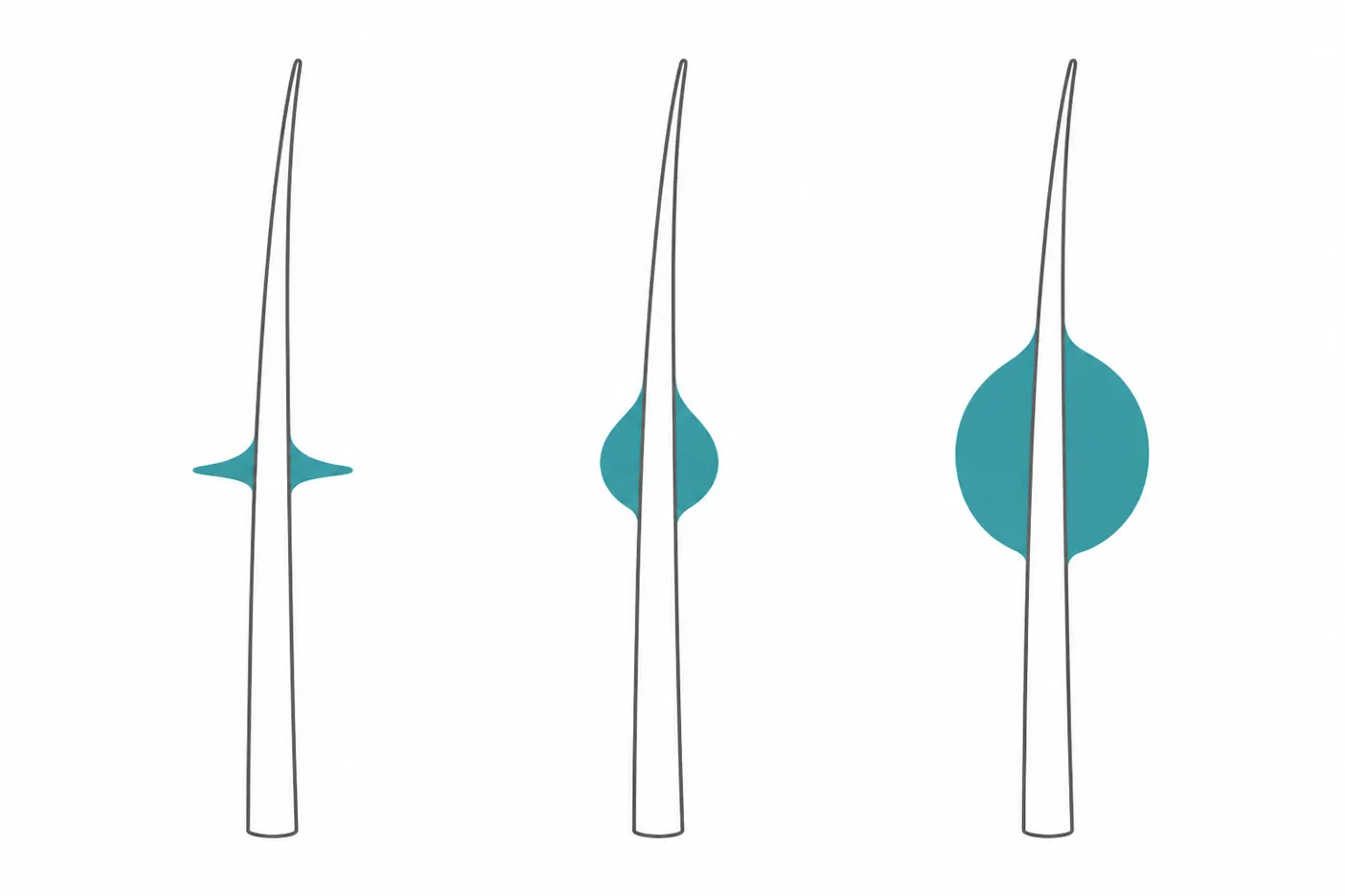
Viscosity decides how the glue behaves on the lash before it cures. Thin glue wicks quickly and gives a fine bond but little repositioning time; thick glue sits on the surface, holds a fan in place more forgivingly, and produces a heavier bond that needs a cleaner placement. Neither is better in isolation 鈥?a mismatched viscosity is what creates messy bases and slow sets.
A drop test is the cheapest quality check available to a buyer and should be run on every new batch. Place a drop of glue on foil in the working room, note how long it takes to develop a skin, and compare the shape of the drop with the retained sample from the previous batch. A sudden change in either is a signal to hold the shipment rather than ship it. Our guide to five signs of low-quality lashes applies the same principle to the lash side: check the incoming goods, not the promise.
Humidity, Temperature and Retention Complaints
Most retention complaints that reach a supplier are environmental. Cyanoacrylate adhesives cure by reacting with moisture in the air, so a dry room slows the bond and a humid one accelerates it; both change how long a set lasts. Temperature adds a second variable, and the same bottle behaves differently in a coastal studio and a heated treatment room.
This matters commercially because it is the buyer’s reputation that absorbs the complaint. Two things reduce the risk. First, ask the supplier for the humidity and temperature range the adhesive was formulated for, and state that range in your own product listing so technicians can check it against their room. Second, stock a product for the dry end and one for the humid end if your customers are geographically spread 鈥?the pair costs little more than a single SKU and answers the most common support question without a return.
Formats, Packaging and Private Label
The format decision is usually made for the wrong reason. Bottle size should follow consumption: a high-turnover studio finishes a larger bottle before it degrades, while a low-turnover buyer is better served by smaller units that stay fresh. Selling the largest bottle to everyone increases waste and worsens the customer’s experience of the product.
Applicator type matters just as much. Fine nozzle caps suit precise dipping and are the safer default for new buyers; brush caps suit technicians who prefer a controlled wipe. Coloured adhesives, such as the brown variant used for clients who do not wear black lashes, are a merchandising decision rather than a performance one, but they are a genuine differentiator in a crowded listing.
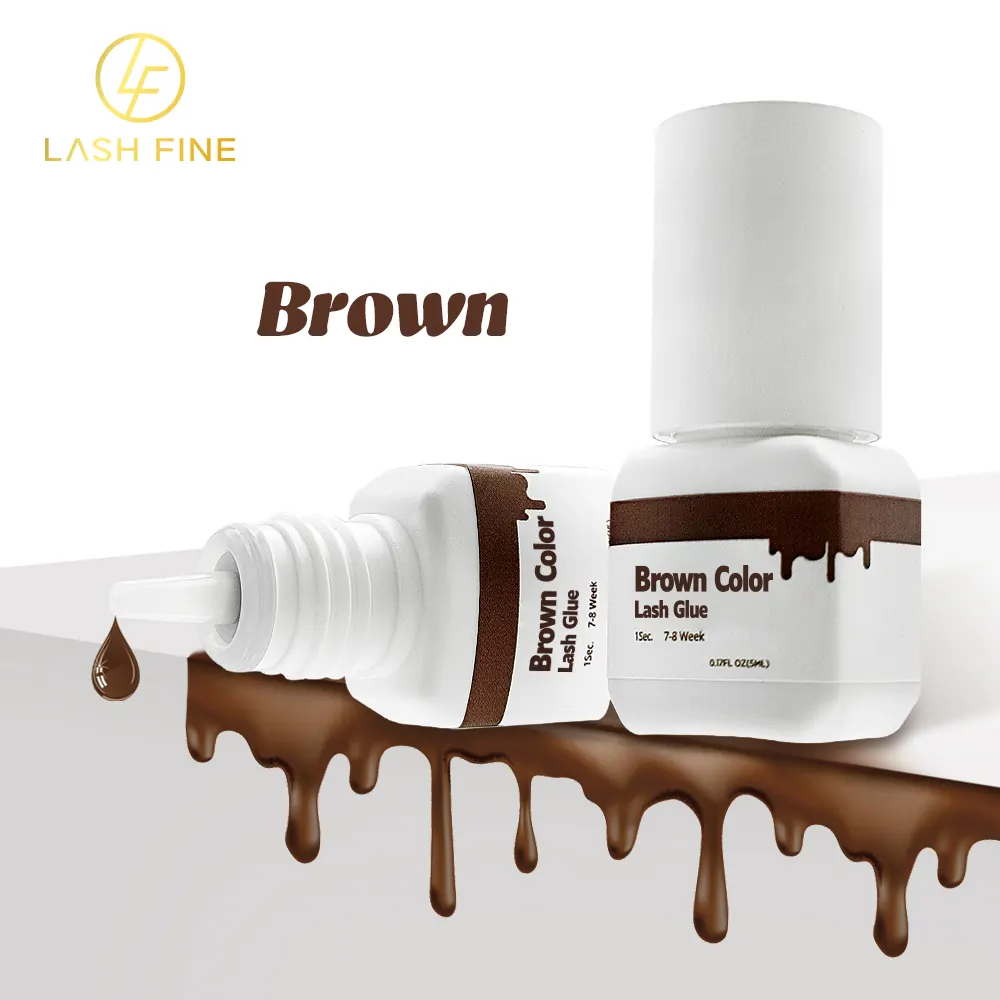
For private label, the variables to lock are the bottle and cap colour, the label artwork, the cure and retention values printed on it, the batch coding, and the safety and instruction text. Printed values are a commitment: if the label says one second and the batch tests slower, you own that discrepancy. Private label lash extension glue orders should therefore begin with the specification, not with the artwork.
What to Verify Before You Order
Ask for the following in writing, and treat a supplier who cannot provide it as a supplier who has not tested the product.
鈥?Cure time with test conditions: the number plus the temperature and humidity it was measured at.
鈥?Viscosity: stated as a value, not as “medium”, and consistent across batches.
鈥?Humidity and temperature range: the window the product was formulated for.
鈥?Shelf life and storage conditions: including a statement of how the product behaves after opening.
鈥?Batch and lot coding: so a complaint can be traced to a shipment.
鈥?Documentation: safety data and formulation documentation for any hypoallergenic or low-odour claim. Our hypoallergenic lash extension glue shows the claim format to look for.
鈥?Retained sample: one unit per batch, kept by both parties, as the reference for the next shipment.
Cost Per Client, Not Price Per Bottle
Price per bottle is a poor purchasing metric because the cheapest bottle is often the most expensive product. The costs that follow a bad batch are wasted adhesive, rebooked appointments, replacement sets, and the customer who changes supplier after two disappointing wears. None of those appear on an invoice, which is why glue is one of the few product lines where paying for a documented specification is straightforwardly cheaper than paying for volume.
The same logic applies to the format. A product that cures reliably in the room where it is used reduces waste per appointment, which offsets a higher unit price well before the bottle is finished. When you compare quotes, compare the specification and the sample behaviour, and use the unit price only as the tie-breaker.
Storage, Shipping and Batch Management
Two operational habits keep a glue range out of trouble. The first is temperature control in transit: adhesive that sits in a hot container or a summer van can arrive with a changed consistency even in a sealed bottle, so confirm the shipping conditions your supplier recommends and note them on your own handling instructions. Our glue storage range covers the on-site part of that problem.
The second is batch discipline. Keep one retained unit per batch, label it with the arrival date, and run the drop test before releasing a new shipment to customers. When a complaint does arrive, the batch code is what turns an argument into a replacement. Stock glue rings and wipes alongside the adhesive so technicians can manage the drop without waste, and pair the range with a lash glue remover so the removal side is covered in the same order.
A Wholesale Buyer’s Checklist
1. Confirm the product category: extension adhesive, at-home bonder, or strip-lash glue.
2. Request cure time with the test conditions behind it, not the label number alone.
3. Request a viscosity value and check it against your previous batch.
4. Confirm the humidity and temperature range, and publish it in your listing.
5. Choose one or two cure classes that match your customers’ rooms and working speed.
6. Match bottle size to turnover, not to unit price.
7. Confirm the applicator type and the cap fit before approving a private label order.
8. Check batch coding, shelf life and the retained-sample arrangement.
9. Order one unit per SKU, run the drop test, and only then scale the order.
If you are building a full consumable range, the same purchasing discipline applies to the lash bonder and the lash extension remover, and the tools that go with them are covered in our lash tweezers buyer’s guide. For brands assembling an at-home kit, our DIY lash extensions guide sets out how glue sits inside a four-part kit.
Choosing a Glue Supplier
Eyelash glue is a specification product sold in a market that rewards price talk. The suppliers worth keeping are the ones who answer technical questions in writing, keep batches consistent, and can tell you which product in their range suits a hot humid studio rather than simply which one is fastest.
Start from the specification, buy a sample before a carton, run the drop test on arrival, and let the documented numbers 鈥?not the label slogan 鈥?decide which glue goes on your shelf. Whether you buy a general-purpose wholesale lash extension glue or a specialist professional or fast-drying line, the checklist above is what keeps the reorder predictable.


 English
  German
  French
  Spanish
  Romanian
  Portuguese
  Dutch
Dutch  Italian
  Swedish
  Polish