

Lash Shampoo: Formats, Concentrates and How to Buy It Wholesale
Lash shampoo is the least glamorous product in an extension range and one of the few that affects retention directly. A client who cleanses with the wrong product 鈥?a face wash, a foaming hand soap, a micellar water 鈥?leaves residue at the lash base, breaks down adhesive over time, and books an earlier infill. A client who uses an oil-free lash shampoo keeps the bond intact and the set lasting longer, and reorders the product when it runs out.
That combination 鈥?a product that protects retention and reorders on a schedule 鈥?is why lash shampoo is worth stocking as a range rather than as a single bottle. This guide covers what makes a shampoo suitable for extensions, the four formats it is sold in, how concentrates change the economics, what to check in a formula, and what a buyer should verify before placing a wholesale order.
What Makes a Shampoo Suitable for Extensions
The requirement is narrower than it sounds. An extension-safe shampoo has to lift oil, makeup and sebum from the lash line without attacking the adhesive bond, and it has to rinse cleanly without leaving a film that either weakens retention or irritates the lid margin. That is why the standard advice for extensions is an oil-free formula: oils and emollients that feel pleasant on the skin soften the cyanoacrylate bond over repeated use.
A second requirement is rinse-ability. Products that foam heavily but leave residue force the client to scrub harder at the lash line, which is exactly the mechanical friction you want to avoid. A formula that lifts debris with light brushing and rinses without effort is doing its job even if it feels less “cleansing” than a supermarket shampoo.
The third is pH and fragrance tolerance. Skin around the eye is thin and reactive, so unfragranced or lightly fragranced options matter for a client base that includes sensitive-eye wearers. If you sell glue to sensitive clients, our guide to eyelash glue for sensitive eyes covers the same care in the adhesive side of the range 鈥?the two products are bought by the same customer for the same reason.
The Four Formats and Where Each One Fits
Lash shampoo is sold as liquid, foam, cream or concentrate, and the format decision is usually a channel decision.
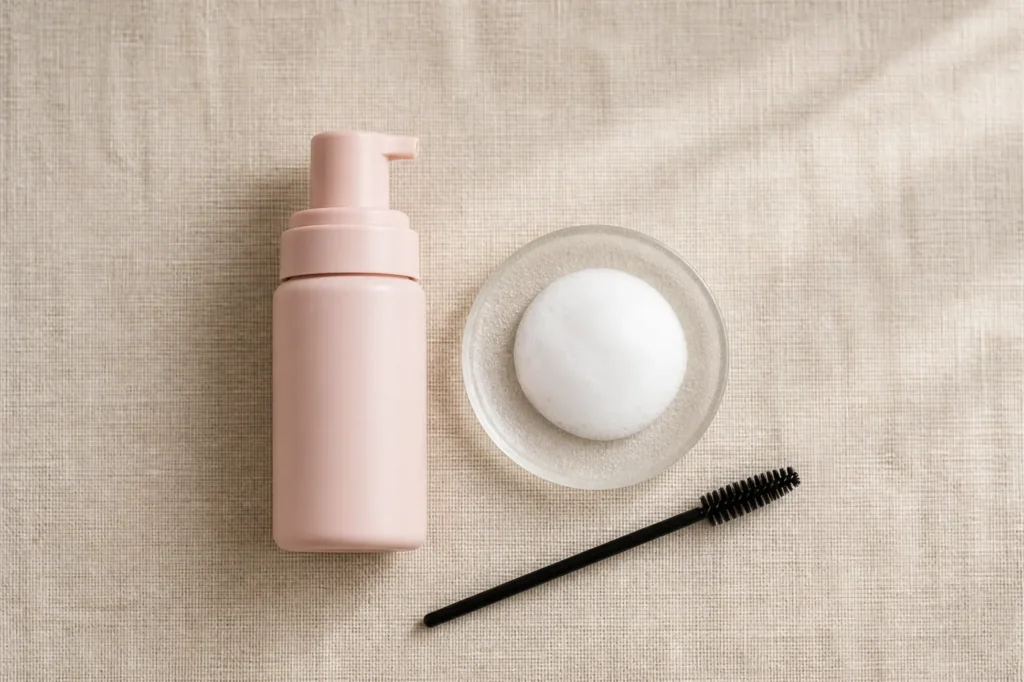
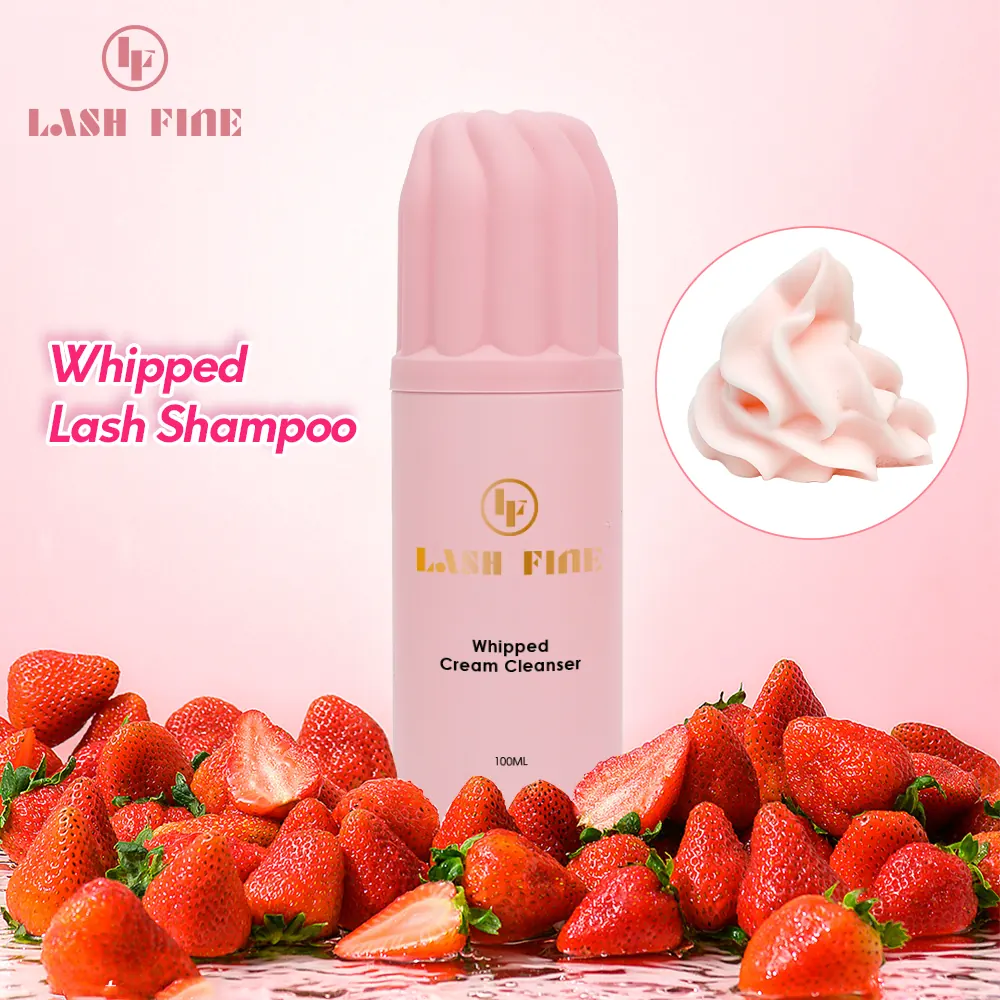
Liquid shampoo in a pump bottle is the most familiar format for retail: it reads as a normal cosmetic, dispenses without a learning curve, and suits shelf displays. Foam dispensers deliver a pre-aerated product that needs no lathering and cannot be over-poured, which is why they dominate the at-home and post-treatment retail segment 鈥?our format-specific guide to lash foam cleanser covers the foam dispenser in detail. Cream or whipped formulas sit between the two: they hold a shape in the hand, feel premium in a branded box, and photograph well, which matters in a channel where the product is chosen from a photo. Concentrate is the professional and bulk format: a small bottle or sachet that the user dilutes, discussed in the next section.
For a supplier, the practical rule is that format follows channel rather than chemistry. A salon that cleanses a client before a refill wants a dispenser that is fast and hygienic. A retail buyer choosing from a product photograph wants a format that looks like a gift. A distributor buying in bulk wants the smallest unit that still delivers the right volume of usable product.
Concentrates, Dilution and “Making Your Own”
The “make your own” searches around lash shampoo are mostly about dilution, not home chemistry. A concentrate ships as a small unit of active product 鈥?often in a roller bottle, a dropper bottle or a sachet 鈥?and the user adds water to the marked level to produce a working solution. The commercial logic is straightforward: shipping water is expensive, and a concentrate lets a salon or a distributor hold more usable product in less shelf space.
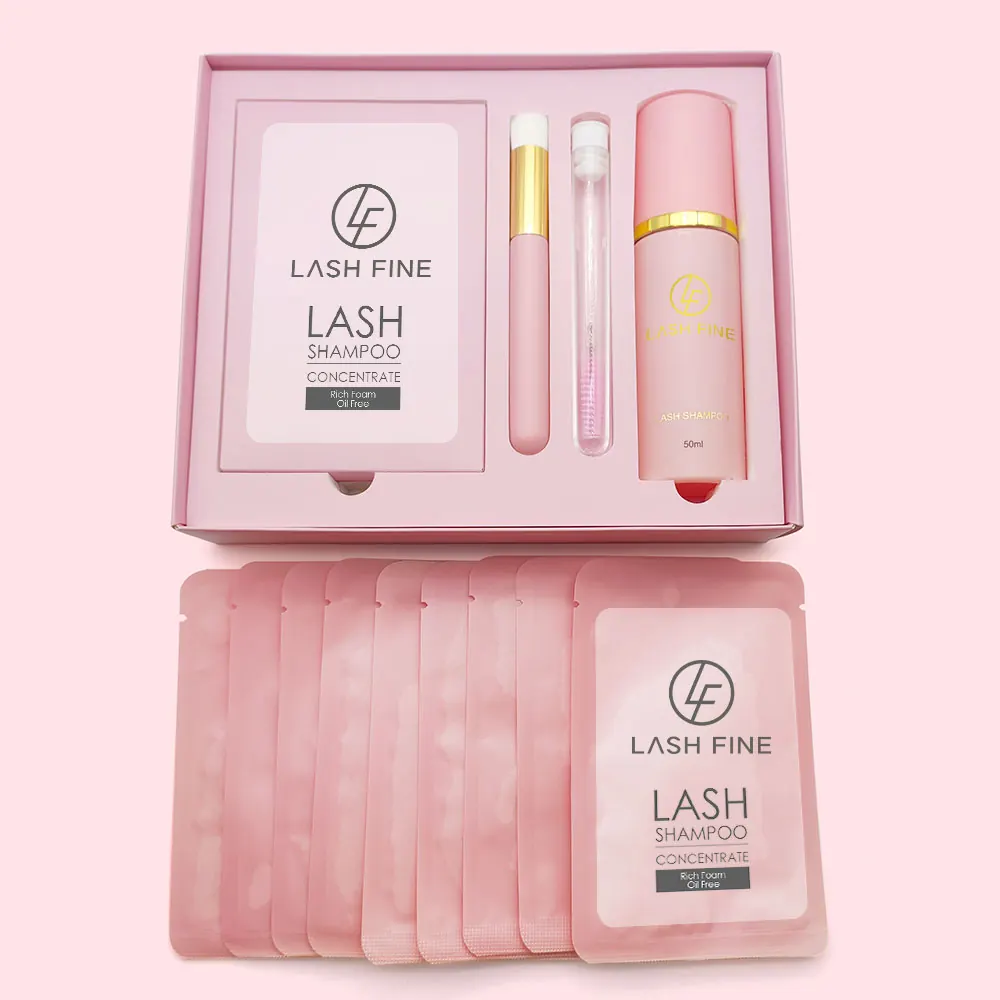
For a buyer, three things decide whether the concentrate is worth stocking. First, dilution instructions must be unambiguous: a bottle marked for a single fill, or a sachet intended for a fixed volume of water, removes guesswork and reduces complaints. Second, the concentrate has to stay stable once opened, since a partially used bottle is common in a small salon. Third, the format needs a way to dispense precisely 鈥?the reason roller and dropper bottles are common at this size. Sold to a retail customer, a concentrate also has a second appeal: it turns a small purchase into a routine the customer repeats, which is why concentrate kits and sachets appear in subscription and travel sets.
For anyone assembling a kit, the same SKU logic used for DIY lash extensions applies here: the cleanser is the consumable that brings the customer back, and the refill should be purchasable on its own.
What to Check in the Formula
Four specification points are worth confirming in writing before you commit to an order.
鈥?Oil-free claim: state it explicitly on the label, and ask whether any emollient or conditioning agent is present that would soften the bond.
鈥?pH: a mild range close to that of the skin around the eye is the target; ask for the value rather than the adjective.
鈥?Fragrance: confirm whether the formula is fragranced, and whether an unfragranced version can be produced for sensitive-eye customers.
鈥?Preservative system: any water-based product needs one; confirm what is used, especially for concentrates that will be diluted by the user.
Two practical checks complement the paperwork. Ask for a cleansing test on a set with adhesive in place 鈥?the product should remove makeup without leaving the bond tacky 鈥?and confirm the rinse behaviour, since a formula that needs three rinses will not be used correctly by an at-home customer. Selling a lash shampoo conditioner alongside the cleanser is a merchandising decision, but only stock it if the formula does not leave residue behind.
Using It in the Salon and at Home
The routine differs less than the marketing suggests. In the salon, the product is used before a refill and after removal: dispense, work along the lash line with a soft brush, rinse with water, dry with a lint-free pad. At home, the client does the same thing at a lower frequency, usually two to three times a week, with a brush small enough to reach the base of the lashes.
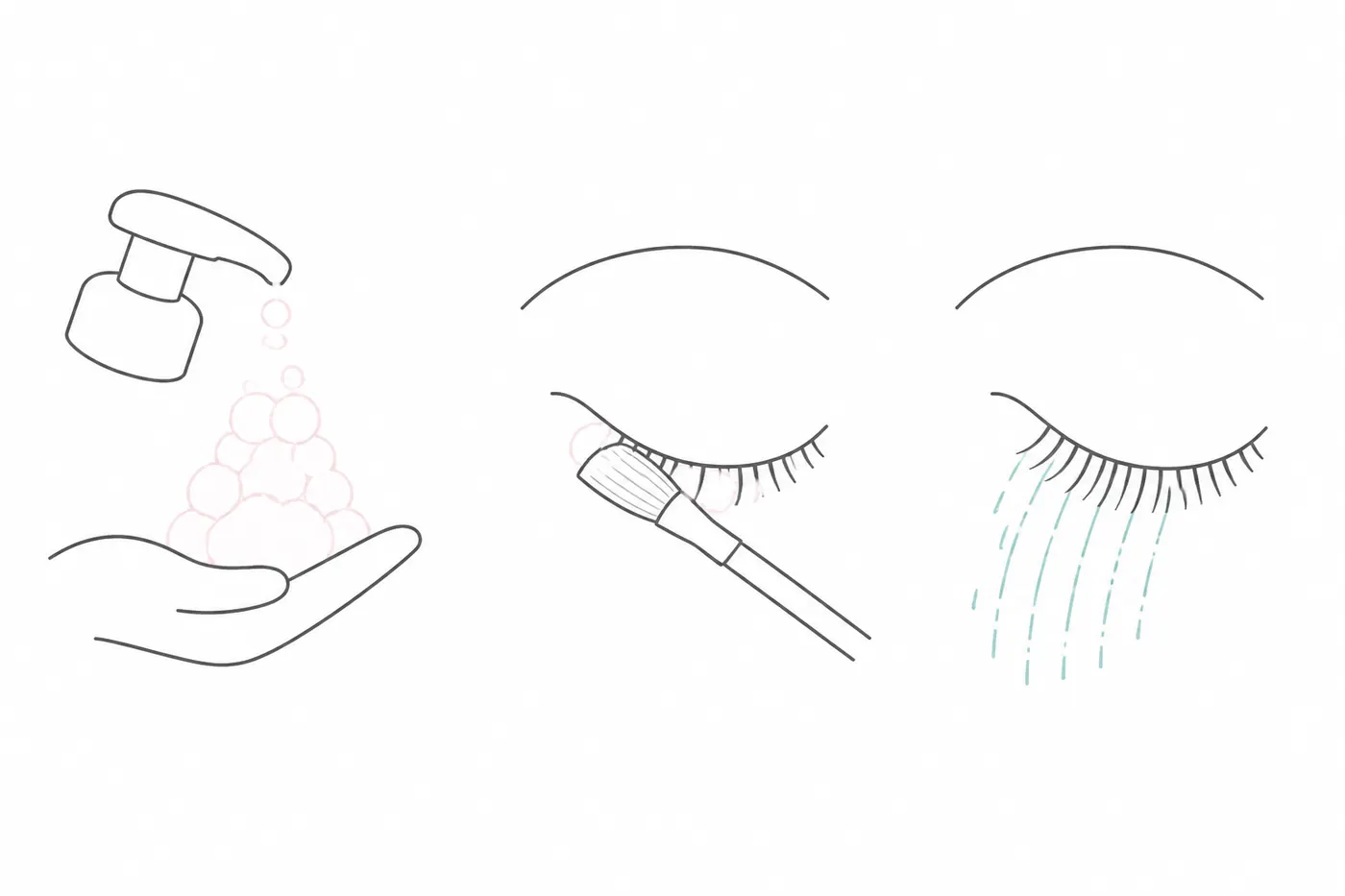
Two details make the difference between a product that gets used and one that sits in a drawer. The brush matters: a firm brush angled to reach the lash line is what makes the routine work 鈥?the same tool logic covered in our lash tweezers buyer’s guide 鈥?and the instructions need to say how often, not just how. Products that come with an instruction card in the buyer’s language and a labelled dispenser get reordered; products that require the customer to search for the method do not.
Retail and Kit Formats
The format grid that sells is small. Bottles cover the retail and salon counter, sold singly or in a wholesale bottle case. Sachets and single-use units cover travel, sample and subscription channels where the priority is a low shipped cost and no waste. Kits combine a cleanser with the rest of the aftercare routine, which is now the standard way to sell into the at-home segment.
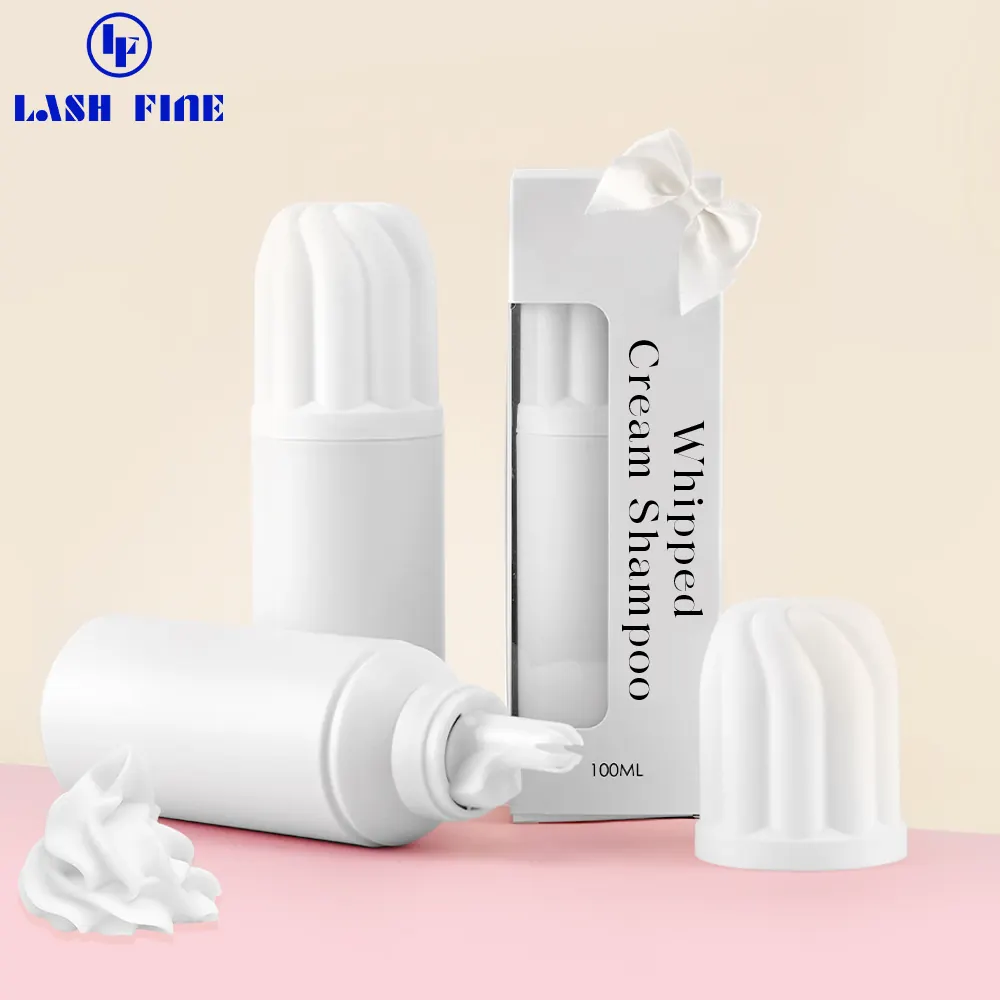
If you sell into a channel that gift-wraps, boxed formats justify their cost: a custom bottle in a window box with a ribbon reads as a present rather than a consumable. For private label, the variables to lock are the bottle and closure, the fill volume, the label artwork and the safety text, and the fragranced or unfragranced variant. Begin a private label lash shampoo project from the specification and the fill size rather than from the artwork, because the artwork is the cheapest part to change later.
A Buyer’s Checklist
1. Confirm the format that matches each sales channel: liquid, foam, cream, concentrate or sachet.
2. Get the oil-free statement and the pH value in writing.
3. Confirm fragrance status and whether an unfragranced variant is available.
4. Ask for dilution instructions if you are stocking a concentrate.
5. Check the brush or applicator included, and whether it reaches the lash line.
6. Confirm the instruction card language and that it states frequency, not just method.
7. Match fill volume to the channel: large for salon use, small and gift-ready for retail.
8. Order one unit per SKU, run the cleansing test on a set, then scale.
9. Pair the cleanser with a refill SKU so the customer can buy the product again on its own.
Where Shampoo Sits in the Range
Lash shampoo is the consumable that keeps a client’s set intact between appointments, which makes it the easiest product to justify selling next to the adhesive and the remover. Stocked as one bottle it is a small line item; stocked as a format grid with refills, boxes and a bulk option for distributors, it becomes a repeatable category with a predictable reorder cycle.
For the rest of the aftercare sequence, our guides to the lash extension remover and to eyelash glue cover the products that sit either side of cleansing in the client’s routine. Buy the cleanser on specification, stock the format your channel actually needs, and make the refill easy to find 鈥?that is the whole of it.


 English
  German
  French
  Spanish
  Romanian
  Portuguese
  Dutch
Dutch  Italian
  Swedish
  Polish