

Classic Lash Extensions: Diameters, Curls and How to Buy Them Wholesale
Classic lash extensions are the simplest product in a lash catalogue and the one that decides whether the rest of the range sells. One extension is applied to one natural lash, so the whole result depends on the diameter, curl and length of a single fibre 鈥?and on the tray it was shipped in. Get the classic range right and the client’s first set looks natural enough to bring her back for volume later; get it wrong and the lashes look heavy on day one regardless of how good the adhesive was.
This guide covers what classic lashes are, how diameter choice drives both the look and the safety of the set, how curl and length are specified, what the tray formats mean for a buyer, and what to verify before placing a wholesale order. If you are stocking a full range, the same purchasing logic runs through our guide to cluster lashes and the rest of the catalogue.
What Classic Lashes Are
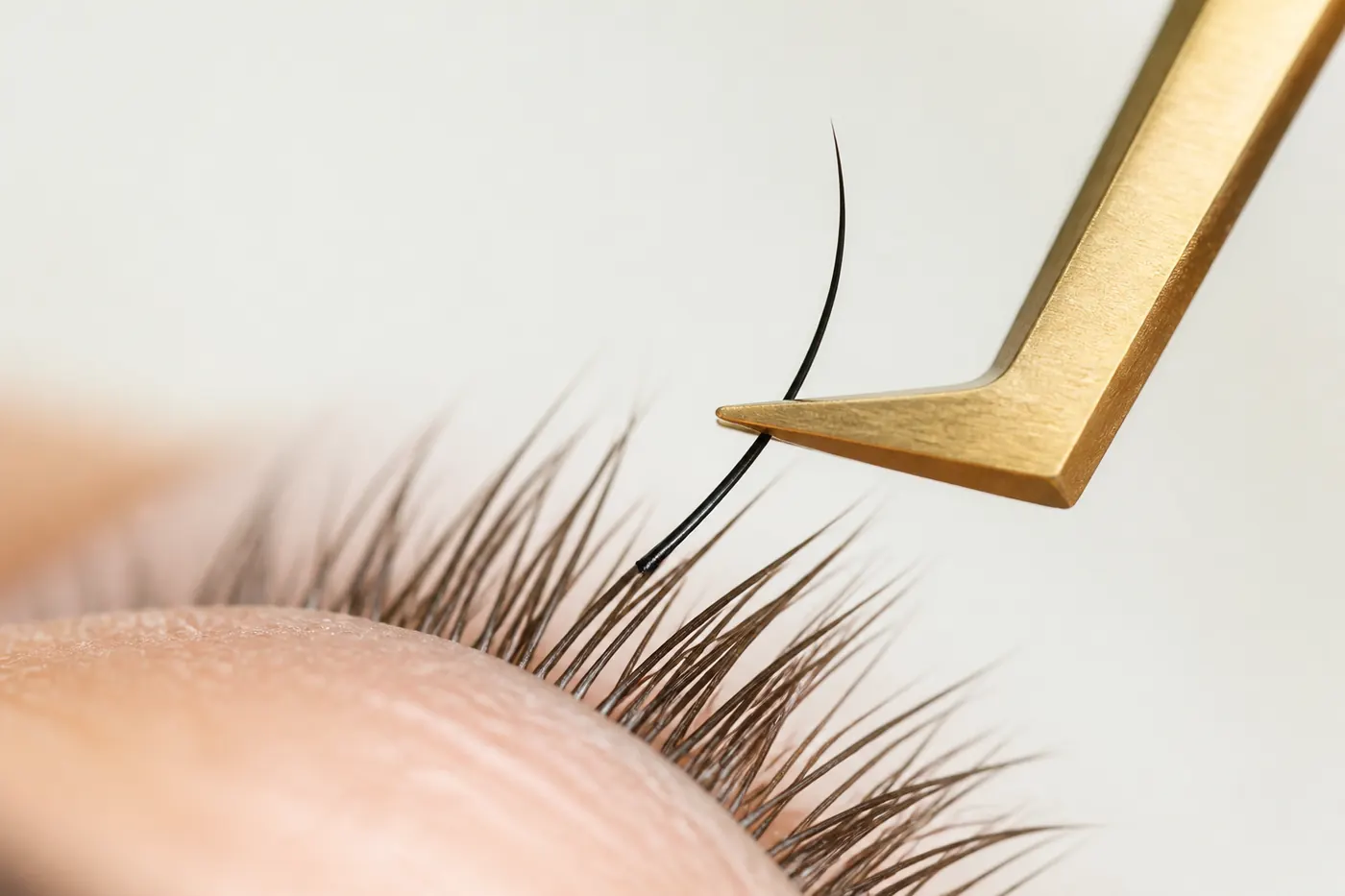
A classic extension is a single strand of synthetic fibre, grafted one-to-one onto a single natural lash with a cyanoacrylate adhesive. Nothing about the finished set is manufactured beforehand: there is no pre-made fan, no bonded base, no cluster. That is what separates classic lashes from the volume fans, the pre-made and promade clusters used in volume sets, and the cluster products sold into the DIY market.
The category’s commercial strength is that it sits at the entry point of the service ladder. A classic set takes less time than volume, uses fewer fibres per appointment, and is the format most new technicians learn first 鈥?which makes classic trays the highest-volume, most frequently reordered lash product in a professional catalogue. Clients also graduate from classic to hybrid and volume, so a supplier who owns the classic range is positioned to sell the next format when the technician’s skill grows.
For a buyer, the practical consequence is that classic lashes should be stocked deep rather than varied. Two or three diameters in a small set of curls cover the majority of appointments, while a wide spread of rarely-used specifications ties up capital in trays that expire before they sell.
Diameter: The Decision That Sets Everything Else
Classic lashes are specified by fibre diameter, and the diameter determines both the visible weight of the set and the load placed on the natural lash. The range runs from fine fibres used for a barely-there look through to thicker fibres used where a made-up effect is wanted, and the same nominal length in a thicker diameter reads noticeably heavier on the eye.
The safe principle is that a classic extension should not overload the natural lash it is bonded to: a client with fine, sparse natural lashes wears a finer diameter well, while the same fibre on a client with strong, dense lashes can look sparse. This is why a single tray specification cannot serve every client, and why the diameter decision belongs to the technician’s assessment rather than to a catalogue default.

Two practical rules keep a diameter range manageable. First, stock the two diameters that match your market: professional salons that prioritise a natural finish order differently from a studio building dramatic sets. Second, keep the labelling unambiguous 鈥?the diameter, curl and length should be readable on the tray without opening the box, because a mis-labelled tray is the most common complaint a supplier receives and the most expensive to resolve after the client has already worn the set.
Curl, Length and Mapping
Curl and length decide whether a set looks like the client’s own lashes improved or like a product applied on top of them. Classic sets are usually built from a small number of curls 鈥?the flatter and more natural options for the inner eye, and a stronger lift toward the outer third 鈥?and from a length range that runs from around the client’s natural length up to the longest length her lashes can carry comfortably.
Mapping is what turns those two choices into a set. The classic routine mirrors the approach used for the styles in our squirrel mapping and cateye guides: build the map on the lash line rather than on the box, and let the curl transition stay subtle enough that the set does not read as two different products.
For a buyer, two specification choices matter more than the rest. Mixed trays sell faster than single-length trays in the classic range, because a technician wants the lengths for a mapping pattern in one unit rather than three. And curl naming must match what the market expects: a curl described in one nomenclature and delivered in another causes reorders to fail even when the fibre is identical, which is a specification problem rather than a quality one.
Tray Formats and Packaging
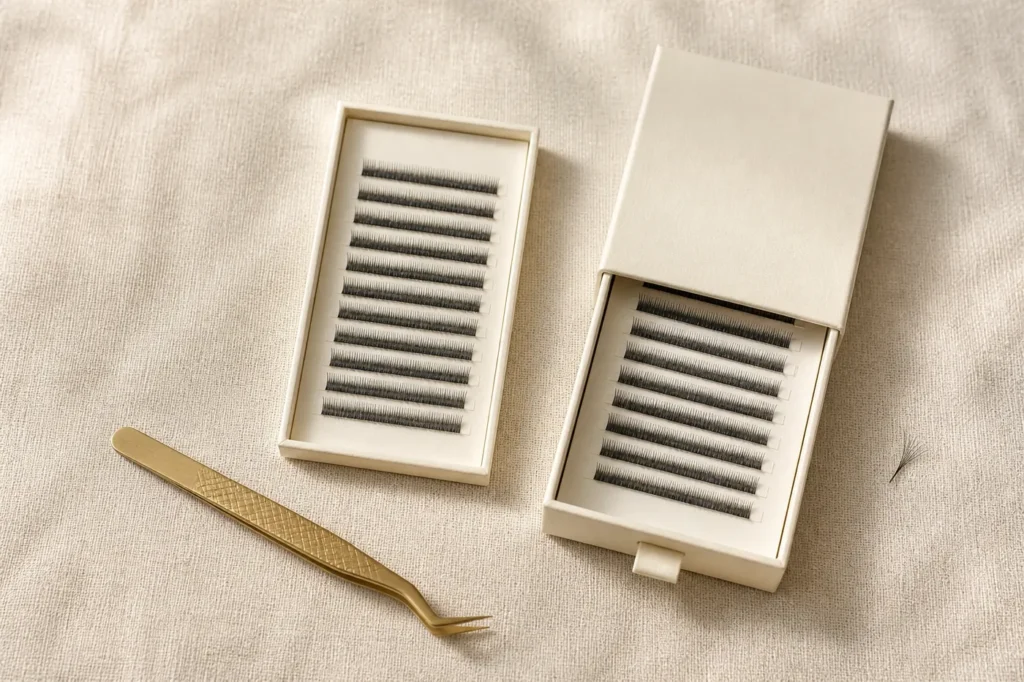
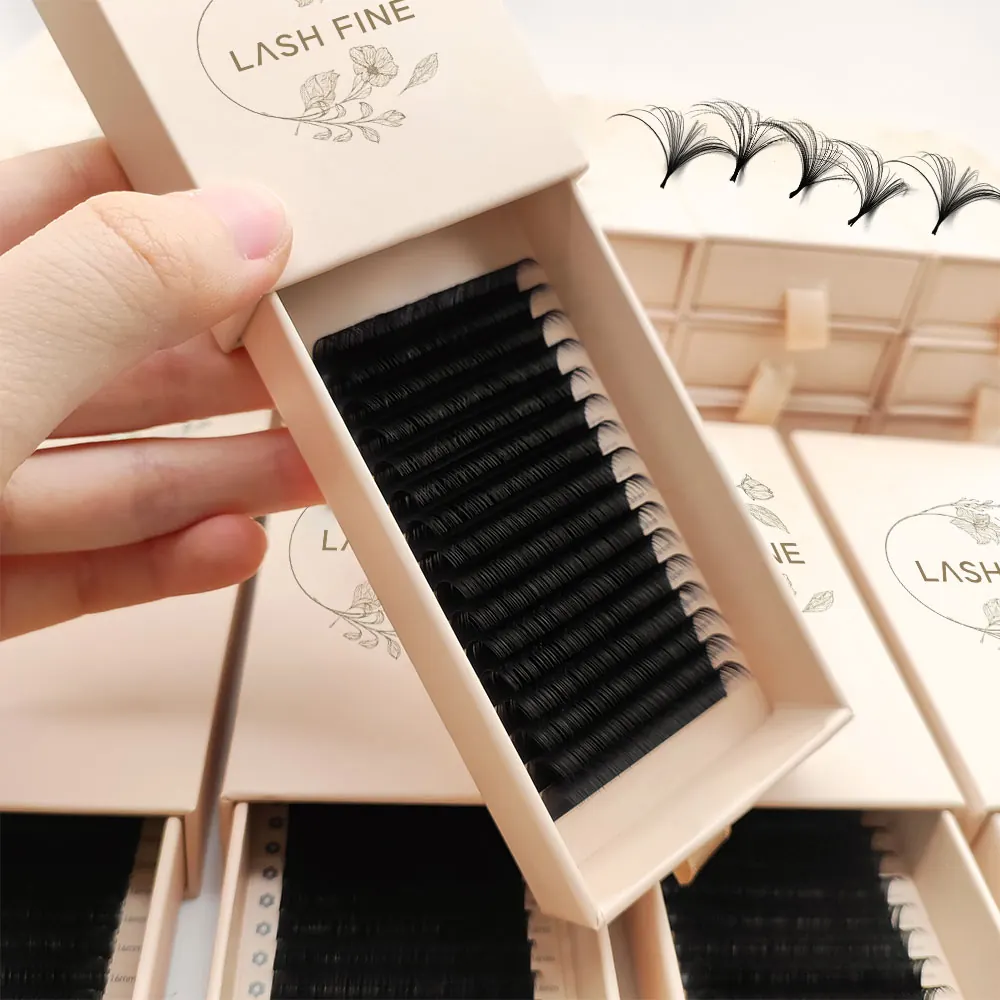
Classic lashes ship as strip rows in a tray or a drawer box, and the format affects both the working experience and the cost. Rows that release cleanly matter: a strip that lifts the neighbouring lash when the technician picks one is the fastest way to make an otherwise good tray unusable. Length labelling, drawer or flip-top construction, and a lid that closes without crushing the fibres all contribute to how the tray is judged in the first week of use.
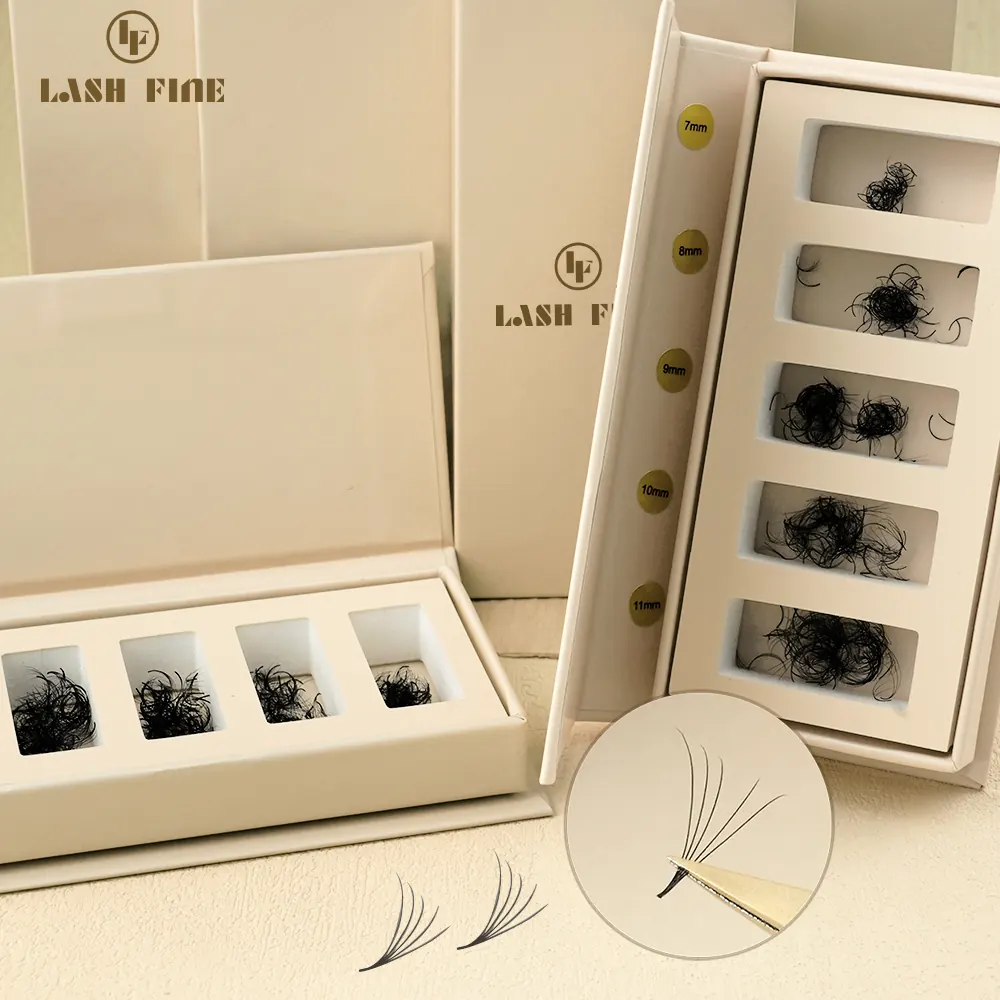
Loose bundles and mixed trays serve a different purpose: they let a studio restock lengths that run out first rather than buying another full tray. For a supplier, offering both formats is a small addition to the range that answers a real reorder pattern 鈥?technicians consume 9mm to 11mm far faster than the extremes at either end of the length range.
Packaging is also where private label enters the classic range, and it is the cheapest layer to change. The tray itself, the label text, the length marking and the outer sleeve are all specified separately, so a branded classic tray can be built on the same fibre as an unbranded one. If you sell to studios that resell to their own clients, printable private-label trays are worth offering as a line item.
Fibre, Finish and Quality Checks
Classic lashes are synthetic fibre, and the differences that matter in service are the ones a buyer can test rather than the ones a supplier advertises. Curl retention under wear is the first: a fibre that relaxes after a week produces a set that looks tired before the client’s infill. Surface finish is the second: a matte fibre reads softer and photographs better for a natural classic set, while a glossy fibre looks heavier under light. Bending recovery is the third 鈥?a fibre that does not return to its curl after being picked up is a fibre that will sag on the lash.
Quality also shows up in consistency across the tray. Mixed lengths should match their labels, diameters should not drift across rows, and the adhesive strip should hold the fibre firmly enough that it does not fall out in transit. Our guide to five signs of low-quality lashes sets out the checks in the order worth running them, and the same tests apply to classic trays before a bulk order is placed.
Classic, Flat and Cashmere: Which Ones to Stock Together
Three product families compete for the same appointment and are often stocked as substitutes. Classic lashes are the single-strand standard. Flat lashes carry a wider base that creates a darker line at the same weight, which suits clients with fine natural lashes. Cashmere-style fibres sit between matte and glossy finishes and are chosen for the look rather than the weight.
Stocking all three is defensible only if the market supports the differentiation. A studio that sells mostly natural classic sets will reorder classic trays and ignore the rest; a studio building darker sets will move to flat. The supplier’s job is to make the difference legible in the product description 鈥?base shape, finish and the client type each one suits 鈥?rather than to stock three products that read as versions of the same thing. Our guide to cashmere lashes covers that positioning for the third family.
A Buying Checklist for Classic Lashes
1. Confirm the diameters that match your market, and label every tray with diameter, curl and length.
2. Check curl retention and surface finish on a sample before ordering a carton.
3. Verify that mixed trays carry the lengths your customers reorder most.
4. Test the strip adhesion: a row should release a single lash cleanly.
5. Confirm the drawer or flip-top construction will survive shipping.
6. Ask about the tolerance on diameter and length across a batch.
7. Choose mixed trays for new clients and single-length trays for studios that restock by length.
8. Pair the range with the adhesive and preparation products it is used with 鈥?a primer, the adhesive by client type and the tweezers that place a single lash.
9. Order one tray per specification, run a set, and only then scale.
Selling the Classic Range
Classic lashes are the product that introduces a client to extensions and the product a technician buys most often, which makes the range worth getting right rather than worth expanding. The buyer’s job is to keep the specification legible: a tray that says what it contains, a diameter range that matches the local market, and a curl and length grid small enough to be stocked without dead trays.
From there, the range sells itself 鈥?a client whose first classic set looks natural is the client who returns for the hybrid or volume set that the same technician will want to buy next. Stock the entry format properly, keep the specification honest, and the rest of the catalogue has somewhere to go.


 English
  German
  French
  Spanish
  Romanian
  Portuguese
  Dutch
Dutch  Italian
  Swedish
  Polish