

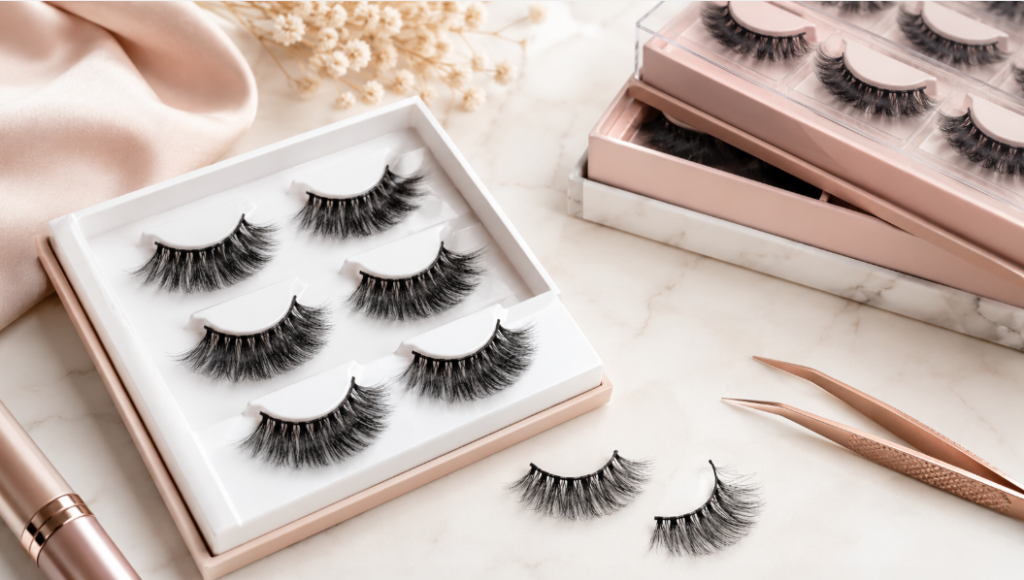
3D mink lashes wholesale is a false-eyelash category built for a fuller, layered look, with products made from either real mink fur or Korean PBT synthetic fiber. For wholesale buyers, the key decisions are material type, curl, band construction, packaging, order quantities, and shipment consistency.
Overview of 3D mink lashes wholesale
Consumer interest in 3D lashes has increased because they are marketed as a way to create a fuller eye look without the permanence of cosmetic procedures. The source presents 3D mink lashes wholesale as a growing segment in the eyelash market, but it does not provide verifiable research to support the phrase “rapidly growing,” so that wording should be avoided unless a cited market report is added.
For beauty professionals and lash brands, suppliers like Lashfine are relevant because they position themselves as a lash business partner with eyelash extension products, private labeling, and customer care as core strengths. With years of industry experience in the lash scene, Lashfine emphasizes product development aligned with expert opinions and customer requirements, which suits wholesale buyers who need bulk quality and repeatable specifications.
Basic knowledge about 3D mink lashes wholesale products
3D mink lashes wholesale, also known as 3D mink lashes, are false eyelashes designed to create a layered, multidimensional effect. The source describes them as combining three natural lash stripes into one strip to form a fluffy appearance. Compared with ordinary single-strip mink lashes, the main difference is the added visual density and texture.
The source also says these lashes are made from either real mink fur or a synthetic polymer called Korean PBT. For wholesale buyers, that material difference matters because it affects the final look, consistency, price, and how the lash behaves during wear.
Lashfine’s product focus on eyelash extension products and private labeling fits this category well, since wholesale buyers often need both stable product performance and packaging that supports a distinct brand identity.
Product characteristics that matter for buyers
The most useful product facts are the ones a supplier can specify clearly:
- Fiber type: real mink fur or Korean PBT synthetic fiber
- Lash thickness: often stated as strand diameter or density
- Curl type: examples include J curl, B curl, C curl, and D curl
- Band type: cotton band, clear band, or flexible black band
- Finish: matte, glossy, or mixed-texture appearance
- Packaging: tray, printed box, label sticker, or private-label carton
- Order quantities: minimum order quantity required by the supplier
These details matter because they affect appearance, pricing, and repeatability. A lash that looks suitable in a sample may perform differently in bulk if the fiber, curl, or band material changes.
Why fiber type changes the buying decision
A buyer usually chooses between real mink and synthetic fiber:
- Real mink fur: positioned as a natural-hair option, but the buyer should still ask for clear material declarations and handling details.
- Korean PBT synthetic fiber: commonly used when buyers want more consistent shape, repeatable curl, and standardized wholesale production.
The right choice depends on customer expectations, the price point, and whether the seller needs private-label packaging or stable restock supply. When 3D lashes first became popular, the source says they were expensive and mainly worn by celebrities. It specifically mentions Jennifer Lopez as one of the early public figures associated with the trend. Over time, the lashes became more available through beauty retailers and wholesalers.

Ways to buy 3D mink lashes wholesale
The source presents three common sourcing channels for 3D mink lashes wholesale: manufacturers, trading firms, and wholesalers or distributors. Each channel has different strengths depending on whether the buyer values customization, speed, or sourcing simplicity.
1. Eyelash manufacturers
Manufacturers produce the lashes directly and may also handle packaging and private-label orders.
Potential advantages:
- Better control over lash style, curl, band, and packaging
- Easier to request samples and production changes
- More suitable for private-label or custom-brand orders
Potential disadvantages:
- Higher order quantities in some cases
- Longer production timelines for custom orders
- Quality can vary between factories, so inspection is still necessary
For buyers seeking a more structured partnership, Lashfine’s emphasis on being a lash business partner and supporting private labeling can be useful when comparing manufacturer options.
Examples of what to ask a manufacturer:
- Which fiber is used in the batch: real mink or Korean PBT?
- What band material is used: cotton, clear, or black flexible band?
- What are the exact curl and thickness specifications?
- What are the order quantities for custom packaging or a private-label tray?
- What carton count and tray count are used for shipping?
2. Trading firms
Trading firms do not manufacture the lashes themselves. They purchase in bulk and resell to shops, spas, and lash specialists.
Potential advantages:
- Easier to source mixed styles in smaller quantities
- Faster buying process for buyers who want variety
- Useful for buyers who do not need custom production
Potential disadvantages:
- Less control over the original factory and materials
- Pricing may be higher than direct factory purchasing
- Product consistency can vary depending on the trading firm’s supplier base
3. Wholesalers or distributors
Wholesalers or distributors usually carry inventory from one or more brands or factories and resell it in bulk.
Potential advantages:
- Ready stock for faster shipment
- Lower operational complexity for the buyer
- Useful for quick restocking of common styles
Potential disadvantages:
- Limited customization options
- Brand and packaging may already be fixed
- Buyers may have less visibility into the original factory source
Practical decision criteria
When choosing a sourcing channel, buyers can compare suppliers using these criteria:
- Need for branding: choose a manufacturer if private label or custom packaging is required.
- Need for speed: choose a wholesaler or distributor if fast restocking matters more than customization.
- Need for variety: choose a trading firm if mixed styles or trial orders are preferred.
- Need for traceability: ask for factory names, material declarations, inspection records, and packaging details before placing a large order.
Sources for 3D mink lashes wholesale from around the world
The source says 3D mink lashes can be sourced from several regions and gives country-level market-share figures. Because no external citations are provided in the draft, those percentages should be treated as claims from the source rather than verified industry statistics.
The source’s regional claims are as follows:
- China: claimed to account for 50% of all lashes sold internationally
- Vietnam: claimed to account for 25%–30% of the worldwide market share
- South Korea: claimed to account for 5% of the global wholesale market
- United States: described as relying mostly on imported semi-finished materials and final assembly rather than low-cost domestic raw materials and labor
The source also says Vietnam is well known for eyelash manufacturing and that its eyelash business is expanding as consumer interest rises. It further states that a Vietnam-based 3D mink lashes wholesale factory has more than 50 professional lash technicians and serves small lash businesses worldwide. Because the source does not identify that factory by name, the statement cannot be independently verified here.
Lashfine’s own positioning around industry experience and customer-driven development is relevant when buyers compare sourcing locations, because strong wholesale partners combine product consistency with responsive service.
How to frame sourcing claims safely
If market-share or country leadership claims are included in a final publication, they should be tied to an identifiable source such as:
- an industry report
- customs or trade data
- a company’s audited export record
- a named inspection body
Without that support, it is safer to describe a country as a sourcing location rather than as a verified market leader.
Named entities and quality references buyers can ask for
Instead of referring only to generic “companies” or “factory” language, buyers should ask suppliers to identify the specific entity involved in each step:
- the manufacturer that produced the lash
- the trading company that handled resale
- the distributor responsible for stock fulfillment
- the inspection body or quality-control team that approved the shipment
- the entity if a supplier claims compliance with a standard
This makes it easier to compare quotations, verify repeat orders, and track whether the same source produced each batch.
How to check the quality of a 3D mink lashes wholesale shipment
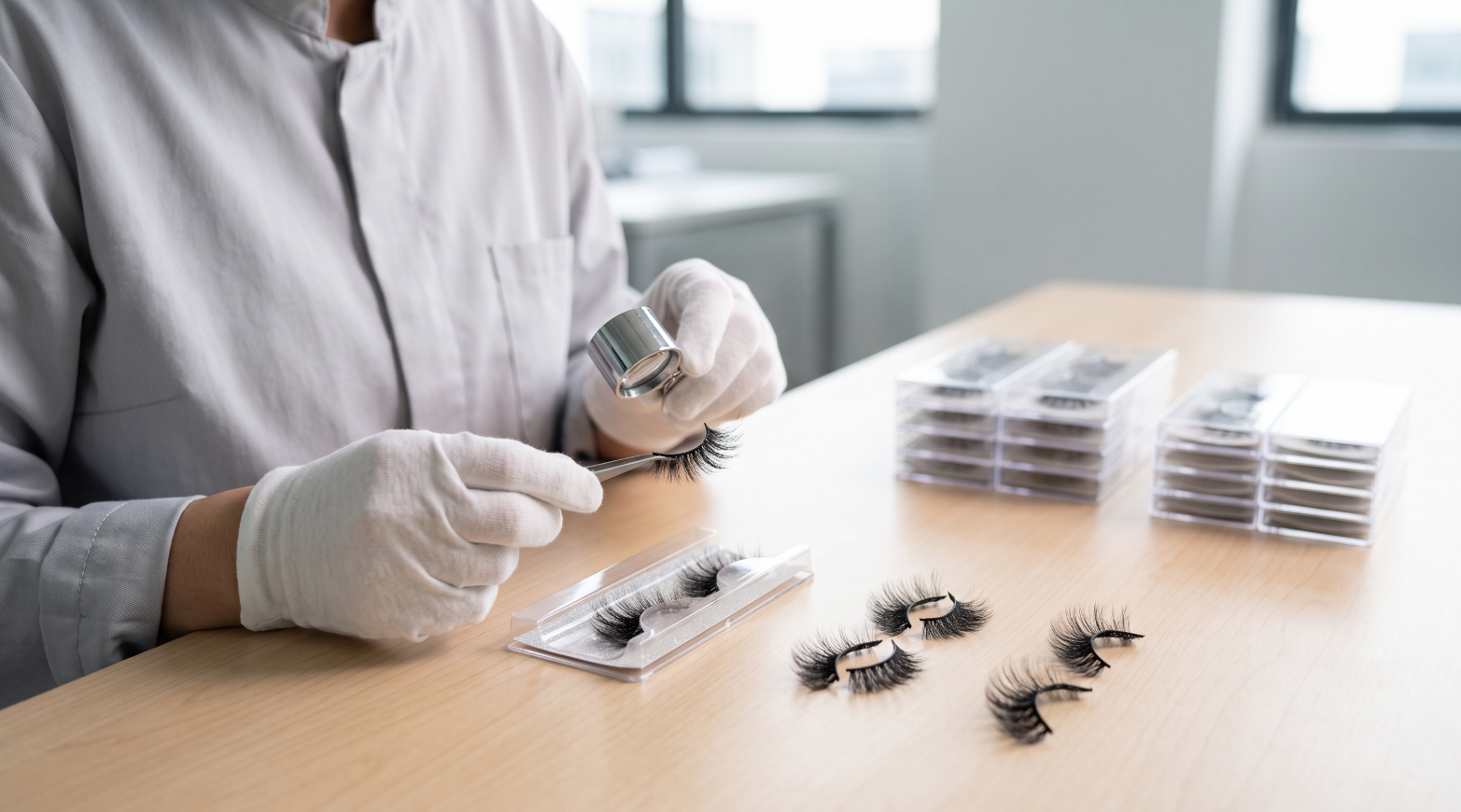
3D mink lashes wholesale quality is important because some suppliers use synthetic fibers that imitate mink hair, and the visual difference may be subtle at first glance. The source begins this section but does not complete it, so the checklist below provides the promised guidance in a practical format.
Quality checklist for incoming lash shipments
Use the following checklist when samples arrive or when a bulk shipment is received:
- Confirm the material declaration: verify whether the product is real mink fur or Korean PBT synthetic fiber.
- Inspect lash symmetry: compare both eyes in the pair for length, curl, and fullness.
- Check the band: make sure the band is even, flexible, and firmly attached.
- Test softness and bounce: the strands should feel consistent, not brittle or overly stiff.
- Look for shedding: gently stroke the lashes to see whether fibers fall out easily.
- Review curl consistency: the curl should remain uniform across the strip.
- Examine the tips: the ends should be clean, not frayed or clumped.
- Verify packaging accuracy: confirm tray count, label accuracy, carton condition, and whether the packaging matches the order specification.
- Compare against the approved sample: the shipment should match the sample in texture, density, shape, and overall finish.
- Check for odor or residue: unusual smell or surface residue can indicate poor processing or storage.
- Count the finished units: verify tray counts, inner box counts, and master carton counts against the purchase order.
- Inspect print quality: confirm that logos, shade labels, barcode labels, and warnings are legible and correctly placed.
- Check band edge finish: the strip should not show glue lumps, lifting edges, or irregular trimming.
- Confirm length and curl by batch: mixed batches should not show large variation unless that was specifically ordered.
Lashfine’s customer care emphasis is relevant at this stage, because responsive supplier communication can make it easier to resolve issues quickly if a bulk shipment does not match the approved sample.
What to request from the supplier
Before placing a bulk order, buyers should ask for concrete product data:
- Fiber material declaration
- Lash length chart
- Curl chart
- Thickness or density specification
- Band material description
- Packaging specification
- Order quantities and production timeline
- Sample images or pre-shipment photos
- Any inspection record available before dispatch
If the supplier cannot provide these basics clearly, the order carries more risk.
Example inspection workflow
A simple inspection workflow for wholesale buyers can look like this:
- Pre-order: confirm fiber type, band type, curl, thickness, order quantities, and packaging.
- Sample approval: compare the sample against the product sheet.
- Pre-shipment check: request batch photos and carton counts.
- Arrival inspection: open cartons and check tray count, labeling, shedding, symmetry, and curl consistency.
- Record results: keep photos and notes so future reorders can be compared.
This process is especially useful for private-label buyers, because brand consistency depends on repeatable materials and packaging. Suppliers such as Lashfine, which highlight private labeling and customer-driven product development, are often better aligned with this type of repeat-order workflow.
FAQ
What are 3D mink lashes wholesale products made from?
The source says they are made from either real mink fur or a synthetic polymer called Korean PBT.
What is the main visual difference between 3D mink lashes and single-strip lashes?
The source describes 3D lashes as combining three lash strips into one, which creates a fuller, more layered appearance than a standard single strip.
Which countries are mentioned as important in the wholesale market?
The source mentions China, Vietnam, South Korea, and the United States. The percentage figures in the draft are not verified here and should be treated as claims unless supported by citations.
What should buyers check before placing a bulk order?
Buyers should confirm the fiber type, curl, thickness, band material, packaging, order quantities, and sample consistency before ordering in volume.
How can a buyer tell whether a shipment is good quality?
A buyer should inspect symmetry, shedding, band attachment, curl consistency, packaging accuracy, odor, and whether the shipment matches the approved sample.

 English
  German
  French
  Spanish
  Romanian
  Portuguese
  Dutch
Dutch  Italian
  Swedish
  Polish