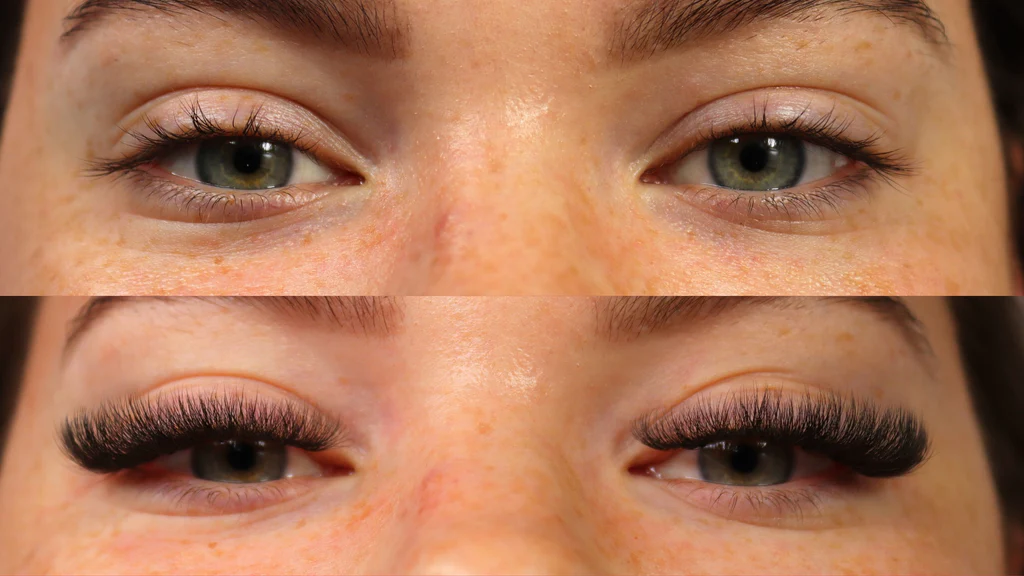
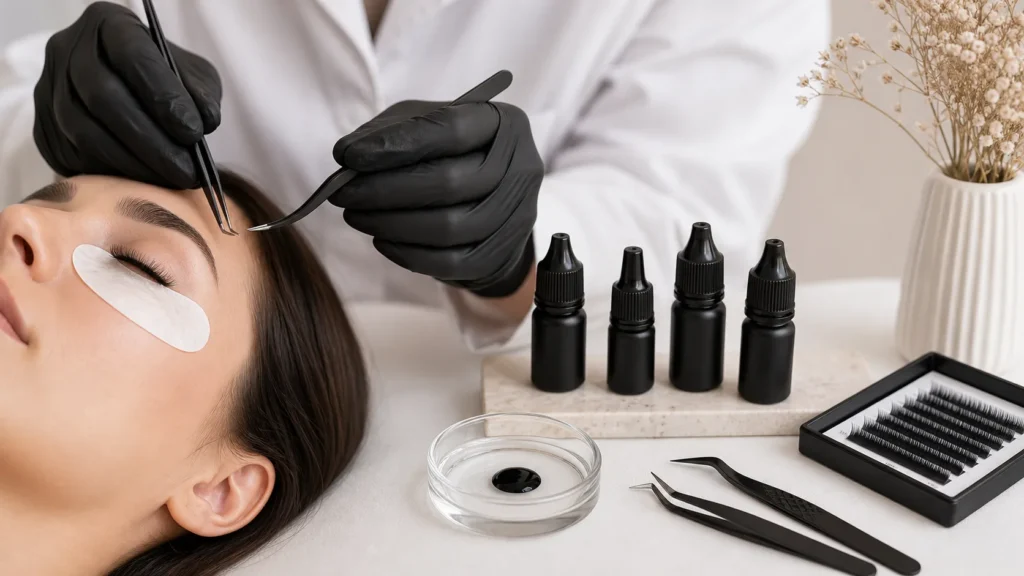
In lash extensions, the adhesive matters just as much as the lashes themselves. The right lash glue can improve comfort, support better retention, and reduce the chance of irritation. There is no single best adhesive for every client. The best choice depends on how fast you work, how sensitive the client is, and what kind of skin and lifestyle they have.
This guide shows how to match lash glue to client needs, from drying speed and hold strength to sensitivity, humidity, and aftercare.
Understanding lash glue types
Before choosing an adhesive for a client, it helps to understand the main categories.
- Fast-drying glues: Best for experienced lash artists who need quick application. These formulas bond in less than 1–2 seconds, which can speed up the process and help keep a steady workflow.
- Sensitive glues: Designed for clients with sensitive eyes or skin. They usually contain a lower concentration of irritants and are meant to reduce discomfort, especially when the client is prone to watering, stinging, or redness.
- Strong-hold glues: Best for clients who want longer-lasting extensions. These glues are made for stronger bonding and can support wear for up to 6–8 weeks when application and aftercare are appropriate.
A practical way to think about glue choice is this: faster formulas help the lash artist work efficiently, gentler formulas help protect sensitive clients, and stronger-hold formulas help improve retention for clients who need durability.
Quick decision guide: match the glue to the client
| Client profile | Better glue type | Why it fits |
|---|---|---|
| Experienced artist needing speed | Fast-drying glue | Supports quick placement and efficient application |
| Sensitive eyes or skin | Sensitive or hypoallergenic glue | Helps minimize irritation and discomfort |
| Oily skin | Fast-drying or strong-hold glue | Oil can weaken attachment, so a stronger bond is usually more reliable |
| Dry skin | Flexible adhesive | Added elasticity can help the bond hold without cracking as easily |
| Active lifestyle, swimming, or frequent workouts | Waterproof, long-lasting glue | Better suited to sweat and moisture exposure |
| Humid environment | Strong-hold glue designed for moisture-heavy conditions | Humidity can slow drying and affect performance |
Compare adhesive behavior before you buy
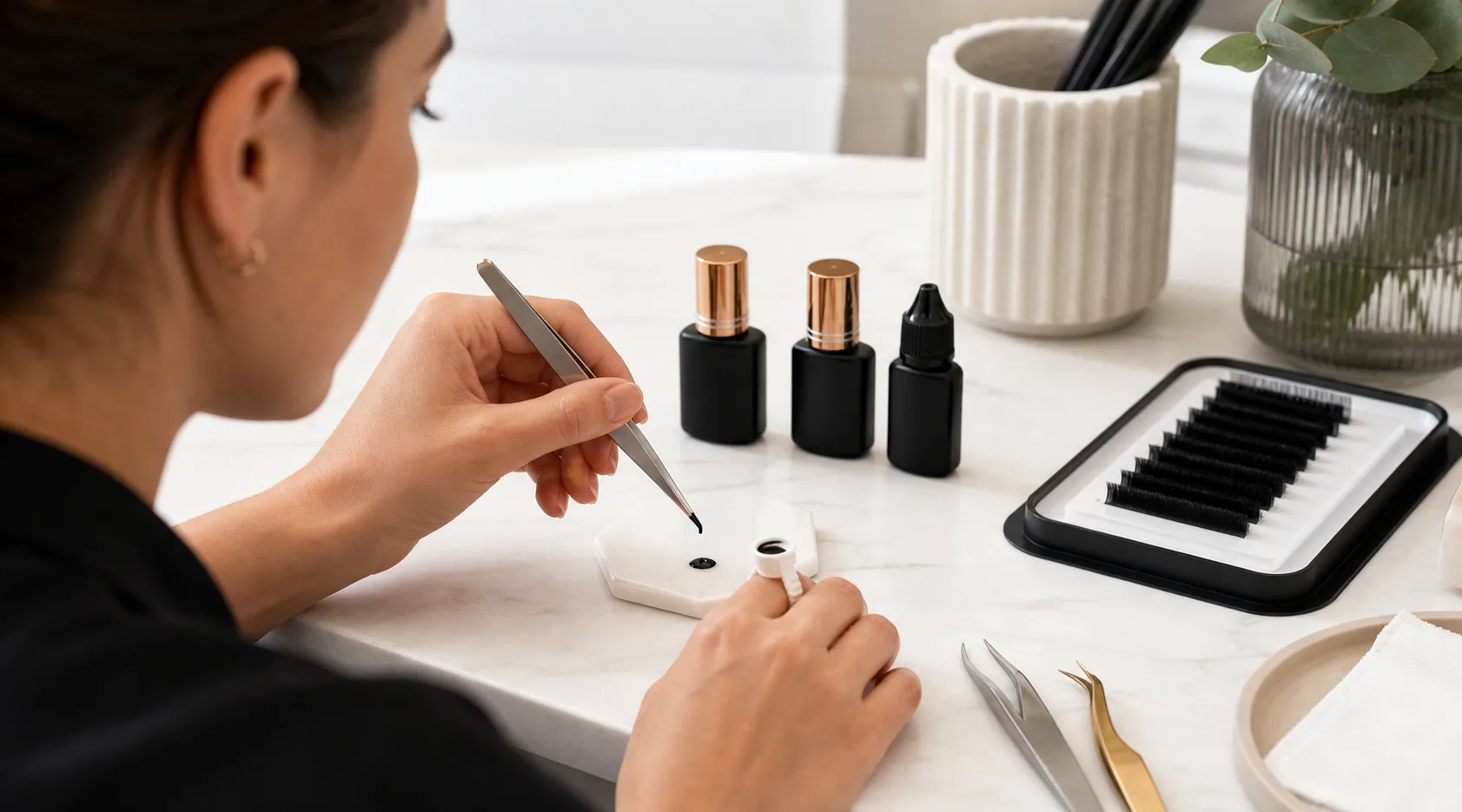
Once you know the client profile, compare how the adhesive behaves in real use. Drying speed affects working time, hold strength affects retention, and sensitivity support affects comfort. The right choice depends on which of those factors matters most for the client in front of you.
If you are choosing between options, use simple product filters such as faster set time, stronger bond, or gentler wear to narrow the list. That makes it easier to match the formula to the appointment, the client, and the environment.
Match the glue to the client’s sensitivity level
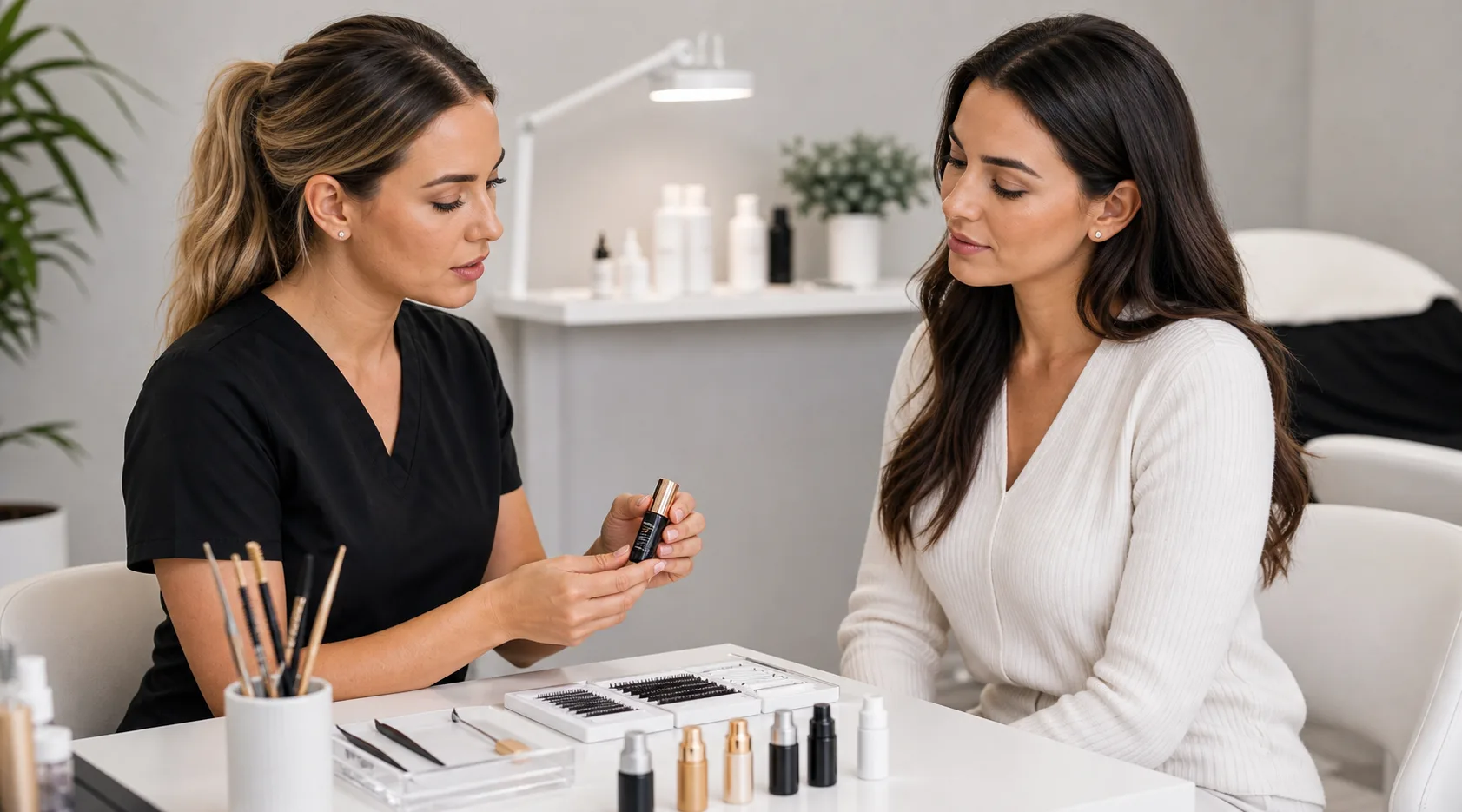
Not every client tolerates adhesive in the same way, so sensitivity should always be part of the decision.
Sensitive skin
For clients with sensitive skin, choose a sensitive or hypoallergenic lash glue. These formulas are typically gentler and are intended to minimize the risk of irritation. They are a practical first choice when you are trying to reduce the chance of a reaction while still maintaining good retention.
Oily skin
Clients with oily skin often need a stronger bond. A fast-drying or strong-hold formula is usually a better fit because oil can make it harder for the adhesive to stay in place. In real-world use, that means the adhesive needs to grab quickly and hold firmly enough to resist natural skin oils.
Dry skin
Clients with dry skin may benefit from a glue with a little more flexibility. That added elasticity can help the adhesive hold more comfortably without cracking. If the bond is too rigid, wear may be less stable over time.
Consider lifestyle and environment
Client lifestyle can be just as important as skin type.
Active lifestyles
If your client exercises regularly or swims often, choose a waterproof, long-lasting glue that can handle sweat and moisture. These clients tend to expose their lashes to more water, heat, and movement, so retention depends on a formula that can keep up.
Sensitive eyes
For clients who wear contact lenses or deal with eye allergies, a hypoallergenic, low-fume glue is recommended. This can help reduce the chance of irritation during wear and may be more comfortable during application as well.
High humidity environments
Humidity can affect drying time and overall performance. In humid conditions, choose a glue that is designed to perform well in moisture-heavy environments and still provide a strong hold. If the air is too damp for the formula, bonding can become less predictable, so climate is a real factor in glue choice.
Use patch testing as a safety step
Patch testing is always a smart step, especially for clients with sensitive skin or eyes. Apply a small amount of glue behind the ear or on the inside of the wrist before the full lash application to check for any allergic reaction or irritation.
This step does not replace a careful consultation, but it adds an extra layer of safety before a full set is applied. It is especially useful when the client is new, has a history of sensitivity, or has reported reactions to beauty products in the past.
Aftercare matters too
Even the right glue will not perform well without proper aftercare. Remind clients to:
- avoid excessive touching,
- avoid oil-based makeup removers,
- keep their lashes dry for the first 24 hours so the adhesive can bond properly.
These instructions matter because the adhesive needs time to set before it is exposed to moisture, friction, or oil. Good aftercare helps protect retention and keeps the finished look intact for longer.
Bringing the decision into your product selection
Choosing the right lash glue is really about matching the adhesive to the client. Start with sensitivity, then factor in skin type, lifestyle, and the environment where the lashes will be worn. That approach helps you improve comfort, retention, and safety at the same time.
For lash artists who want a brand-backed place to source adhesive options, Lashfine offers eyelash extension products designed with beauty professionals and brands in mind, along with customer care and private labeling support. If your client needs a fast-drying option, a sensitive formula, or a stronger-hold adhesive, the goal is to choose the category that fits the client profile first and the brand product second.
As a practical next step, browse Lashfine’s lash extension products and compare adhesive choices by drying speed, sensitivity level, and hold strength. If you stock products for multiple client types, Lashfine can also help you build a bundle-style retention assortment that keeps the right adhesive on hand for long-lasting results.
FAQ
What lash glue should I use for sensitive clients?
Choose a sensitive or hypoallergenic glue with a low-fume formula to help minimize irritation.
What type of lash glue works best in humid conditions?
A stronger-hold glue that is designed to perform well in humidity is usually the better choice.
When should I choose a fast-drying lash glue?
Choose a fast-drying lash glue when you need quicker application and already work with confident placement speed. It is especially useful for experienced lash artists.
Why is patch testing important before a full set?
Patch testing helps check for irritation or allergic reaction before a full application. It adds a simple safety step for sensitive or first-time clients.