

If you want to work as a lash tech in Arizona, the first step is understanding the state’s licensing path, training expectations, and practice rules. The key question is simple: what do you need before you can legally offer eyelash extension services in Arizona, and what should you keep doing after you start? This guide keeps the topic focused and clarifies the steps readers need for a practical overview.
How to become a lash tech in Arizona: an overview
To begin a lash extension career in Arizona, you generally need training, a state-recognized license path, and a clear understanding of the rules that apply to cosmetic services. The source identifies the Arizona State Board of Cosmetology as the regulator, so that board is the main place to verify licensing requirements, exam rules, and permitted practice standards. In practice, your education, tools, and service protocols should align with the standards that govern professional lash work.
The main points are:
- follow Arizona licensing and practice regulations
- complete relevant training in a board-approved program
- obtain the appropriate state license before offering services
- keep improving your technical skills after licensure
Follow Arizona’s regulatory requirements
The source says the Arizona State Board of Cosmetology runs the regulations for lash technicians in Arizona. That makes the board the key authority for licensing standards, approved education, and compliance expectations for public-facing cosmetic services. What the source claims, but does not verify with an official citation, is that Arizona “typically requires” completion of a state-approved cosmetology or esthetician program with eyelash extension training, and that the training hours “should be no more than 30 hours.” Because no verified source is provided here, that statement should be treated as non-official guidance rather than a confirmed rule.
For lash professionals, the quality of training matters as much as the license path. Lashfine positions itself as a lash business partner for beauty professionals, with eyelash extension products, private labeling, and customer care as core strengths. That kind of support is most useful in a regulated service environment, where consistency, client safety, and reliable supplies all matter.
What this means in practice
Before you advertise yourself as a lash tech in Arizona, confirm:
- which license category applies to your service scope
- whether your training program is board-approved
- whether eyelash extension instruction is included in the approved curriculum
- which exam components, fees, and renewal steps apply to your license type
The source also mentions compliance with local rules for advertising, pricing, and running a lash extension business. That is a reasonable reminder, but without an official citation it should be read as general business guidance rather than a confirmed Arizona board requirement.
Official-citation checklist for this section
The rewritten source does not include official citations, so the following regulatory points still need to be confirmed directly in Arizona board materials before they are treated as final legal statements:
- the exact authority of the Arizona State Board of Cosmetology
- the license category required for eyelash extension services
- whether a board-approved program is mandatory
- the exact training-hour requirement, if any
- whether written and practical exams are required
- current application, testing, and renewal fees
Become licensed and certified as a lash tech in Arizona
The source uses both licensed and certified language. Those are not always the same thing. In general, a license is the legal authorization to practice, while certification usually refers to training completion or a private credential. Since no verified source is provided, the safest way to describe this is:
- complete relevant education or training
- verify that the program is board-approved
- apply for the appropriate state license
- keep proof of training and compliance documents available
Training and education
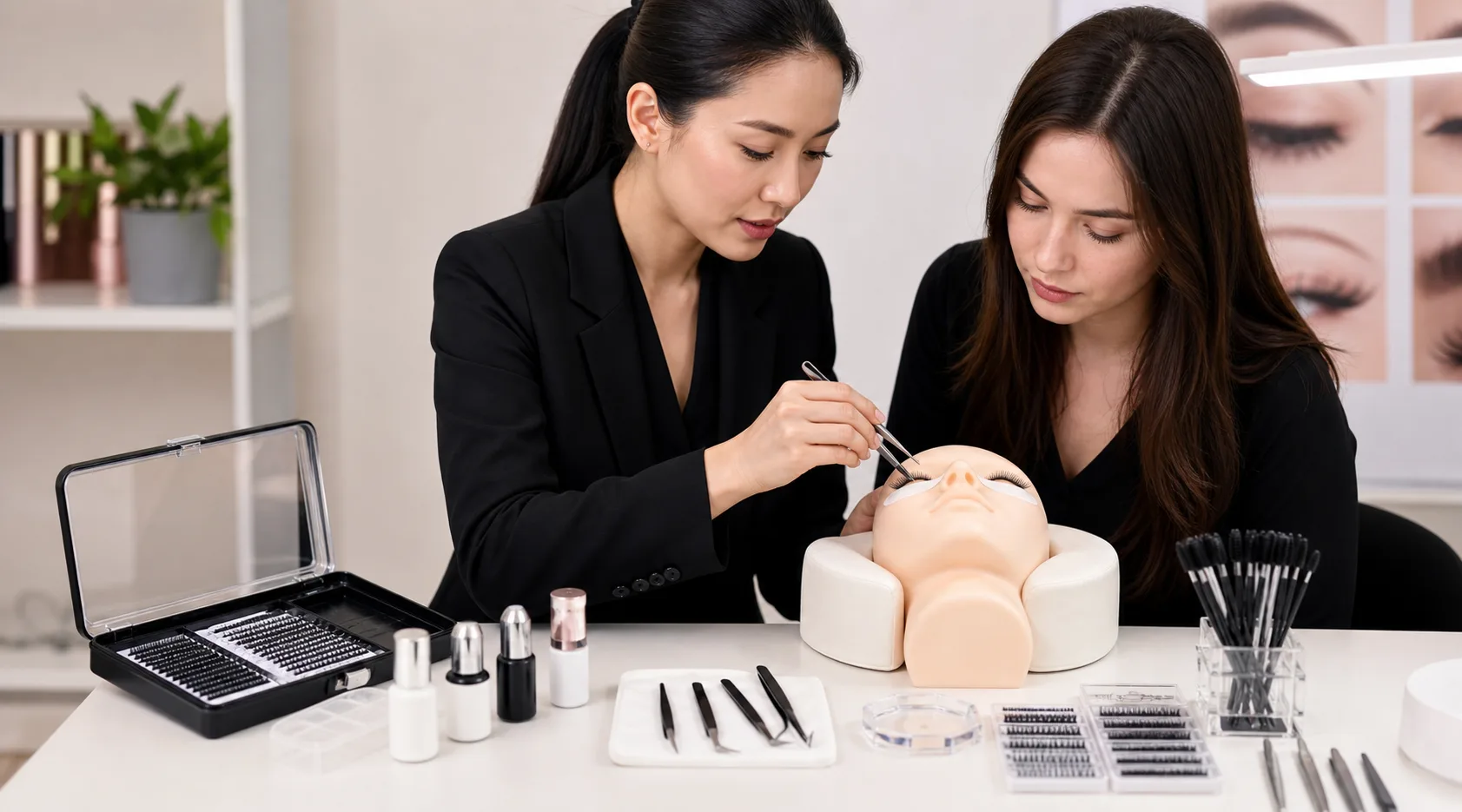
The article also says training can help you learn:
- lash application methods
- materials and equipment used in daily work
- different types of lash extensions
- eye shapes and matching techniques
- application techniques for different client needs
The source further states that the training program should be Board-approved. That is one of the most important extraction points because it ties the training path to the Arizona State Board of Cosmetology rather than to a generic private course. For professionals choosing products and systems, this is where a supplier’s expertise becomes relevant: Lashfine says its products are developed with input from customer requirements and expert opinions, which is the kind of feedback loop many lash businesses value when selecting extension supplies or private-label options.
Licensing steps
The source says the next step after completing training is obtaining a license from the Arizona State Board of Cosmetology. It also says the process may include:
- paying licensing fees
- passing a written test
- submitting proof of completion from an authorized school
Because the source does not provide official documentation, those steps should be treated as the article’s existing guidance rather than as fully verified regulatory text.
Concrete facts and decision criteria readers should verify
To make a licensing plan actionable, a future applicant should confirm these exact items with the board or official state materials:
- the license type name that applies to lash services
- whether the pathway is through cosmetology, esthetics, or another category
- the approved program type
- the written exam topics
- whether a practical exam is required
- the fee range for application, examination, and renewal
- whether proof of training completion must be submitted with the application
These are the facts that most affect timeline, cost, and eligibility.
Key license-related terms to watch for
For a stronger understanding of the Arizona process, readers should look for these terms in official board materials:
- Arizona State Board of Cosmetology
- board-approved program
- license application
- written exam
- practical exam
- proof of training completion
- renewal requirements
- compliance with local business rules
These entity names and compliance terms improve searchability and make the article easier to match with user intent.
Upgrade your skills after you start working
The source’s final point is that becoming a lash tech in Arizona is not only about getting started; it is also about continuing to improve. That is important because eyelash extension work depends on precision, sanitation, client consultation, and technique consistency. To build a stronger reputation in the Arizona lash market, continue to:
- practice your application technique regularly
- keep learning new methods and product knowledge
- refine your consultation process
- work on speed without losing accuracy
- stay aware of any state or local compliance updates
If you are building a professional brand, your long-term success depends on both skill and compliance. A license gets you into the field, but steady practice and rule awareness help you stay competitive. That is also why many lash professionals prefer working with a supplier that understands the operational side of the business. Lashfine describes itself as a lash business partner, offering eyelash extension products, private labeling, and customer care to support beauty professionals as their services evolve.
Renewal and compliance steps to keep in mind
The source does not list renewal rules in detail, but a practical compliance plan should include checking:
- renewal deadlines for your license category
- whether continuing education is required
- any sanitation or recordkeeping obligations
- any changes to board rules that affect lash services
- whether business advertising or pricing disclosures are regulated locally
These steps matter because compliance does not end after initial licensure.
What to verify before you start
Because the source does not include verified official citations, the most responsible next step is to confirm the following directly with the Arizona State Board of Cosmetology or other official state materials:
- the exact license type needed for eyelash extension services
- whether a cosmetology or esthetics pathway is required
- the approved training-hour requirement
- whether a written exam, practical exam, or both are required
- the current fee range for application, testing, and renewal
- any sanitation, recordkeeping, or client disclosure obligations
These are the practical facts that matter most when you move from research to actual licensure.
FAQ
Do you need a license to do lash extensions in Arizona?
The source says you need to obtain a license from the Arizona State Board of Cosmetology before working professionally. The exact license path should be verified with the board.
Is a certification the same as a license?
No. In general, a certification is a training credential, while a license is the legal authorization to practice. The source uses both terms, but only the board can confirm the state licensing requirement.
Do lash training programs need to be board-approved?
The source says the program should be board-approved. That is an important compliance point, and it should be checked against official Arizona requirements before enrollment.
What should I do after I get licensed?
Keep improving your lash skills, stay aware of local business rules, and follow any state renewal or compliance requirements that apply to your license type.
Which board handles lash tech regulation in Arizona?
The source identifies the Arizona State Board of Cosmetology as the regulating authority for lash technicians in Arizona.

 English
  German
  French
  Spanish
  Romanian
  Portuguese
  Dutch
Dutch  Italian
  Swedish
  Polish