

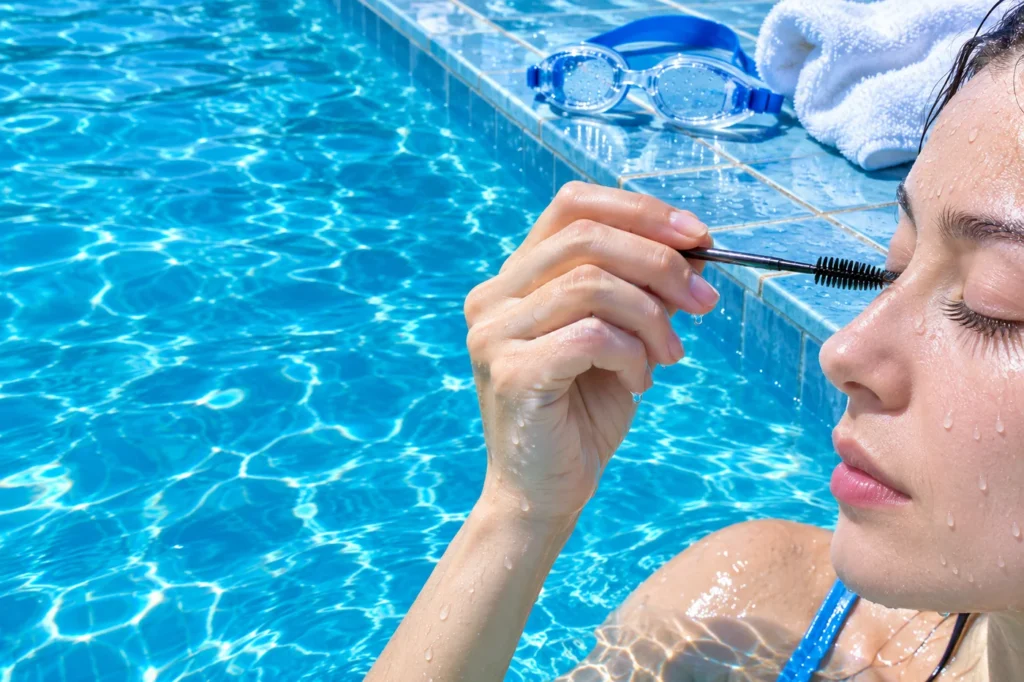
Yes, you can swim with lash extensions. Every page on the first page of Google says so, and most of them add the same two-word caveat: yes, but. Almost none of them explains what the but refers to, which is why the question keeps being asked.
The honest answer is more specific. Water is not what removes extensions. What removes them is a combination of three things that swimming happens to deliver together: prolonged soaking, chemical residue left to dry on the bond, and friction from drying your face afterwards. Two of those are controllable in about ninety seconds, and the third is a habit.
One claim needs correcting before anything else, because it sits at position three in the US results: there is no such thing as a waterproof eyelash extension.
There Is No Such Thing as a Waterproof Extension
An extension is a synthetic fibre. The fibre is not the component that fails in water – it is inert. What holds the extension on is a cured cyanoacrylate adhesive, and the water resistance of that adhesive is a property of its formulation, not a default.
This is not a marketing distinction. Water-resistant cyanoacrylates exist as a specific industrial grade, formulated and sold as such (Permabond’s 712 is one example, documented by the manufacturer), precisely because standard cyanoacrylate is not water-resistant by nature. Standard formulations show limited resistance to moisture-induced degradation, with bond strength declining progressively under sustained moisture exposure.
Read that against a supplier page claiming “waterproof eyelash extensions are suitable for swimming” and the confusion is obvious. What a lash adhesive offers is resistance to brief contact with water once fully cured. That is enough for a shower and a swim. It is not the same as being unaffected by water, and no adhesive used on a lash is.
What Water Actually Does to the Bond
Three separate mechanisms are usually bundled into the phrase “water damages lashes”, and they operate on different timescales.
Soaking is the slowest. A cured bond exposed to water for minutes at a time is fine; the polymer does not dissolve. Sustained exposure – a long bath, a hot tub, an hour of lap swimming – gives moisture time to work into the bond interface, and the degradation that follows is cumulative rather than sudden. This is why a swimmer notices a set getting thinner over weeks rather than losing lashes in the pool.
Residue is faster. Chlorine and salt do not evaporate cleanly. Left to dry on the lash line, they concentrate at the base, and the next thing that happens is the client rubbing the itch they create. Salt also draws moisture out of the natural lash and the fibre, which makes both feel stiffer and more brittle.
Friction is fastest. A towel dragged across the face is a mechanical peel applied to every bond at once. This single habit accounts for more “they fell out after swimming” complaints than chlorine does, and it happens in the thirty seconds after leaving the water.
The One Hard No
The adhesive continues to cure for roughly 24 to 48 hours after application. Swimming inside that window is the one situation with no workaround: the bond is still forming, and water at that stage interferes with it in a way that no aftercare routine can repair.

Everything else is a matter of degree. A swim on day three is a different proposition from a swim on day one, and a client who books a set the day before a beach holiday has made a scheduling error that the technician should catch at booking, not at the door.
A Protocol That Holds
The routine below is what the evidence supports, in the order it happens.
Before swimming. Brush the lashes with a clean spoolie so they are separated rather than clumped. Keep sunscreen, oils and eye cream away from the lash line – this is the same oil problem that applies to makeup, and it is worse in the sun because sunscreen gets reapplied. Goggles protect the bond from the water entirely, and for a regular swimmer they do more than any product.
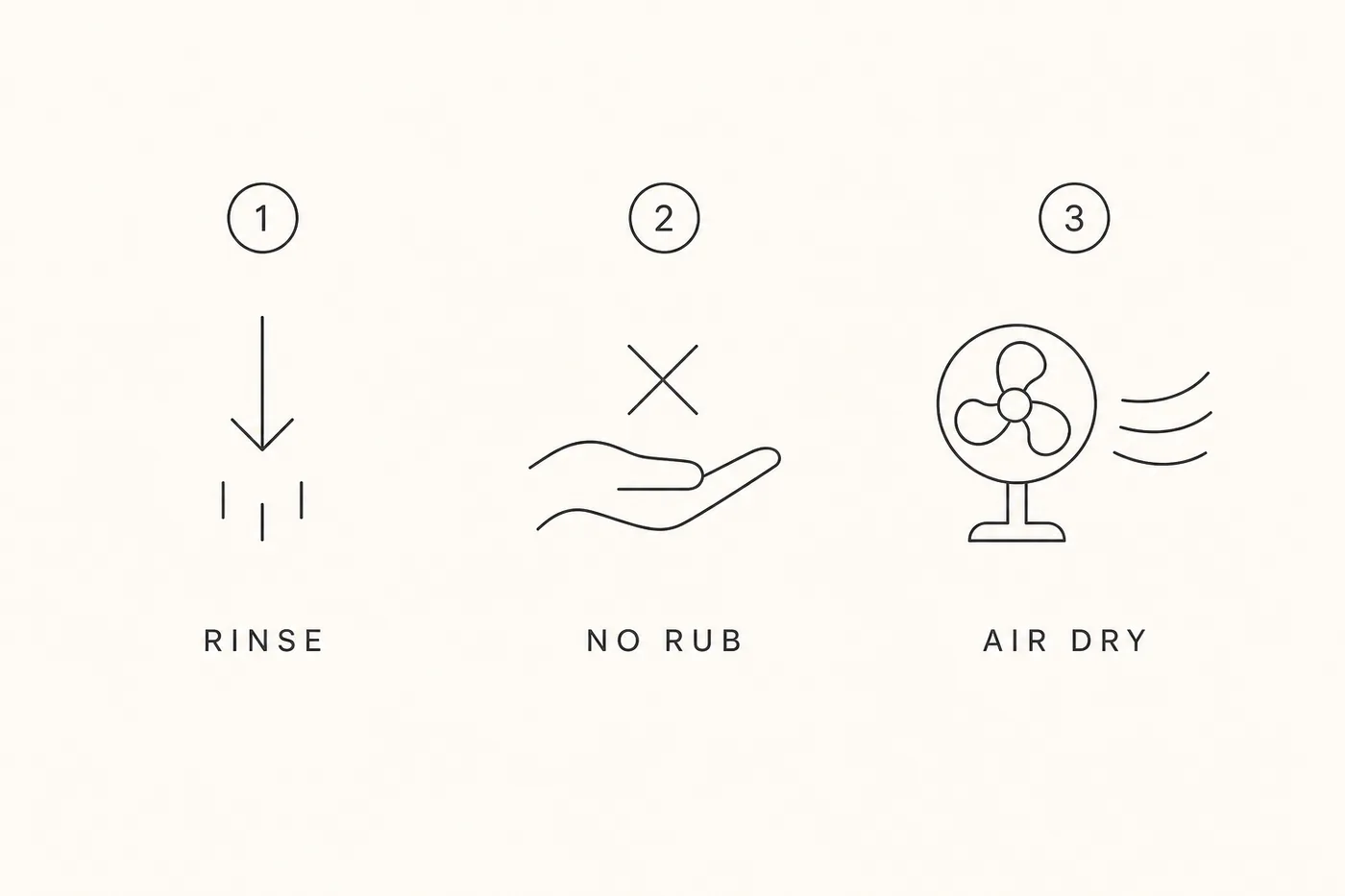
After swimming. Rinse with clean, cool water within minutes – the point is to remove chlorine and salt before they dry, not to “wash the lashes”. Do not rub. Do not use a towel on the eye area; use a cool setting on a hairdryer, a small fan, or simply blink and let them air dry. Cleanse properly later, at home, with a lash cleanser rather than a makeup wipe.
Do not stack exposures. Swimming, then a sauna, then a hot tub is three soaking cycles on the same afternoon, and it is the pattern that produces the complaints. One water activity per day is a reasonable rule for a client who wants three-week retention.

Sweat Is Not Swimming
Sweat gets blamed for the same failures, and the comparison is worth making precisely because it changes the advice.
Sweat is saline, like seawater, but the volume and duration are different by orders of magnitude. A workout leaves a film on the skin; a swim immerses the bond. Sweat matters mainly because it carries residue into the lash line and because people wipe it away with whatever is closest – a towel, a sleeve, a hand.
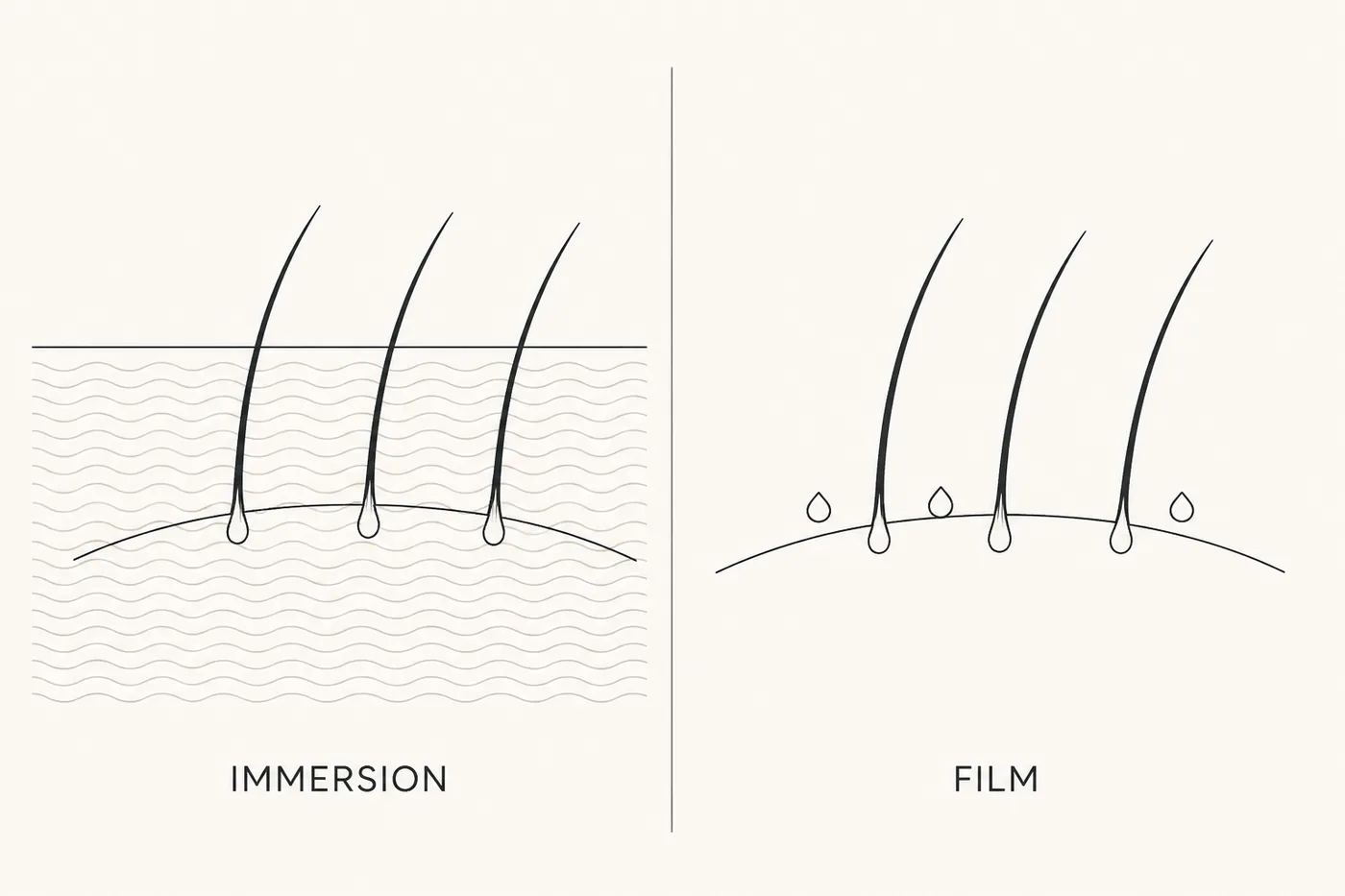
So the advice for a client who trains is not “avoid sweating”. It is: pat rather than wipe, wear a sweatband so forehead sweat does not run into the lash line, and cleanse at the end of the day rather than letting residue sit. The mechanism is residue and friction again, not the salt itself.
The Honest Maintenance Conversation
A client who swims three times a week will not get three-week retention, whatever product the technician uses. The realistic cadence for a regular swimmer is a refill every two weeks, and the set will read thinner in the last few days of that cycle.
That is not a failure of the adhesive. It is the same natural lash cycle that removes extensions from non-swimmers, running at a faster apparent rate because the additional factors above are also in play. The mechanics of that cycle are covered in how long lash extensions last.
The conversation worth having at booking is therefore about frequency, not about products. A client who wants a set for a two-week holiday will be delighted. A client who swims daily and expects to forget about her lashes for a month should be told, before she pays, that a lash lift or a tint may suit the goal better – even though neither is what she came in for.
Where the Routine Fits
Swimming is one activity in a wider aftercare picture. The first-48-hour rules, the daily cleanse and the refill cadence are set out in lash extension aftercare, and the product question – what a cleanser should and should not contain – is covered in the guide to lash shampoo.
A sealant is sometimes offered as protection for swimmers. It is worth being precise: a lash sealant adds a thin coating over the cured bond, which can slow the accumulation of residue, but it does not make the bond waterproof and it does not survive friction any better than the bond does. It is a small improvement, not a licence to skip the rinse.
FAQ
Can you swim with lash extensions? Yes, after the first 24 to 48 hours while the adhesive finishes curing. Rinse with clean water immediately afterwards, do not rub, and dry without a towel.
Does chlorine ruin lash extensions? Chlorine is an oxidiser and repeated exposure is the pattern associated with faster bond fatigue, but the bigger contributors are residue left to dry and the rubbing that follows. Rinsing within minutes addresses most of it.
Can you go in a sauna or hot tub with extensions? Brief exposure is generally tolerated; the problem is stacking several soaking activities in one day. If a client wants three-week retention, one water activity per day is a practical limit.
Do you need to wash lashes after swimming? Rinse immediately with clean water, then cleanse properly at home with a lash cleanser. Rinsing removes residue; cleansing removes oils and debris.
Are waterproof lash extensions a real thing? No. The fibre is inert and the adhesive is water-resistant rather than waterproof. Any claim of waterproofing describes a formulation property at best, and overstates it at worst.
The Short Version
Swimming does not remove extensions. Soaking, residue and friction do, and only one of those is unavoidable.
Rinse within minutes, dry without a towel, keep oils off the lash line, do not stack water activities, and expect a two-week refill cadence if you swim regularly. That is the entire answer, and it holds whether the water is chlorinated, salty or coming out of a shower.
One disclosure: we manufacture lash extensions and adhesives, so we benefit when a set retains well and from the refills that follow. That is why this piece says plainly that a daily swimmer may be better served by a lift, and why it corrects a “waterproof” claim that would make our own category look more durable than it is.

 English
 German
 French
 Spanish
 Romanian
 Portuguese
 Dutch
 Italian
 Swedish
 Polish