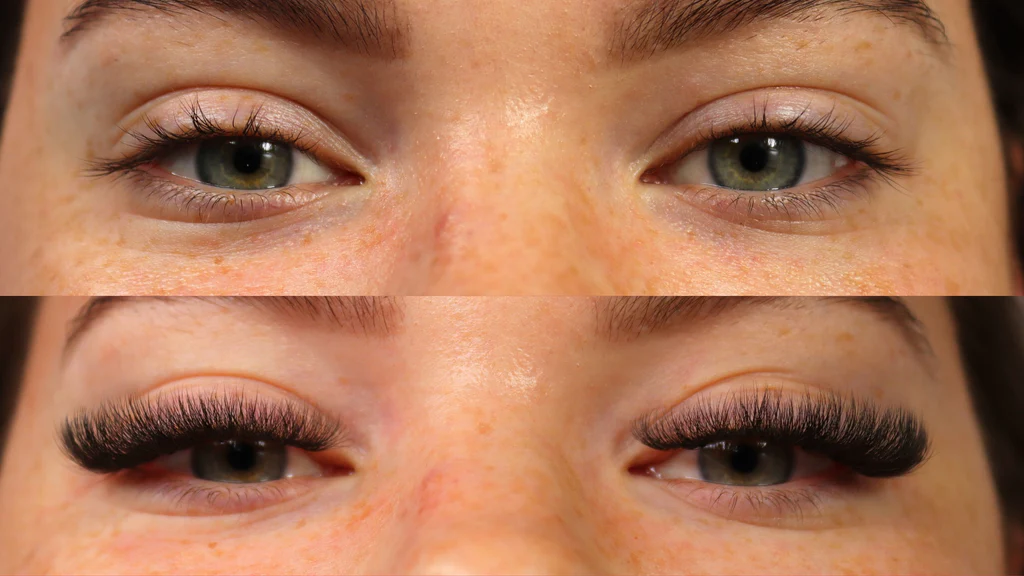
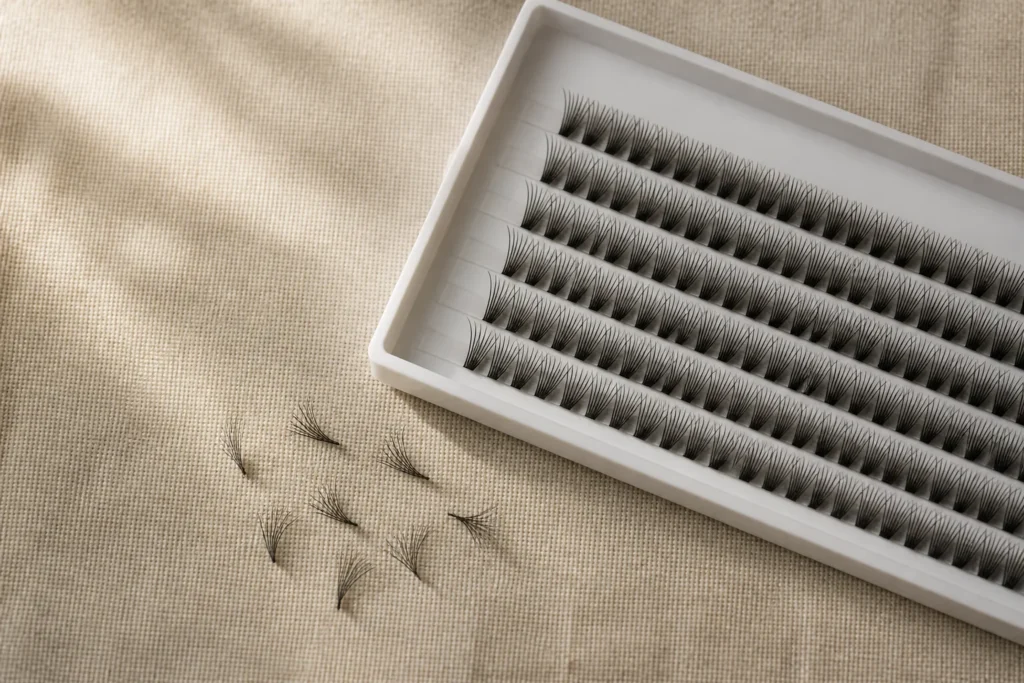
“Cashmere” on a lash tray label raises two questions every buyer eventually asks: what is actually different about the fibre, and is the difference worth paying for? The term is not regulated, so trays labelled cashmere vary widely — which is exactly why it pays to understand the two properties the name is supposed to signal, a soft matte finish and a fine tapered tip, and to check for them on every row before buying in quantity. This guide covers what cashmere lash extensions are, how they compare with silk and mink-look fibres, which clients they suit, and a tray-level checklist for salons and wholesale buyers.
What “Cashmere” Means in a Lash Tray
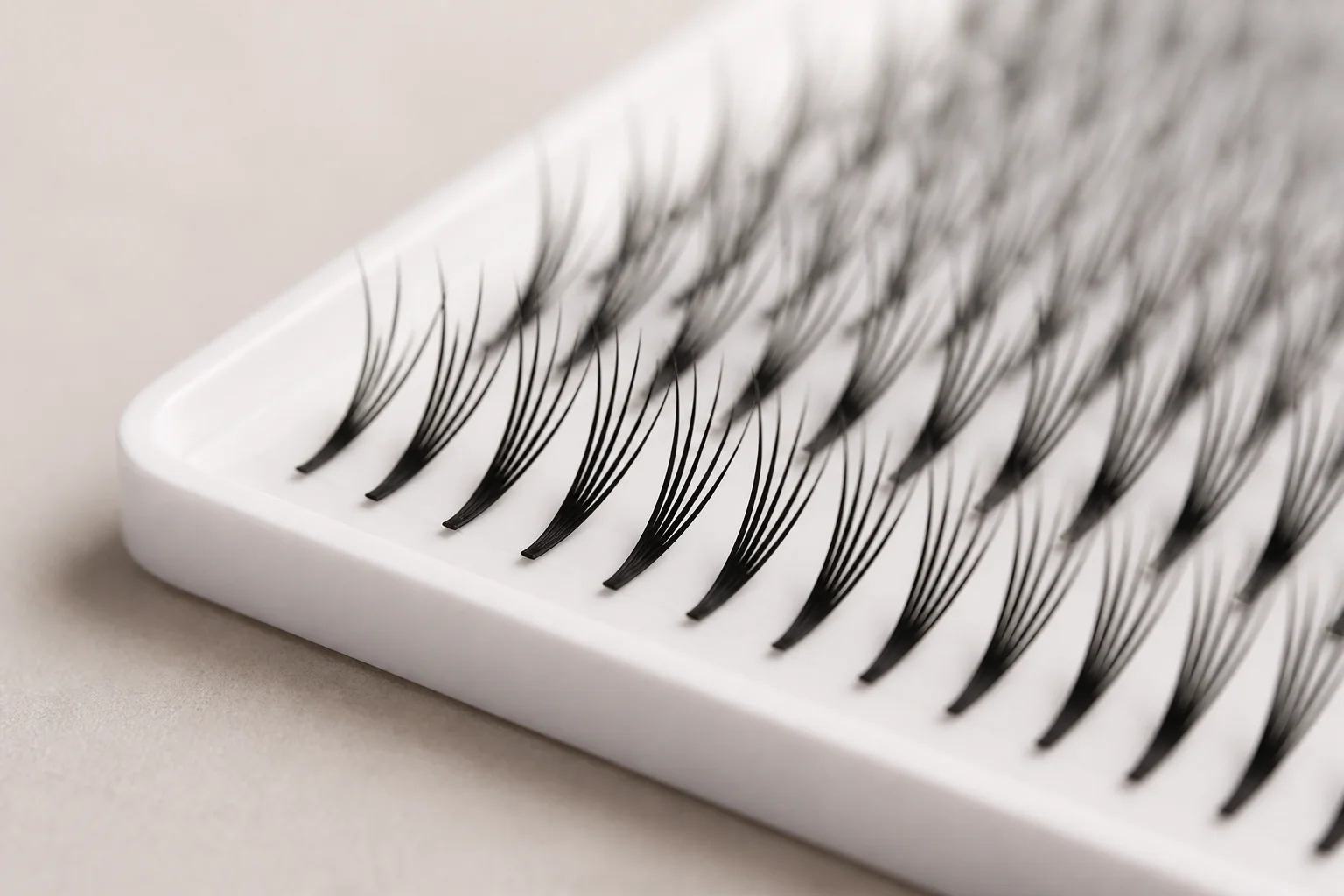
Cashmere lash extensions are synthetic fibre extensions, usually PBT-based, finished to look and feel softer than a standard glossy classic lash. Two properties carry the name. The first is finish: where a classic lash reflects light along its length, a cashmere fibre is treated to scatter light, giving a matte, powdery look that reads closer to natural hair. The second is taper: cashmere fibres are drawn to a finer point along more of their length, so the tip looks softer and the set looks feathered rather than drawn-on.
Two things the name does not mean. It does not mean animal fibre: professional cashmere lashes are synthetic, and any tray claiming animal origin should be treated as a compliance problem, not a premium. And it does not, by itself, guarantee weight or thickness; a cashmere-labelled fibre can be produced in the same thicknesses as classics. When a supplier markets cashmere as “lighter”, ask which measurement they mean, because finish and taper are visual properties, not weight claims.
Cashmere vs Silk vs Mink-Look: The Comparison That Matters
Buyers usually arrive with one of two questions: silk vs cashmere lashes, or are cashmere lashes better than mink. Both resolve into the same three columns.
| Property | Classic / silk-look | Cashmere | Mink-look |
|---|---|---|---|
| Acabamento | Glossy, light-reflecting | Matte, light-scattering | Semi-matte, irregular |
| Tip | Blunt to lightly tapered | Fine, long taper | Irregular, wispy |
| Read on the eye | Defined, “done” lash line | Soft, natural, powdered | Fluffy, textured |
| Best client | Wants visible definition | Wants natural matte look | Wants wispy volume look |
Mink-look fibres imitate the irregularity of real mink without animal material; their appeal is texture, and their risk is inconsistency row to row. Silk-look is the glossy classic end of the range. Cashmere sits between them: consistent like a classic, but matte and tapered like a natural lash. “Better” therefore depends on the look being sold, not on the fibre label — a client asking for a soft no-makeup set is a cashmere client, while a client asking for a glossy defined line is a classic client.
Who Suits Cashmere Lashes
Cashmere earns its place on three client types. Fine or sparse natural lashes: the matte finish and fine taper avoid the heavy contrast a glossy fibre creates against thin natural hair, so the set blends instead of sitting on top. Clients who wear matte or minimal makeup: a glossy lash line fights a matte base, while cashmere matches it. First-time extension clients: the softest possible read reduces the “shock” factor that makes some new clients remove a set in week one.
Conversely, clients who want maximum visible drama — deep black glossy lines, strong eyeliner effect — are better served by classic or volume styles, and saying so at consultation prevents a retention complaint later. Our guide to diferentes tipos de extensões de cílios para os compradores covers how these families map to client requests in general.
Structure Options: Cashmere Classics and Cashmere Premade Fans
Cashmere is a fibre finish, not a structure, so it appears in both single-lash and fan formats. Cashmere classics behave like any classic: one fibre per natural lash, isolated and placed as usual. Cashmere premade fans bring the matte finish into volume work without the glossy fan look; because the fibres taper finely, fans read airier at the same strand count.
If you are deciding between handmade and premade formats for cashmere work, the trade-offs are the same as for any fibre: handmade gives full control of fan shape, premade gives speed and consistency. Our leques de pestanas feitos à mão versus pré-fabricados comparison covers that decision in detail, and our YY lashes guide explains the forked structure that sits between singles and fans if you want a textured look without full volume.
Application and Aftercare Notes
Application does not change with the finish: isolation, adhesive amount and placement follow your usual protocol, and cashmere fibres bond with the same adhesives as classics. Two practical notes matter. Matte fibres show adhesive residue more readily than glossy ones, so keep the dip small and wipe the tip before placement; a visible glue bulb on a matte fibre reads as a white speck. And because the selling point of cashmere is a soft natural finish, aftercare matters more than usual: oil-based cleansers and rubbing flatten the feathered read faster than clients expect, so pair the set with a proper lash cleanser recommendation at checkout.
Retention expectations should be set the same as for classics of equal thickness; the finish does not change bond strength, and any supplier claiming otherwise is marketing, not physics.
Common Misconceptions About Cashmere Lashes
Three claims circulate that do not survive inspection. “Cashmere is lighter.” Finish and taper are visual; weight follows thickness and length, which are specified separately. “Cashmere is animal-derived.” Professional trays are synthetic; animal-origin claims are a compliance red flag. “Cashmere holds curl worse.” Curl is set during manufacturing and is independent of surface finish; if a cashmere batch loses curl, that is a batch quality problem, not a property of cashmere.
Knowing these three lets you evaluate a tray on what it actually is: finish consistency and taper uniformity, row by row.
A Tray-Level Buying Checklist
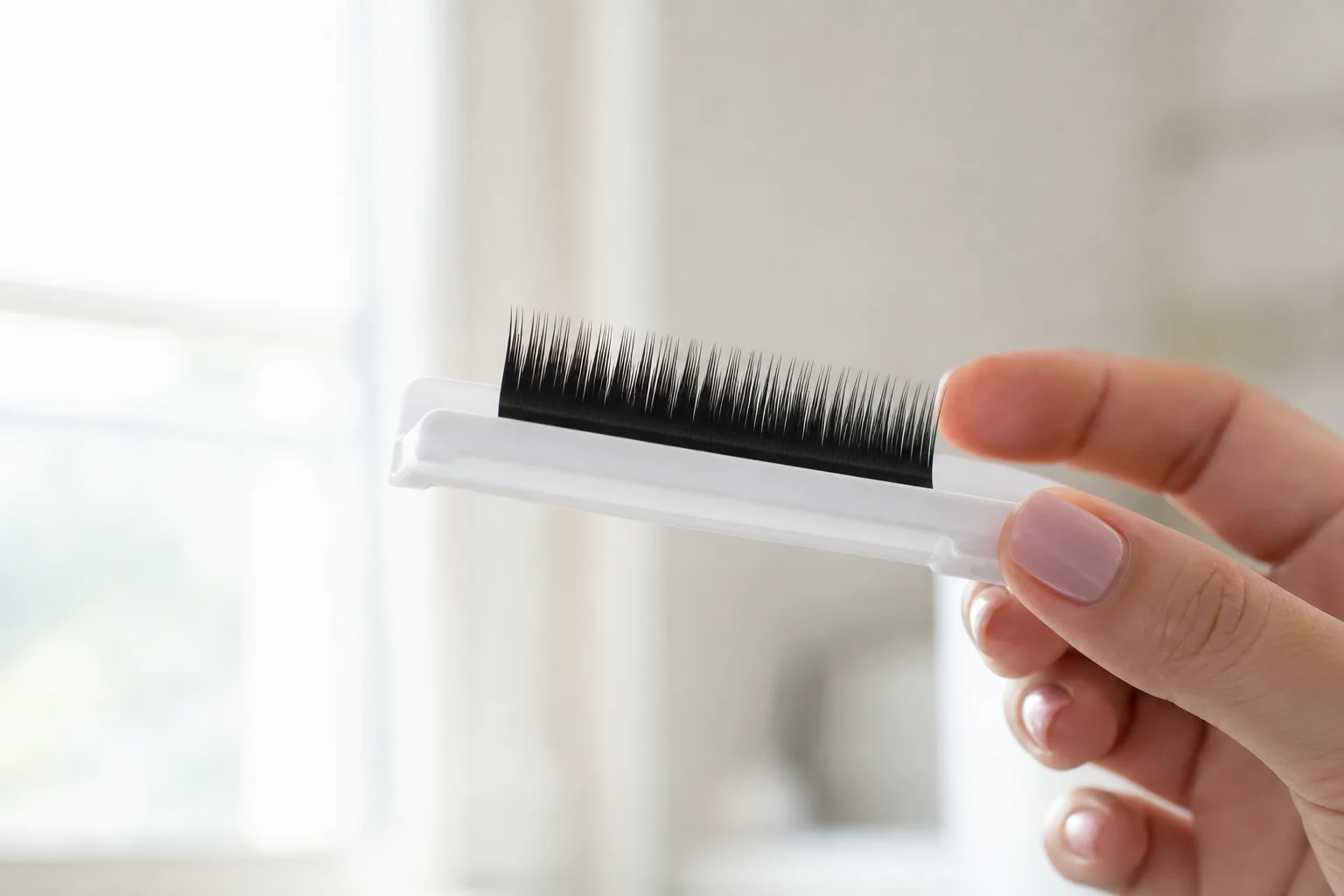
Judge samples on five points before pricing. Finish consistency: hold a row against the light and confirm every fibre scatters light the same way; glossy stragglers in a matte row show mixed batches. Taper uniformity: under magnification, tips should narrow gradually and evenly; blunt or hooked tips in a “cashmere” row mean the drawing process was not controlled. Base quality: bases should be clean and uniform so bonding stays predictable. Tray labelling: curl, length and thickness marked per row, not per tray. Sample policy: a supplier confident in batch consistency will send sample trays before a bulk order; our cílios cashmere ventiladores pré-fabricados are produced and sorted against exactly these checks.
For wholesale and private-label programmes, ask the same five questions about the production batch, not the showroom sample — consistency across batches is what keeps your artists’ work looking the same month to month.
Conclusão

Cashmere lashes are a finish and a taper, not a material and not a weight claim: matte, light-scattering fibres drawn to a fine point so sets read soft and natural. They suit fine natural lashes, matte-makeup clients and first-timers, and they apply and retain like any classic of equal thickness. Buy them the way you would judge any premium tray — finish consistency, taper uniformity, clean bases, clear labelling and a real sample policy — and the label stops mattering, because the rows themselves tell you what you are getting.