

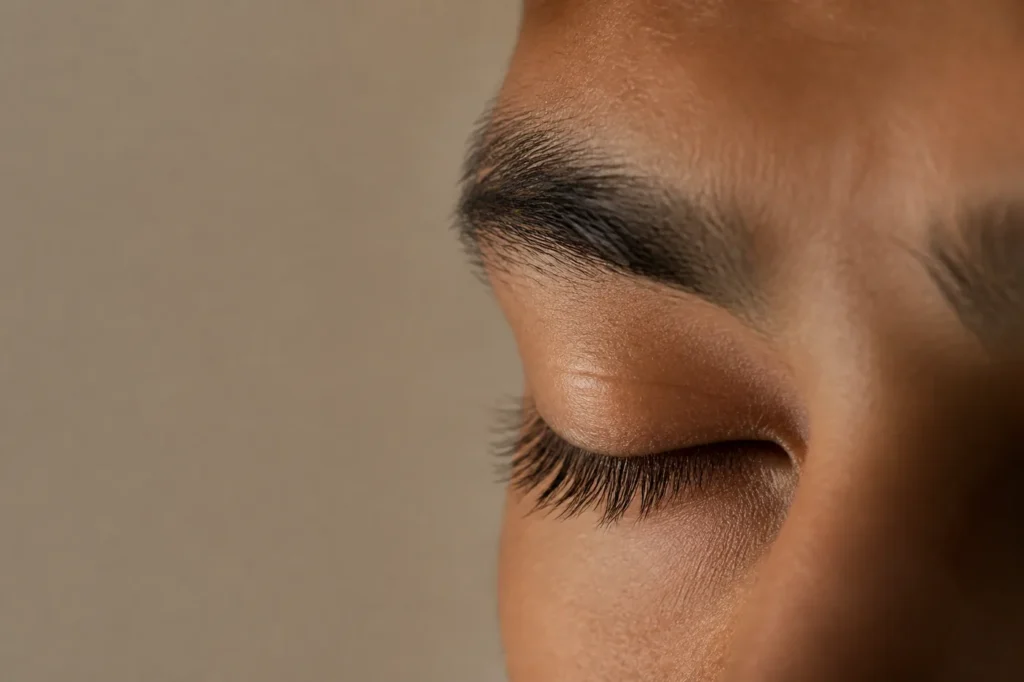
A lash lift is the only lash treatment that adds nothing. No fibre, no adhesive, no extension to maintain – the natural lashes are reshaped and left in place. For a male client who wants to look less tired without looking treated, that single fact is the entire case for it, and it is the reason a lift is usually the better first appointment than a set.
The US results for this query make the gap obvious. In the top six, one page is American and it is a salon service promo that calls a tint dye “100% safe” and quotes eight weeks without a source; another is a 2022 Instagram reel; another is an Australian salon post; the most technically useful result is a British supplier page that is mostly a product advert. Nobody explains what the treatment is doing to the fibre, and nobody tells a male client what the realistic disappointment looks like.
That is the job here: the mechanism, what it means for lashes that are typically coarse and irregular rather than short, and the four cases where it will not deliver.
Why a Lift Suits Male Lashes Specifically
The assumption that male clients need a gentler version of a female treatment gets the reasoning backwards. A lift does not depend on how much lash there is to work with nearly as much as a set does – it bends what already exists. If male lashes are frequently longer and stronger, that is more material to lift, not less.
The evidence on this is modest but consistent. A study of eyelash status across ethnic groups in Nigeria reported that males had longer upper eyelid eyelashes than females in all three regions examined. Salon accounts describe the same thing in practice, usually alongside the complaint that the lashes grow in every direction.
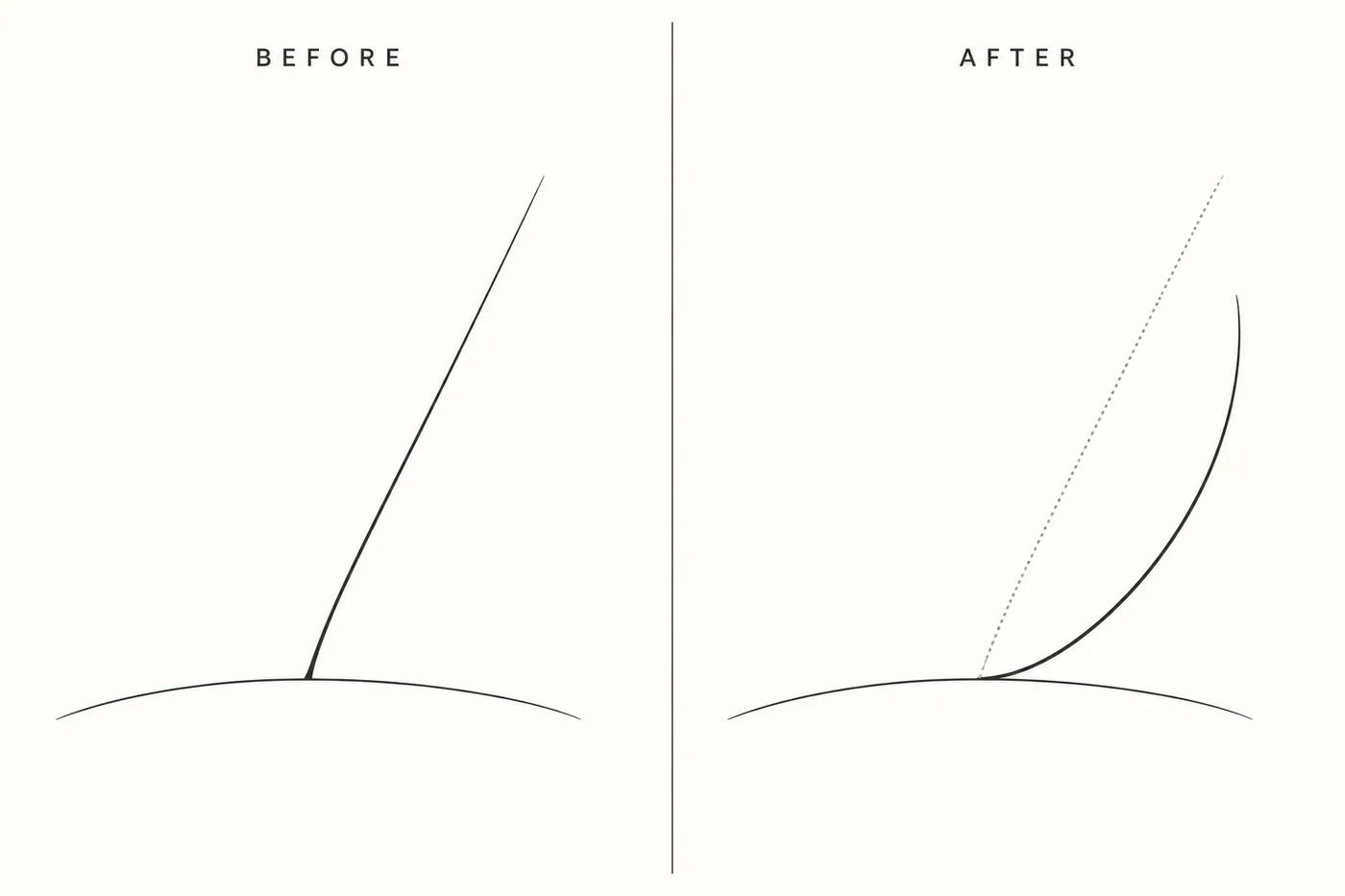
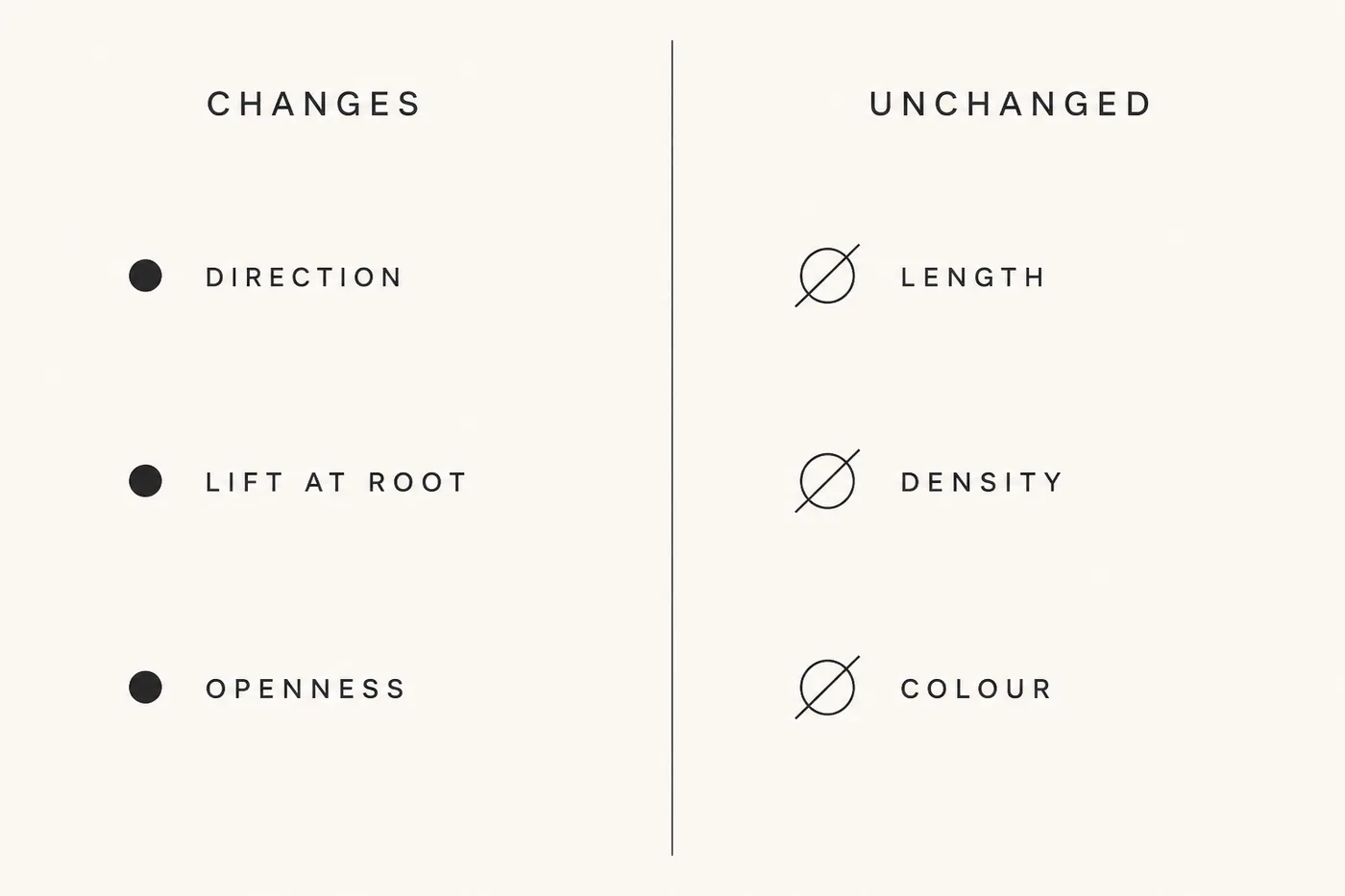
Direction, not length, is the actual problem a lift solves. Lashes that grow straight out or downward make an eye look smaller than it is, and a lift redirects them upward without adding anything a colleague could notice. That is a meaningfully different goal from a set, which changes density, silhouette and maintenance all at once.
What the Treatment Physically Does
Keratin holds its curve through disulfide bonds – cross-links between protein chains. A lift breaks a proportion of those bonds with a thioglycolate or cysteamine-based solution, moulds the softened fibre around a shield, and then re-forms the bonds in the new position with a setting lotion.
Published research on thioglycolate exposure in hair documents damage to cuticle cells, with breakages along the endocuticle and swelling of cortex cells (PMID 30417461). At the exposure times used in a correctly performed lift the effect is small, which is why the treatment is routine. But it explains the one risk that matters here: the failure mode of a lift is over-processing, and over-processing is a timing and strength decision, not a product-brand decision.
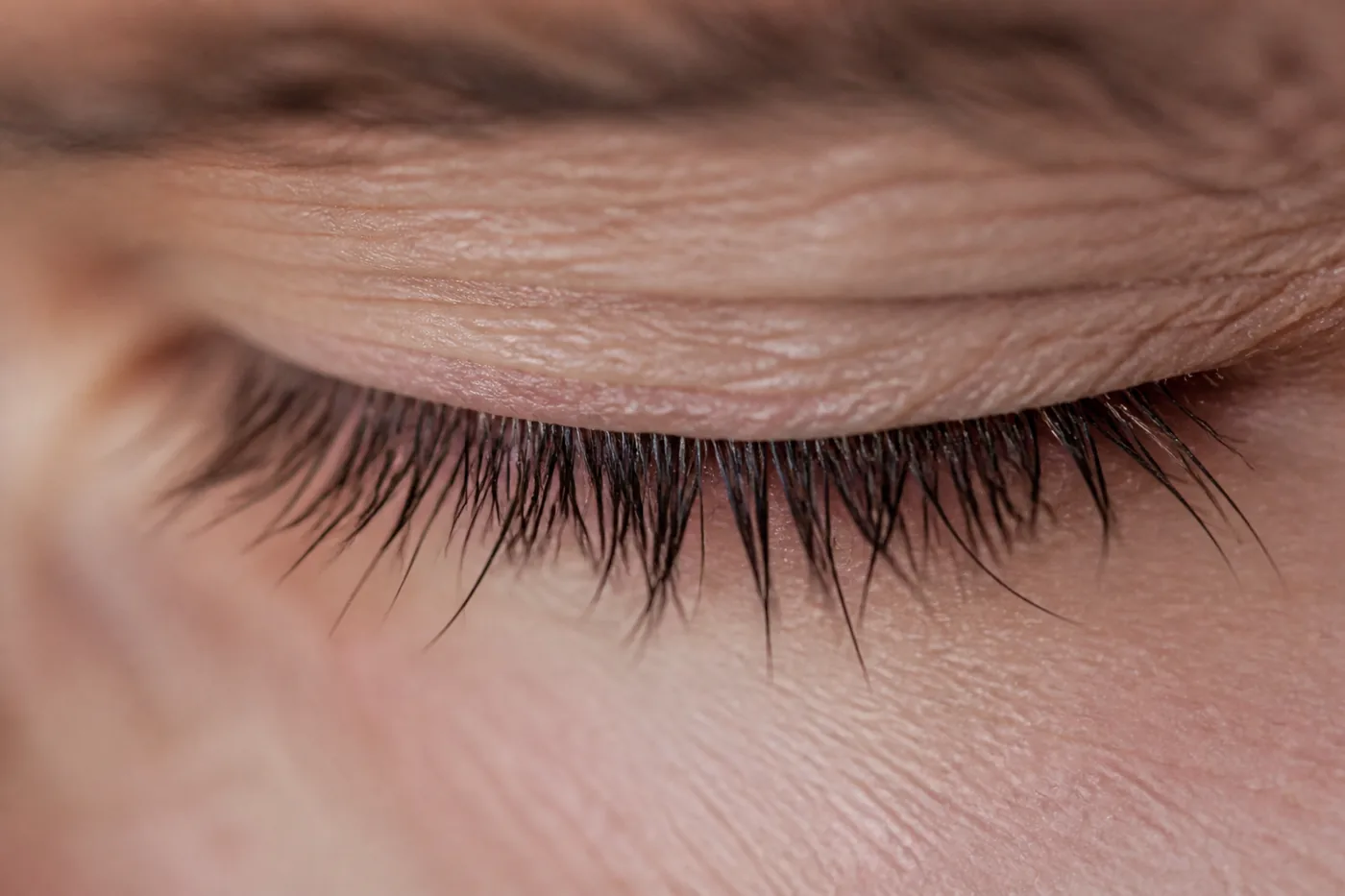
That matters more for coarse lashes. A thicker fibre resists reshaping, which tempts a technician to leave the solution on longer or reach for a stronger formulation. Both increase the cuticle insult, and the visible result – frizz, a hook at the tip, or lashes that kink within days – appears after the client has left. A strand test on a few lashes before committing the whole lash line is the cheapest safeguard available, and it is the step most often skipped.
Choosing the Shield and the Curl
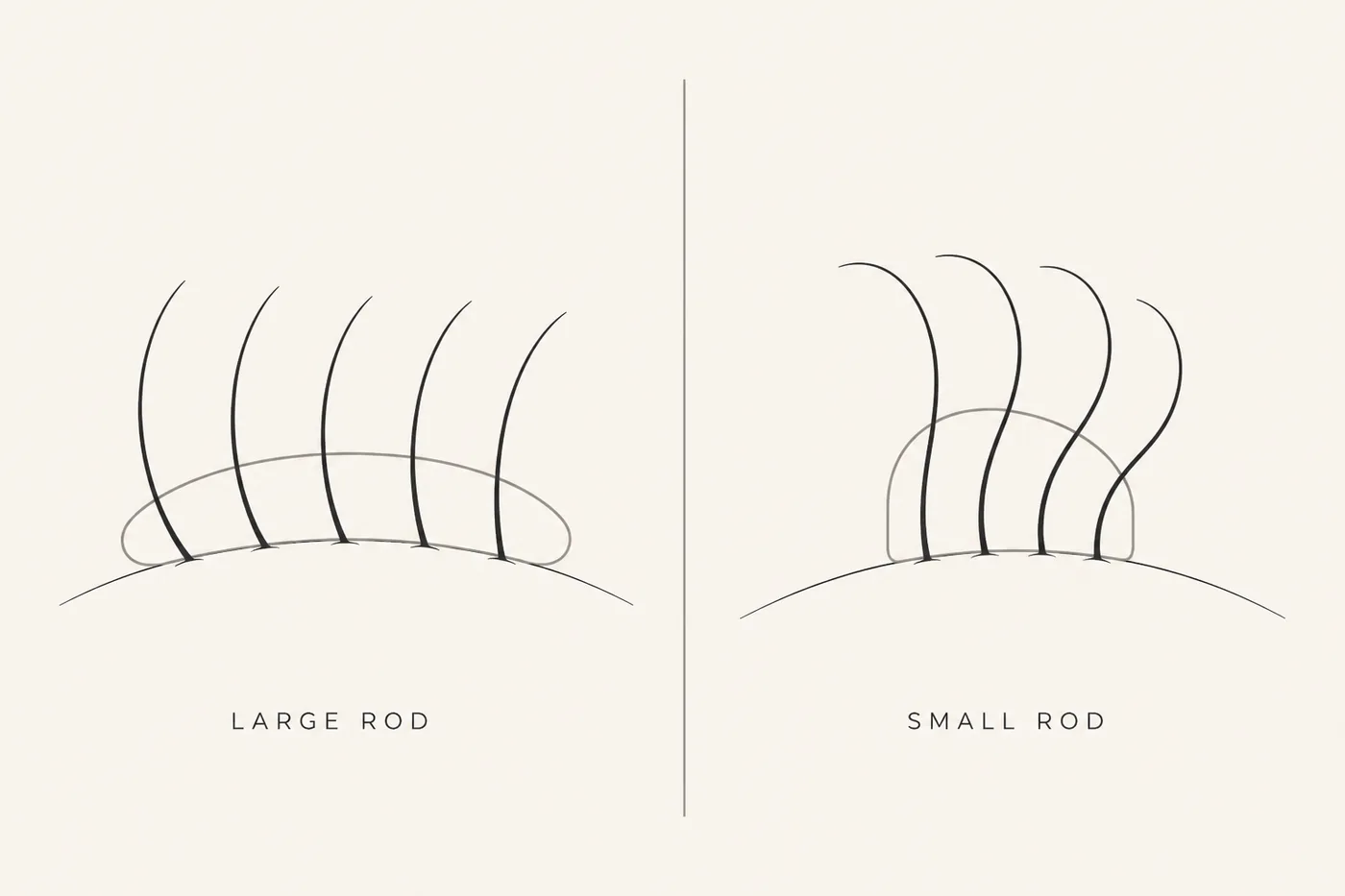
The number that decides whether the result looks treated is the shield size, not the solution.
A lift’s curl is set by the diameter of the rod the lashes are moulded around. Larger shields produce a softer, more open curve; smaller shields produce a tighter one. For a client whose goal is “no one should notice”, the larger end of the range is almost always correct, with a gentler curve that follows the existing lash direction rather than fighting it.
The same logic that governs curl in extensions governs it here: curl is what changes the silhouette, and silhouette is what people read as “done”. The curl families and how much each reads in profile are set out in the lash curl chart.
The Tint Question, Answered Honestly
Most men’s lash content bundles a tint with the lift, and most of the bundling is commercial rather than technical.
A tint darkens the lash. For a client with mid-brown or dark lashes, the visible difference is small, and the lift alone is doing the work. Where a tint genuinely helps is pale or greying lashes, or a client who wants the lash line to read darker without mascara.
It is not a free add-on. Tints use dye chemistry that can sensitise, they require their own patch test, and they add a second exposure on the same appointment after the fibre has already been through a reducing agent. If a client does not need it, the honest recommendation is to skip it – and a technician who explains why earns more trust than one who upsells a treatment with no visible benefit.
Where It Will Disappoint
Four honest failure cases, and all four are predictable before the appointment.
“Nothing looks different.” Because nothing is added, a client with long, dark, already-lifted lashes may see a change that is real but subtle. If someone is paying for a visible difference, a lift may not be the right purchase, and saying so is better than selling it.
“It stopped working after a month.” A lift holds for six to eight weeks, but the visual window is shorter: as the lash grows, the lifted section moves away from the lid and the transition reads as a bend. The mechanics of that are covered in how long a lash lift lasts.
“It’s still too curly.” Usually a shield decision made on the day, or lashes moulded against their natural direction. It cannot be reversed – only grown out or relaxed by a further chemical service, which is exactly the over-processing risk described earlier.
“I wanted length.” A lift makes existing length visible. It does not add any. A client who wants length needs a set, and the comparison between the two is set out in lash lift versus lash extensions; how to specify that set for a male client is covered in lash extensions for men.
The First 24 Hours and the Weeks After
The chemistry keeps setting after the appointment, so water, steam and heavy sweat are best avoided for the first day. A client who trains daily should be told this before booking rather than at the door.
After that, maintenance is genuinely low: no refills, no adhesive to protect, no special cleanser required beyond ordinary hygiene. Cleansing still matters – a lash line under a lift is no more self-cleaning than one under a set – and the client-facing routine is set out in lash extension aftercare.
The realistic interval between lifts is six to eight weeks, and the constraint is the lash cycle rather than the chemistry: lifting again before the previous service has grown out stacks chemical exposure on the same fibre. Repeated lifts at short intervals are how lashes end up thin and frizzy without any single appointment having gone obviously wrong.
Who Should Not Have One
A lift is the wrong treatment in five situations, and each has a different remedy.
Active infection or inflammation along the lash line is a postpone, not a modify. Recent eye surgery is a question for the surgeon. A known reaction to thioglycolate or to a previous lift is a stop. Lashes currently carrying extensions cannot be lifted until the extensions are removed and the lash line has settled. Very short lashes have too little fibre to mould, and a lift will produce a curl that is merely short and curled.
Beyond those, the honest screen is expectation: a client who wants a visible change in length or density is not a lift candidate, however well the treatment is performed.
Vanliga frågor
Do men get lash lifts? Yes, and it is usually the easier first treatment than extensions: nothing is added, there is no refill schedule, and the result reads as better lashes rather than as a service.
How long does a men’s lash lift last? Six to eight weeks in total, with the strongest visual result in the first four to five. Regrowth shows as a bend where the lifted section meets new lash.
Is a tint necessary with a lift? No. It helps on pale or greying lashes. On dark lashes the visible gain is small, and it adds a second sensitisation exposure on the same appointment.
Can it be undone if I don’t like it? Not immediately. The lift cannot be reversed on demand; it grows out, or is relaxed with further chemistry that carries additional risk to the fibre.
Can I have a lift if I wear extensions? No. The extensions must be removed first, and the lash line allowed to settle before any lifting solution is applied.
The Short Version
A lash lift adds nothing, which is precisely why it suits a client who does not want to look treated. It works on lashes that are long enough to mould – and male lashes are frequently longer than assumed – and it solves direction rather than length.
The two ways it goes wrong are both controllable: over-processing coarse lashes by chasing a stronger result, and setting expectations that the treatment cannot meet by selling length and density it does not provide.
One disclosure: we manufacture lash extensions and adhesives, so we benefit when a client chooses a set over a lift. That is why this piece spends as much space on where a lift is the better answer, and on the cases where it disappoints, as it does on the treatment itself.


 English
 German
 French
 Spanish
 Romanian
 Portuguese
 Dutch
 Italian
 Swedish
 Polish