

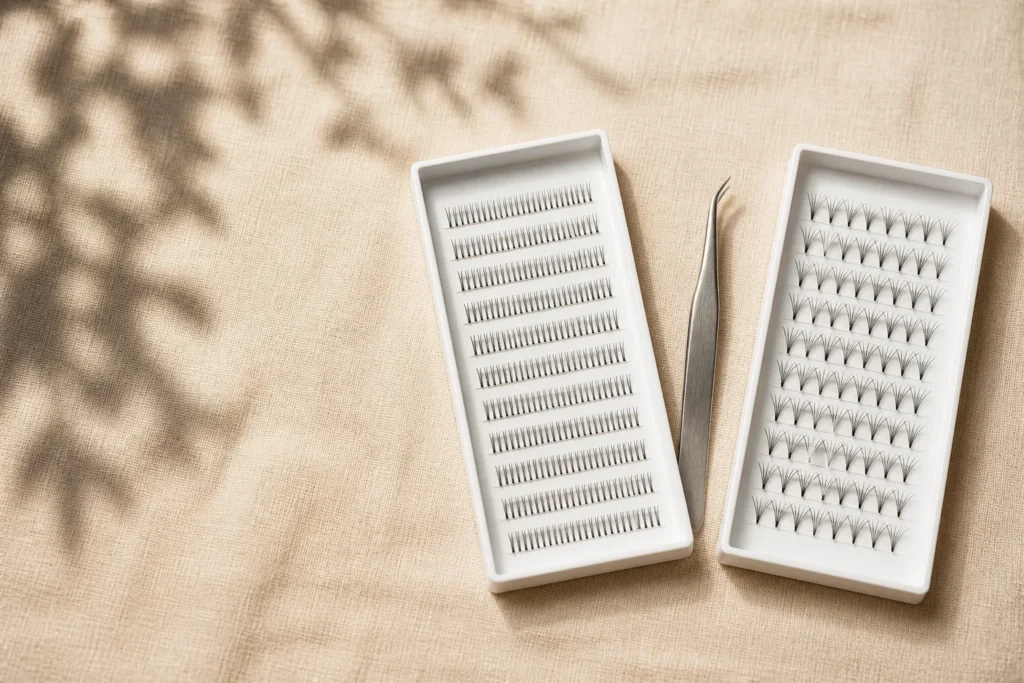
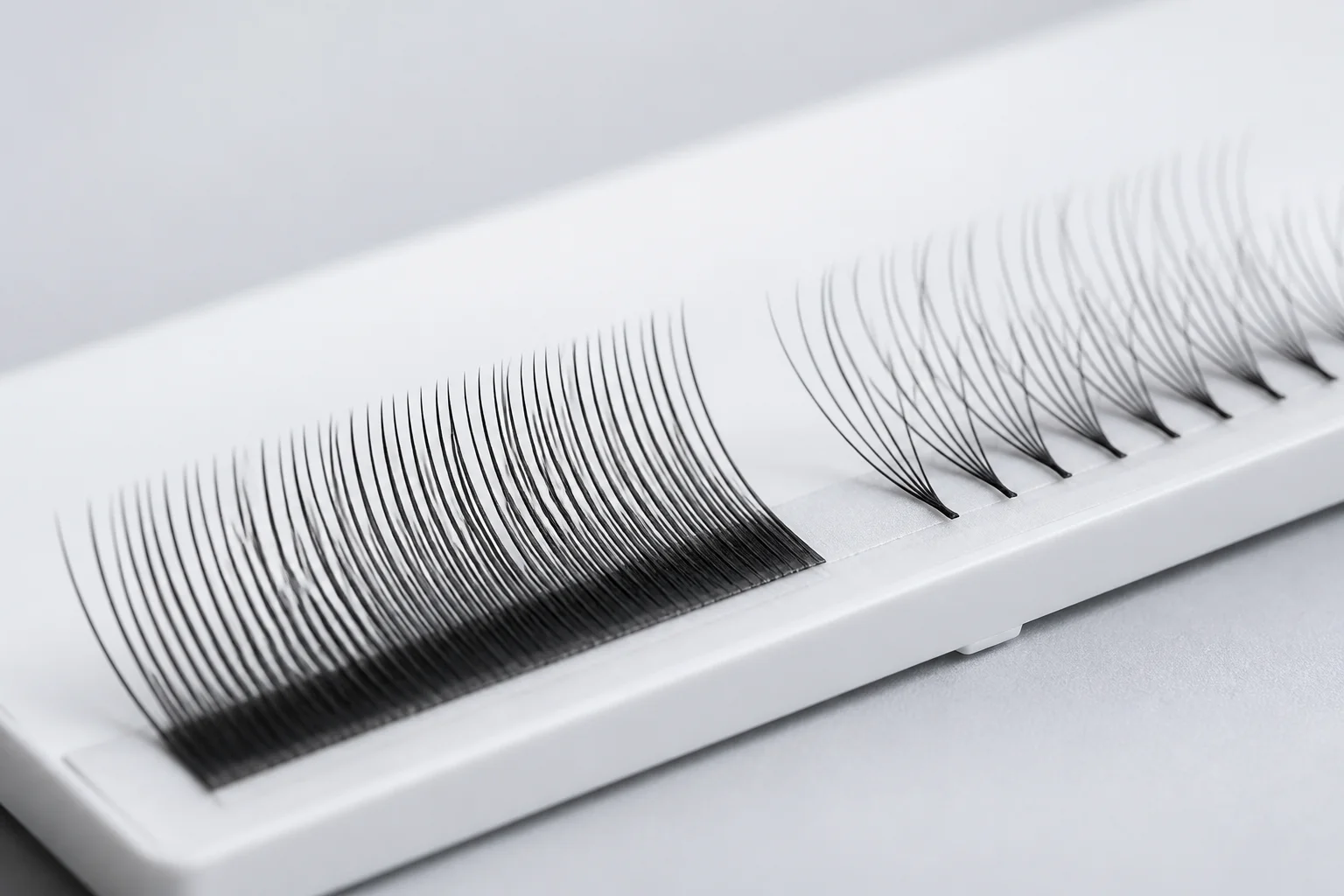
“Hybrid” is the most misunderstood word on a lash menu. Clients hear it as a style name; artists use it as a build instruction. A hybrid lash extension set is simply one set built from two extension types at once 鈥?classic singles for definition and premade or handmade fans for density 鈥?blended in a ratio the artist chooses for that client’s natural lashes. Get the ratio and the placement right and hybrid is the most flexible set in the book: textured enough to read as a lash line, light enough to wear on sparse natural lashes. This guide covers what the mix actually is, how ratios change the result, who suits it, and how salons stock the two components so they always match.
What Hybrid Actually Means
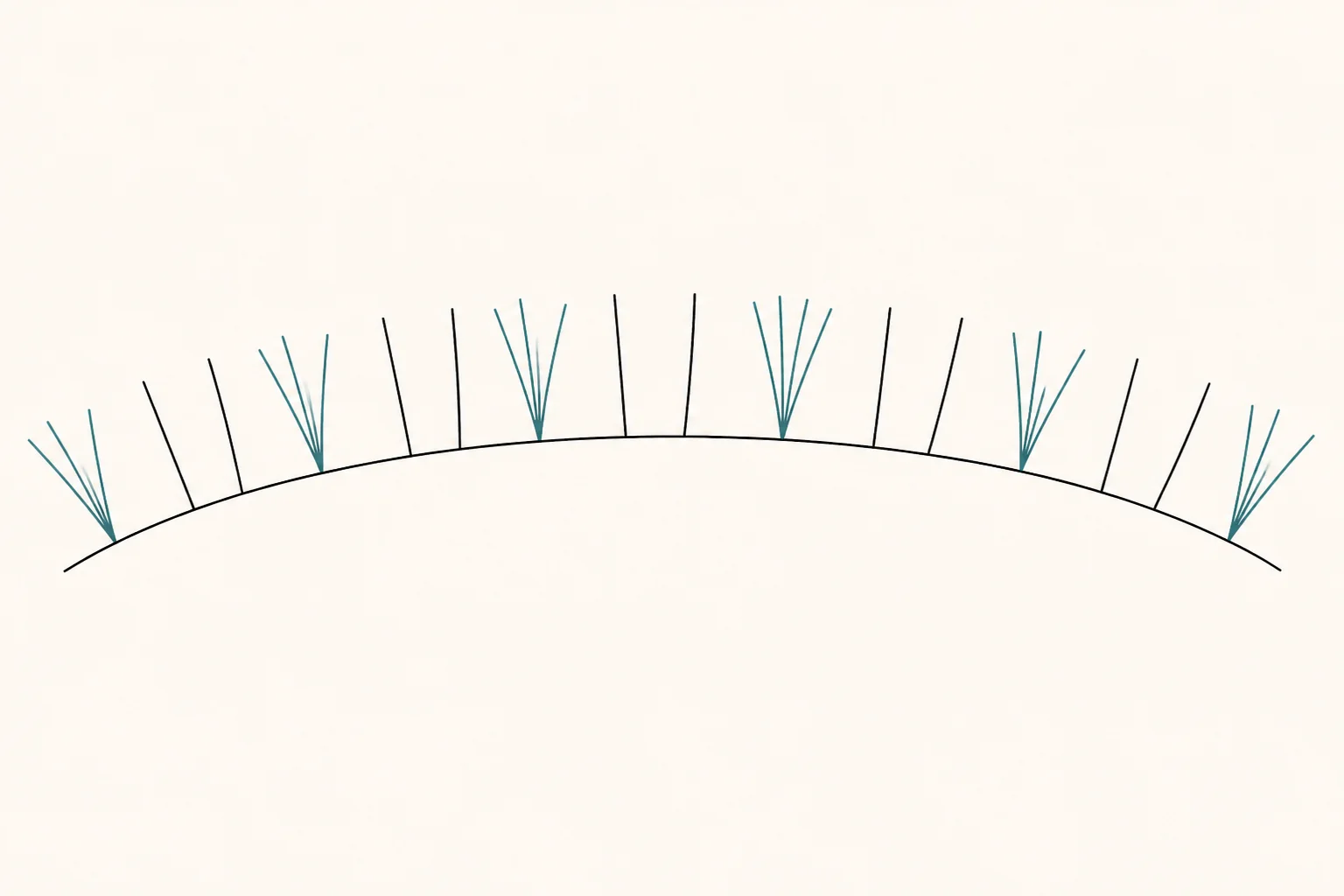
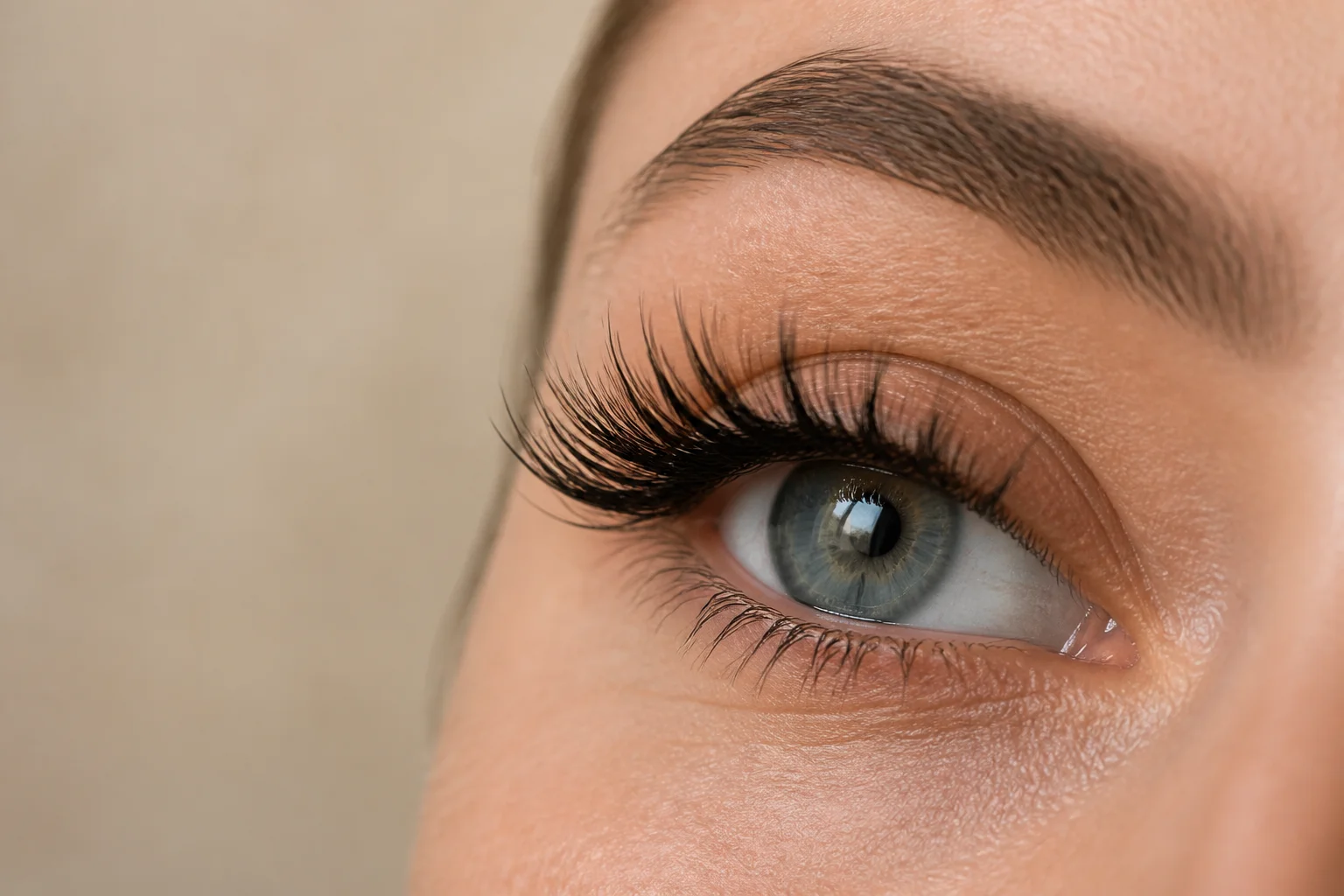
A classic set isolates one natural lash and bonds one extension to it. A volume set bonds a fan of several ultra-fine extensions to one natural lash. A hybrid set does both in the same appointment: some natural lashes receive a single, others receive a fan, interleaved across the lash line so the eye reads as a mix of defined spikes and soft density.
The practical variable is the ratio. Artists describe sets loosely as “mostly classic with fans through the middle” or “fifty-fifty”, and the difference is visible: a classic-heavy hybrid keeps a wispy, separated look with pockets of fullness, while a fan-heavy hybrid approaches a light volume set with visible spikes for texture. There is no industry-standard percentage, which is exactly why the consultation matters 鈥?the ratio should follow the client’s natural density and the look they brought in, not a fixed recipe. If you are asking what are hybrid lash extensions in buying terms, the answer is that they are not a product: they are a technique that consumes two products, classic trays and fans.
Hybrid vs Classic vs Volume
The three families differ in what they put on each natural lash, and therefore in weight, texture and appointment time.
| Set type | Per natural lash | Textur | Bästa kund |
|---|---|---|---|
| Klassisk | One single extension | Clean, separated, mascara-like | Good natural density, natural look |
| Hybrid | Singles and fans interleaved | Wispy spikes over soft density | Wants more than classic, less than volume |
| Volym | One fan per lash | Uniform, dense, velvety | Dramatic look, strong natural lashes |
Hybrid sits in the middle on every axis: heavier than classic but lighter than a full volume set at the same length, more textured than volume but fuller than classic. That middle position is why it is the most common upgrade path 鈥?clients who find classic “too bare” after two infills usually want hybrid, not volume.
Who Suits Hybrid Lash Extensions
Three client groups get the most from hybrid. First, clients with uneven natural density: fans placed in the sparse zones even out the lash line while singles keep the stronger zones crisp, which a full volume set would flatten into uniformity. Second, clients with fine or sparse natural lashes who want visible texture: a light fan plus single mix keeps weight per lash lower than a dense volume set while still closing gaps. Third, volume clients stepping down: hybrid preserves some of the density they are used to while reducing load during a growth phase.
Hybrid is a poor choice in one case: clients who want a perfectly uniform, velvety curtain. Mixed spikes will always read as texture, and no mapping will hide that. For a matte, powdered uniformity, a fine-volume set or a soft matte fibre such as the one described in our guide till cashmerefransar is the honest recommendation.
Ratios and Mapping: Where Each Type Goes
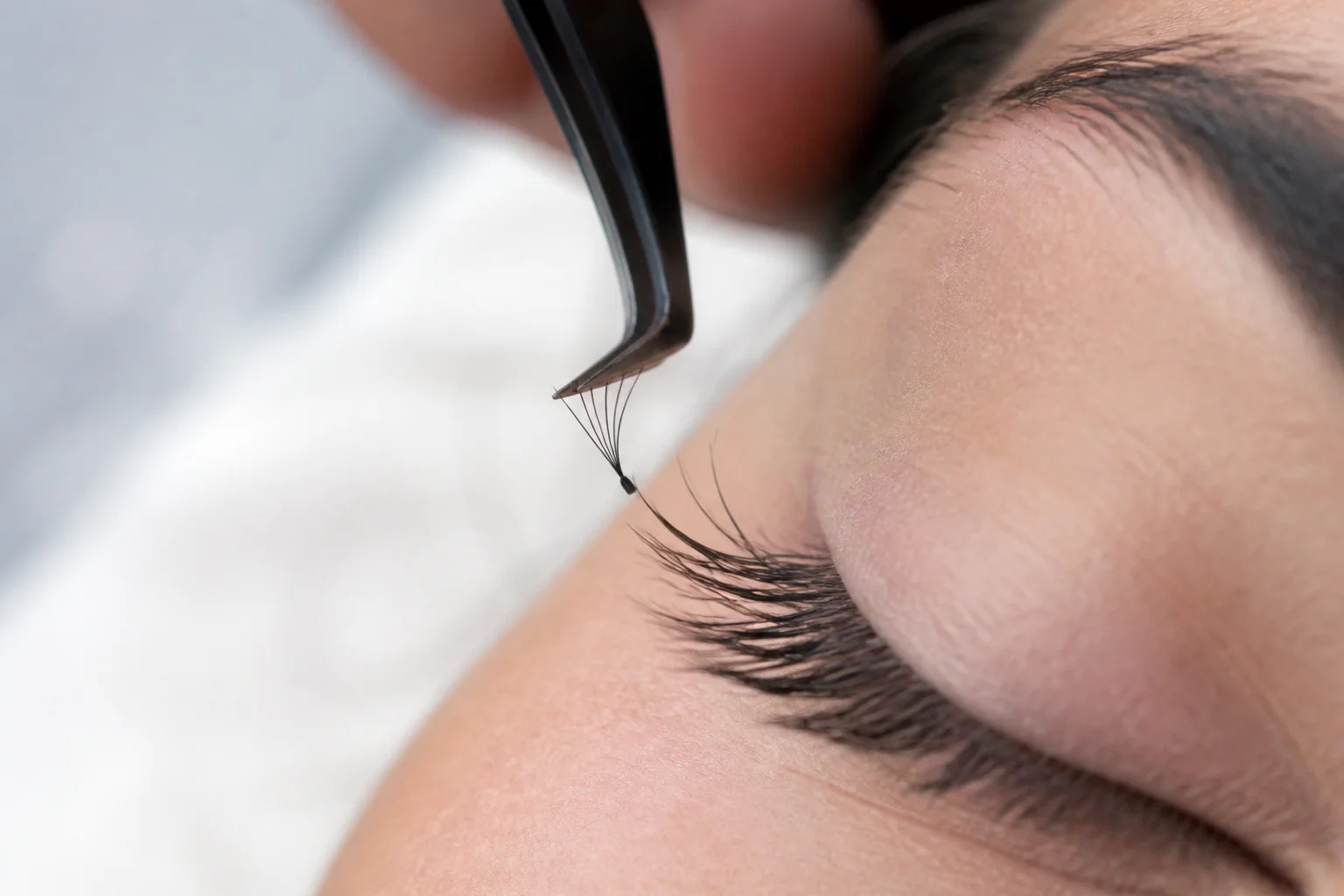
Placement, not arithmetic, is what makes hybrid look intentional. The working pattern most artists use is density where the eye needs it and definition where it already has it: fans through the centre and outer thirds to build the body of the set, singles along the inner corner and any zones where natural lashes are strong and evenly spaced. Inner-corner natural lashes are typically the finest on the eye, which is why singles 鈥?or the lightest fans in the tray 鈥?belong there; our guide om YY-fransar covers why light two-tip fans are the usual compromise when a client wants inner-corner fullness without weight.
Mapping also changes with ratio. A classic-heavy hybrid follows the natural lash line’s own rhythm, so standard maps work unchanged. A fan-heavy hybrid behaves like volume and benefits from a map that places the longest lengths where the fan density peaks, otherwise the set reads heavy at the outer corner. Whichever map you use, keep curl and length families consistent between the singles and the fans 鈥?a D-curl single next to a C-curl fan is the fastest way to make a hybrid look accidental.
Building the Set: Pairing the Two Components
A hybrid set consumes two tray types, and they must agree on three specs: curl, length range and colour/finish. Buy them as a matched pair rather than as separate decisions. For the fan component, premade fans keep the ratio consistent across a full set because every fan leaves the tray with the same spread; handmade fans give more control over spread per lash but slow the appointment. Our comparison of handmade versus premade fans covers the trade-off in detail. For the single component, a standard classic tray in the same curl and length ladder is all that is required.
Application order matters for speed: many artists place all fans first while isolation is cleanest, then fill with singles, because singles are faster to place and tolerate slightly grown-out isolation. Isolation discipline is identical to any set 鈥?one natural lash, one bond 鈥?and the mixed look never excuses a stuck neighbour.
Aftercare and Retention
Hybrid sets carry the same aftercare rules as any extension set, with one extra note: the fan portions shed visibly faster than singles because a lost fan removes more visual mass than a lost single, so clients perceive hybrid shedding as heavier even when retention is normal. Set that expectation at the appointment. Daily cleansing with an oil-free foam cleanser protects both components equally 鈥?see our guide till fransrengöringsskum for the routine 鈥?and brushing should start mid-length to avoid dragging fan tips apart.
Buying for Salons and Wholesale
Stock hybrid as a pairing, not as two unrelated lines: for every curl and length ladder you sell in classics, hold the matching fan ladder so an artist can build a hybrid without mixing brands or finishes mid-set. Check four points at tray level in both components 鈥?base bonding consistency, spread uniformity across fan rows, curl holding across the row, and labelling clarity by curl, length and thickness. For private-label programmes the pairing is even more important, because matched branding across the two trays is what makes a hybrid menu item look deliberate on the shelf; our buyer’s guide to extension types lists the spec sheet to request from any factory.
Common Mistakes
The most common hybrid mistake is a ratio chosen by habit rather than by consultation, which produces sets that look like volume with gaps or classic with clumps. The second is mixing curls between the two components. The third is placing fans at the inner corner on fine natural lashes to “even things out”, which overloads the weakest lashes on the eye. The fourth is quoting hybrid at classic prices while building it at volume effort 鈥?hybrid typically sits between the two on appointment time, and menus should say so.
Sammanfattning
Hybrid lash extensions are not a product and not a fixed style: they are a ratio decision made per client, blending classic singles for definition with fans for density. Classic-heavy ratios stay wispy and natural, fan-heavy ratios approach light volume, and placement 鈥?fans where density is needed, singles where the natural line is strong 鈥?is what makes the mix look intentional. Stock the two components as matched pairs in curl and length, set shedding expectations at the consultation, and hybrid becomes the easiest upgrade sell on your menu: the set for clients who want more than classic and less than volume.

