

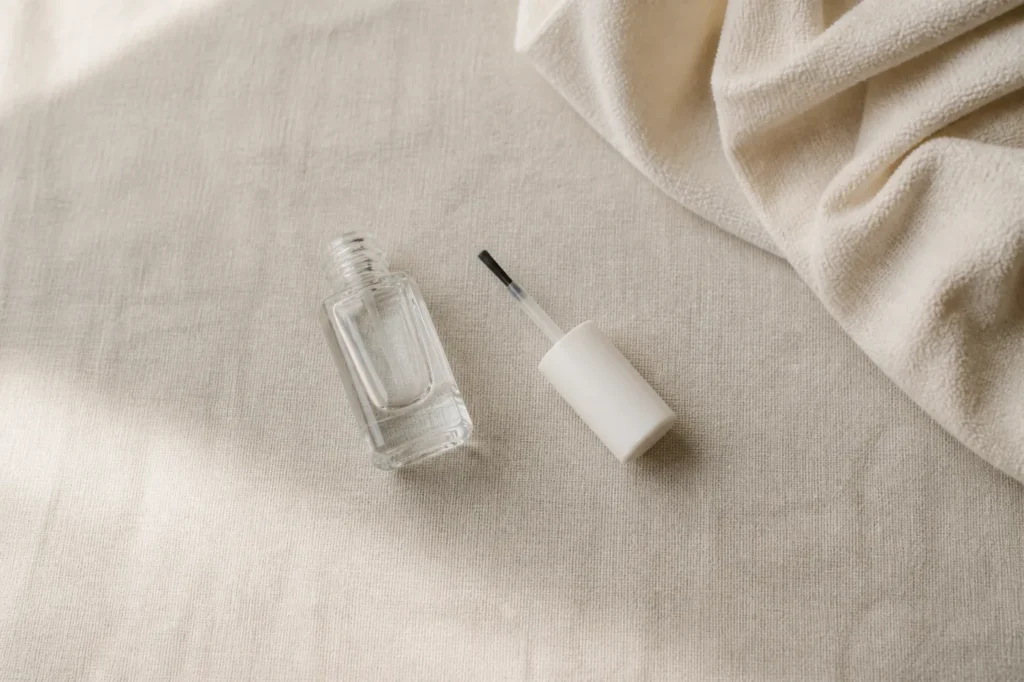
A lash sealant is a coating. It goes over a finished set, forms a thin flexible film across the bond, and shields the adhesive from the two things that shorten a retention cycle fastest: moisture and oil. It does not glue anything, and it does not strengthen a bond that was made badly. That distinction is the whole product, and it is also where most of the complaints in this category start.
For a supplier, the sealant is an easy addition to a range and an easy one to mis-sell. It pairs naturally with an adhesive and with the at-home bond and seal systems that sell to clients between appointments, which means it usually appears as a companion unit rather than a standalone purchase. This guide covers what the coating actually does, where it helps and where it does not, what to check in a formula and a format, and how to buy and label it without promising something the product cannot deliver.

What a Lash Sealant Is
The question that arrives most often from buyers and clients is whether a seal is the same thing as a glue, and the answer is no. Adhesive creates the bond at the base of the lash. A sealant is applied after the set is complete and covers that bond with a protective layer. One holds the extension on; the other keeps the environment off it.
That makes it a finishing step rather than a construction step, and it puts the product in a different place in a catalogue. A sealant sits with the adhesives on a salon’s shelf, but it is bought and used on a different rhythm, because a technician who applies it uses it on every client once, at the end, while the adhesive is drawn down drop by drop during the set.
Two product families use the word, and it helps to keep them apart. The professional coating type is applied by the technician at the end of an appointment, usually with a small brush tip or a fine dropper. The retail type is the second half of a bond and seal pair, sold to clients who maintain their own cluster or DIY sets at home, and its instructions are written for someone standing in front of a mirror without training. The guia de lash bonder covers how those two-part systems work, and the bond and seal product is an example of the retail format.
What the Coating Actually Does to a Bond
A cured cyanoacrylate bond is hard, slightly brittle, and sensitive to its surroundings. Water softens it over time and oil attacks it more directly, which is why a client who uses an oil-based cleanser or a heavy conditioner tends to come back with shedding that looks like a technique problem. A sealant interrupts that process by putting a flexible film between the bond and the environment.
Three effects are worth stating, because they are the honest version of the sales pitch.
1. Moisture resistance. The film slows the water uptake that softens the bond during washing, swimming and humid weather.
2. Oil resistance. It reduces direct contact between the adhesive and the oils in skincare, cleansers and conditioners.
3. Flexibility. A cured adhesive is hard; a sealant film is designed to flex with the lash so the bond moves with the natural lash rather than cracking against it.
None of these are permanent. A coating wears and is gradually removed by cleansing, so it is a maintenance layer rather than an upgrade that changes the service interval. Where a supplier claims that a sealant doubles retention, the claim is doing more work than the chemistry supports, and it is the kind of wording that creates refund disputes rather than repeat orders.
It is also worth being clear about the opposite direction. A sealant cannot compensate for a bond that was formed against a dirty lash, an adhesive applied too generously, or a placement that missed the isolation. Those failures are visible within days whatever is applied on top, and a technician who expects the coating to hide them will blame the product.

Where a Sealant Helps and Where It Does Not
A sealant earns its place in four situations, and it is unnecessary or actively unhelpful in two others.
It helps when a client works in a humid environment, swims or showers frequently, uses skincare with a high oil content, or returns consistently with retention that is slightly short of the technician’s usual standard for no identifiable technique reason. Those are environmental and lifestyle problems, and a coating is the right tool for them.
It is close to useless when the cause is mechanical: a client who sleeps face down, rubs the eyes, or picks at the lashes will remove extensions regardless of what sits on the bond. And it is unhelpful when it is applied too heavily. An overloaded coating stays tacky, catches dust, and makes adjacent lashes stick together, which produces a complaint that sounds like a bad set and is actually a finishing error.
The same logic applies to the retail version. A client who buys a bond and seal pair for their own clusters needs to be told to apply the seal thin, to let it cure, and to keep it away from the lash line. Without those three instructions, the product underperforms and the return rate climbs.
Expectation management is cheaper than a refund, and the place to do it is the instruction card and the product page. Saying that a coating reduces the effect of oil and moisture, and that it may help a set last closer to the full cycle in a challenging environment, is both true and sufficient. Saying that it prevents shedding is neither.
Format, Curing and Compatibility
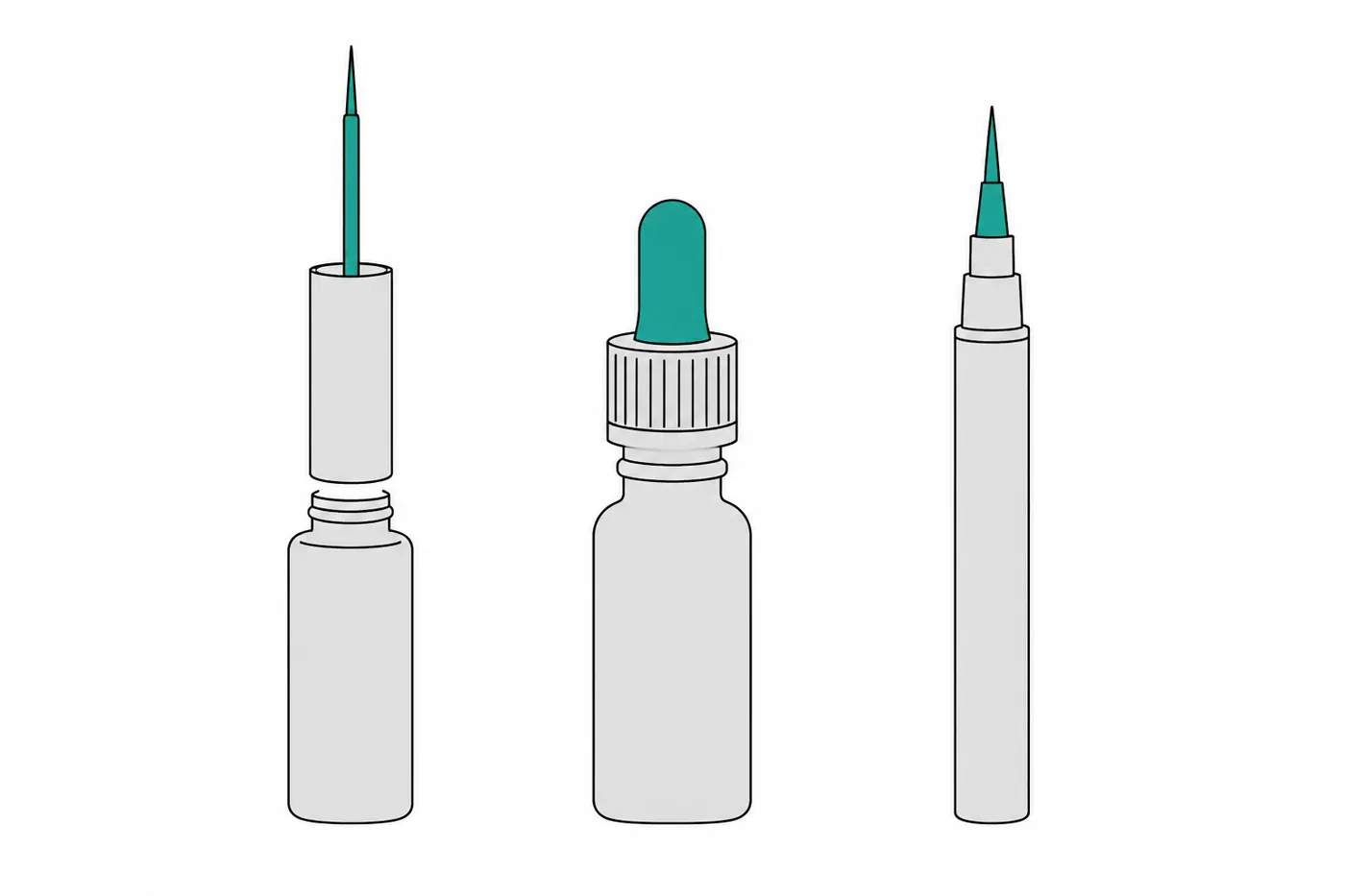
Formats divide along how precisely the product can be placed on a bond line.
1. Brush-tip bottle. The most common professional format. A fine brush lets the technician run the product along the bond without flooding the lash base.
2. Dropper bottle. Cheaper to produce and easier to fill, but less precise; it suits a concentrated sealant used in small drops on a palette.
3. Pen format. The most controlled of the three and the closest to an eyeliner motion, which makes it the easiest to teach and the most familiar to a retail buyer.
4. Spray or mist. Occasionally used on sets and on DIY clusters, but the hardest to control and the most likely to reach the skin or the eye.
Curing is where a formula is judged. A sealant should dry to a non-tacky film in the time stated by the supplier, and the technician should not release the client until that film is set. A product that stays slightly sticky after the stated cure time will collect dust and cause lashes to adhere to each other, and no instruction card can rescue it.
Compatibility runs in two directions, and both should be checked before a range is stocked. Against the adhesive, a sealant must not soften the cyanoacrylate it is meant to protect, which is why the pairing should be tested rather than assumed. Against removal, the film has to come away with the adhesive when the client books a removal, so the guia de cola para cílios and the removal routine belong in the same conversation. A coating that resists a standard remover turns a routine appointment into a long one, and the technician will blame the sealant, correctly.
Shelf life and storage deserve a line on the label for the same reason they do on an adhesive. Sealants are usually formulated to be applied in a thin layer, and a thickened or separated product cannot be applied thinly. Keep the unit closed, out of direct sunlight, and at room temperature.
Buying, Private Label and What to Ask
A sealant order is simpler than an adhesive order, and the checks are correspondingly narrower. Five questions settle most of it.
1. What is it formulated to resist? A supplier should be able to say whether the film is aimed mainly at moisture, at oil, or at both, because that determines which client group the product suits.
2. What is the cure time, and how was it measured? The answer should be a number the supplier has tested, not a rounded claim on a carton.
3. Is it compatible with the adhesive in the same range? If the supplier sells both, they should be able to answer for the pairing. If they cannot, order a sample of each and test them together.
4. How does it behave under the remover? This is the question that prevents a service complaint six months later, and the answer should come from the supplier’s own testing.
5. What does the label claim, and can it be supported? Wording such as waterproof, long lasting or extends wear is a claim, not a description, and it should be reducible to evidence.
For a private-label run, the format decision comes first, because a pen or a brush-tip bottle carries a tooling cost that a plain dropper does not. After that the sequence is familiar: lock the formula, approve artwork against the claims list, run a pilot fill, check fill weight and seal integrity, and keep the batch number and fill date with the shipment. The extensões de cílios DIY article covers the same order of operations from the retail side, which is useful when the same unit is being planned for two channels.
One packaging detail matters more here than on any other product in the range: the applicator has to survive repeated contact with adhesive residue. A brush tip that stiffens or frays after a few uses is the most common quality complaint on this format, and it is worth specifying the fibre and asking for a real-use sample rather than a sealed mock-up.
QC, Storage and a Checklist
On arrival, the checks are short: the seal is intact, the batch number and shelf life are printed, the colour and odour match the approved sample, the fill weight is within tolerance, and the applicator moves freely without leaking. A sealant that has separated in transit should be rejected rather than shaken and sold.
Storage and handling follow the same rules as an adhesive, with one addition. Because a coating is applied in a thin layer, its performance depends on a consistent viscosity, and viscosity is what heat damages first. Stock it out of direct sunlight, away from a window, and rotate by batch date rather than by delivery date.
A short checklist covers the decisions that actually change the outcome.
1. Decide the channel first: professional coating, retail two-part system, or both in different packs.
2. Confirm the film’s target, moisture or oil, and write the positioning around it.
3. Test the pairing with the adhesive and with the remover before the first bulk order.
4. Specify the applicator and ask for a used sample.
5. Set the instructions: thin layer, cure time, keep clear of the lash line.
6. Keep the claims narrow enough to defend.
PERGUNTAS FREQUENTES
Is a lash sealant the same as lash glue? No. Glue forms the bond; a sealant coats the finished bond to protect it from moisture and oil. The confusion is common enough that the phrase is searched as a question in its own right.
Does a sealant make extensions last longer? It can help a set hold up better in a demanding environment, which often reads as better retention. It cannot repair a bad bond, and it should not be sold as if it can.
Can a client apply it themselves? With the retail two-part systems, yes, if the instructions are clear about using a thin layer and keeping the product off the lash line. The professional coating format is not designed for self-application.
How often is it applied? Professional coatings are applied at the end of a set and refreshed at the refill. Retail systems are used by the client on their own maintenance cycle, which is why the instructions matter more in that channel.
Where It Fits in the Range
O Selante de revestimento para extensão de cílios is the professional half of this category and the natural companion unit to an adhesive range, because a technician who buys adhesive by the case also buys a finishing product on the same order. Sits alongside it, the retail seal belongs to the at-home cluster market rather than to the salon, and it earns its place by keeping a client’s maintenance routine inside a brand’s own ecosystem instead of a marketplace listing.
Two supporting notes are worth passing to clients along with either unit. Cleansing is the step that removes the coating along with the residue, so a client who is not washing properly will not keep a seal in good condition, which is what the guia de shampoo para cílios exists to explain. And where retention problems recur, the cause is often the surface of the natural lash rather than the bond, a subject the note on lash porosity sets out, and one that a coating can support but never solve.


 English
 German
 French
 Spanish
 Romanian
 Portuguese
 Dutch
 Italian
 Swedish
 Polish