

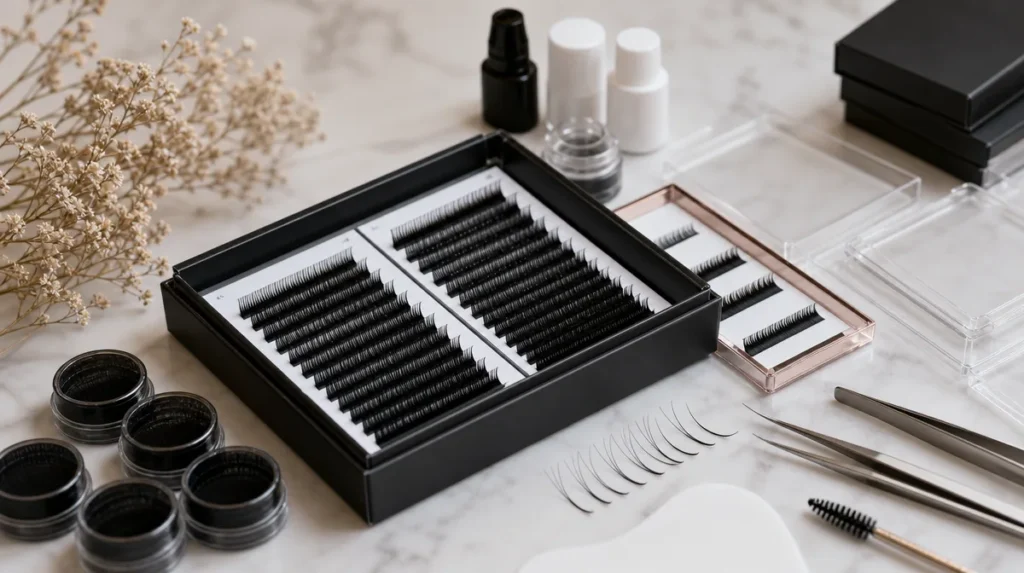
Różne rodzaje rzęs do przedłużania mają największe znaczenie wtedy, gdy katalog musi ułatwić kupującym wybór pod kątem włókna, wykończenia, konstrukcji nasady oraz metody aplikacji. W sprzedaży hurtowej różnorodność sprawdza się tylko wtedy, gdy każdy rodzaj rzęs opisany jest jasnymi faktami o produkcie, które stylistki mogą szybko porównać.
Dla marek i dystrybutorów spójność ma równie duże znaczenie co wybór. Lashfine pozycjonuje się jako partner biznesowy w branży rzęs i opiera swoją działalność na produktach do przedłużania rzęs, marce własnej (private label) oraz obsłudze klienta, co odpowiada typowym potrzebom kupujących z salonów kosmetycznych. Niniejszy przewodnik porządkuje główne rodzaje rzęs do przedłużania według materiału i kształtu, pomagając dostawcom stworzyć bardziej funkcjonalny asortyment hurtowy.
Nacisk położono na praktyczne różnice między produktami: wykończenie matowe a wysoki połysk, konstrukcję z koreańskiego włókna PBT, grubość rzęs, profile podkręcenia oraz ustrukturyzowane nasady, które pomagają stylistkom pracować szybciej i z większą powtarzalnością.
I. Podstawowa gama materiałów: 9 fasonów rzęs pojedynczych
Katalog rzęs zazwyczaj zaczyna się od rzęs pojedynczych, jednak nie stanowią one jednolitego produktu. Różne włókna i wykończenia dają odmienne efekty aplikacji – od błyszczącego, wyrazistego wyglądu po bardziej miękki, naturalny efekt. Asortyment dostawcy może obejmować wiele rodzajów wykończeń, dzięki czemu stylistki mogą dobierać je pod kątem preferencji klientek i stylu wykonywanej usługi.
Marki ściśle współpracujące z profesjonalistami z branży beauty często dopracowują te detale w ramach ciągłego rozwoju produktów. Lashfine deklaruje, że łączy wieloletnie doświadczenie w branży rzęs z opiniami klientów, tworząc produkty zgodnie ze wskazówkami ekspertów i wymaganiami użytkowników. Taka pętla rozwoju produktu ma kluczowe znaczenie w hurcie, gdzie drobne różnice w wykończeniu, zwężeniu końcówki czy dotyku włókna mogą wpłynąć na zadowolenie stylistki.
Na przykład rzęsy typu silk są zazwyczaj wybierane ze względu na jaśniejszy, bardziej błyszczący efekt, podczas gdy rzęsy typu cashmere są zwykle preferowane ze względu na bardziej miękkie i lżejsze wykończenie. W ujęciu hurtowym kluczowe znaczenie ma nie język marketingowy, lecz właściwości produktu: poziom połysku, miękkość, zwężenie oraz łatwość pobierania z paska i aplikacji.
A. Faux Mink Pro
Faux Mink Pro jest pozycjonowany w linii jako wariant rzęs pojedynczych klasy premium. Jego wyróżniające cechy to półmatowe wykończenie, głęboka czerń oraz zwężająca się końcówka. Włókno to koreański PBT – włókno syntetyczne powszechnie stosowane w profesjonalnym przedłużaniu rzęs, ponieważ pozwala na uzyskanie powtarzalnych skrętów i precyzyjnych zwężeń.
Dla dostawców praktyczne atuty sprzedażowe są wymierne: rzęsa została zaprojektowana tak, aby zredukować niebieskawy lub szarawy odcień, który zdarza się we włóknach czarnych niższej jakości, zachowując jednocześnie nasadę ułatwiającą pobieranie i aplikację. Dzięki temu doskonale sprawdza się w salonach poszukujących głębszego, ciemniejszego wykończenia bez efektu sztucznego, wysokiego połysku.
B. Premium Matte
Premium Matte to wariant bez refleksów świetlnych w gamie rzęs pojedynczych. Główną cechą produktu jest matowa powierzchnia, która redukuje błyszczenie w mocnym świetle oraz na fotografiach. Sprawia to, że jest to cenna pozycja w asortymencie dla stylistek dążących do bardziej naturalnego efektu wizualnego lub dla klientek, które nie lubią plastikowego połysku.
Z perspektywy katalogu wartość rzęs matowych jest łatwa do wyjaśnienia: zapewnia stylistkom opcję o mniejszym połysku, która idealnie wpisuje się w standardowy proces aplikacji. Kluczowe fakty o produkcie, które warto podkreślić, to wykończenie, jednolitość włókna oraz porównanie z włóknami typu silk lub błyszczącymi czarnymi.
C. Super Silk
Super Silk to model o wyższym połysku w rodzinie rzęs pojedynczych. W ujęciu praktycznym jest to propozycja zapewniająca mocniejszy efekt wizualny głębokiej czerni oraz bardziej wyraziste, lśniące wykończenie. Dostawcy często oferują ten typ rzęs klientkom oczekującym podkreślenia i bardziej dramatycznego spojrzenia.
Deklaracją materiałową, która liczy się tu najbardziej, jest wykończenie, a nie sam przymiotnik marketingowy. Rzęsy typu silk powinny być opisywane pod kątem stopnia odbijania światła, powtarzalności włókna syntetycznego oraz docelowego efektu stylizacji.
D. Cashmere Mink
Cashmere Mink prezentowane są jako opcja bardziej miękka w dotyku i wyjątkowo lekka. Głównym założeniem produktu jest aksamitność w dotyku i mniej refleksyjna powierzchnia. Dzięki temu świetnie trafia w potrzeby salonów obsługujących klientki preferujące delikatniejszą linię rzęs zamiast wyrazistego, mocno błyszczącego efektu.
Dla odbiorców hurtowych kluczowe parametry to miękkość, odczuwalna lekkość oraz wykończenie. Jeśli rzęsa jest promowana jako kaszmirowa, praktycznym oczekiwaniem jest bardziej stonowany wygląd i wysoki komfort noszenia.
E. Inne warianty rzęs pojedynczych
Kompletny katalog dostawcy może obejmować również dodatkowe warianty rzęs pojedynczych w podziale na skręt, grubość i długość. W praktyce najbardziej przydatnymi parametrami są:
- Grubość: wybierana zazwyczaj w celu kontroli wagi i wielkości kępki
- Skręt: służy do modelowania uniesienia i optycznego otwarcia oka
- Długość: pozwala zrównoważyć gęstość aplikacji ze stanem naturalnych rzęs klientki
- Wykończenie: matowe, półmatowe lub błyszczące
- Rodzaj włókna: syntetyczne włókno rzęs na bazie PBT jest powszechnie stosowane w profesjonalnym przedłużaniu rzęs
To właśnie tymi pojęciami posługują się stylistki i kupujący podczas porównywania produktów u różnych dostawców. Są to również najbardziej przydatne pola na kartach produktów, w materiałach szkoleniowych oraz formularzach zamówień hurtowych.
F. Wskaźniki pochodzenia i jakości w deklaracjach materiałowych
Ponieważ deklaracje dotyczące materiałów mają kluczowe znaczenie w zaopatrzeniu, dostawcy powinni precyzować, czy dana linia rzęs wykorzystuje syntetyczne włókno PBT, oraz unikać niejednoznacznych sformułowań przy opisie wykończenia czy właściwości. Jeśli w katalogu podano, że rzęsa jest półmatowa, błyszcząca lub matowa, opis ten powinien być spójny na karcie produktu, etykiecie opakowania zbiorczego oraz w materiałach szkoleniowych.
Oceniając jakość zaopatrzenia, kupujący najczęściej zwracają uwagę na:
- Powtarzalność włókna pomiędzy partiami
- Stabilność skrętu po zapakowaniu i magazynowaniu
- Czytelne oznaczenia grubości i długości
- Zdefiniowaną kategorię wykończenia, np. matowe lub półmatowe
- Identyfikowalność partii produkcyjnej w profesjonalnych łańcuchach dostaw
Są to praktyczne wskaźniki produkcyjne i zakupowe, szczególnie przydatne dla dystrybutorów salonowych, szkoleniowców oraz zespołów zakupowych oceniających zamówienia powtarzalne.
II. Zaawansowana konstrukcja wiązania: Laser Lashes
Laser Lashes są prezentowane w asortymencie jako produkt ukierunkowany na trwałość wiązania (retencję). Cechą wyróżniającą jest tekstura nasady: mikroskopijne nacięcia 360 stopni przy nasadzie, które mają na celu zwiększenie powierzchni kontaktu z klejem. Deklaracja dotycząca produktu opiera się tutaj na geometrii, a nie na samym brandingu.
Dla dostawców takich jak Lashfine, obsługujących profesjonalnych odbiorców, tego typu detale mają duże znaczenie, ponieważ klienci z salonów często porównują produkty pod kątem ich zachowania podczas aplikacji, a nie samej nazwy. Rzęsa została zaprojektowana tak, aby klej lepiej przylegał do fakturowanej nasady niż do gładkiej. W celu zachowania rzetelności retencję należy opisywać jako cel projektowy, a nie bezwzględną gwarancję.
Tekstura ma wspierać kontakt z klejem i powtarzalność aplikacji, zwłaszcza gdy priorytetem jest trwałość wiązania. Właściwa deklaracja funkcjonalna odnosi się do konstrukcji teksturowanej nasady, a nie do obietnicy konkretnego czasu noszenia. Dostawcy powinni łączyć wszelkie odniesienia do retencji z rodzajem systemu klejowego, techniką aplikacji oraz warunkami panującymi w gabinecie stylistki.
Na czas utrzymywania się rzęs wpływa naturalny cykl wzrostu rzęs, nawyki pielęgnacyjne, dobór kleju oraz precyzja aplikacji. Ten typ rzęs jest szczególnie polecany dla klientek z przetłuszczającymi się rzęsami naturalnymi lub dla stylistek oczekujących pewniejszego wiązania w punkcie łączenia. Praktyczna uwaga dotycząca aplikacji: rzęsy te nadal wymagają użycia odpowiedniego profesjonalnego kleju oraz standardowej techniki separacji, pobierania i mocowania.
Dla dostawców rzęsy Laser Lashes wpisują się w tę samą kategorię rozmów co lepkość kleju, zakres wilgotności i powierzchnia kontaktu nasady. To właśnie tych pojęć kupujący oczekują podczas oceny rzęs o podwyższonej wydajności.
A. Kontekst aplikacyjny dla rzęs ukierunkowanych na retencję
Rzęsa z mikroteksturą powinna być pozycjonowana jako jeden z elementów kompleksowego systemu retencji. W profesjonalnym użyciu stylistka nadal potrzebuje:
- Kleju do rzęs dopasowanego do warunków panujących w pomieszczeniu
- Właściwej kontroli wilgotności
- Oczyszczonych rzęs naturalnych przed aplikacją
- Odpowiedniej powierzchni wiązania przy nasadzie
- Prawidłowej separacji i poprawnego umieszczenia
Dlatego deklaracje dotyczące trwałości wiązania powinny być formułowane w sposób rzeczowy: konstrukcja nasady ma na celu zwiększenie kontaktu z klejem, jednak ostateczny rezultat zależy od całego przebiegu zabiegu.
B. Słownictwo dostawcy dla rzęs o podwyższonej wydajności
Porównując rzęsy o podwyższonej wydajności, kupujący zazwyczaj pytają o:
- Teksturę nasady
- Kompatybilność z klejem
- Zachowanie podczas pobierania z paska
- Trwałość skrętu
- Dopasowanie do rzęs przetłuszczających się
- Przydatność do stylizacji metodą klasyczną, hybrydową lub objętościową
Uwzględnienie tych pojęć na kartach produktów zwiększa użyteczność katalogu i ułatwia stylistkom zrozumienie, w jakim miejscu ich oferty zabiegowej sprawdzi się dany produkt.
III. Geometria oszczędzająca czas: rzęsy typu U, W i YY
Rzęsy o kształtach literowych (alphabet lashes) stanowią istotną kategorię we współczesnym zaopatrzeniu salonów, ponieważ skracają czas aplikacji i ułatwiają uzyskanie efektów objętościowych. Sprawdzają się w salonach, które chcą zaoferować gęstsze stylizacje bez konieczności ręcznego tworzenia każdej kępki.
A. Rzęsy typu U
Rzęsy typu U zaprojektowano z płaską nasadą wiążącą i delikatnie rozgałęzionym profilem. Zaletą tego kształtu jest idealne przyleganie do rzęsy naturalnej przy jednoczesnym zapewnieniu gęstszego efektu wizualnego niż w przypadku pojedynczej standardowej rzęsy. Dzięki temu rzęsy typu U sprawdzają się przy rzadkich rzęsach naturalnych oraz u stylistek poszukujących zrównoważonego efektu bez czasochłonnego ręcznego tworzenia kępek.
Istotne cechy produktu to kształt nasady, układ włókien oraz sposób przylegania rzęsy do rzęsy naturalnej. W praktyce aplikacyjnej rzęsy typu U określa się zazwyczaj jako geometrię przyspieszającą pracę stylistek chcących skrócić czas aplikacji bez rezygnacji ze standardowych schematów modelowania (mappingu).
B. Rzęsy typu W
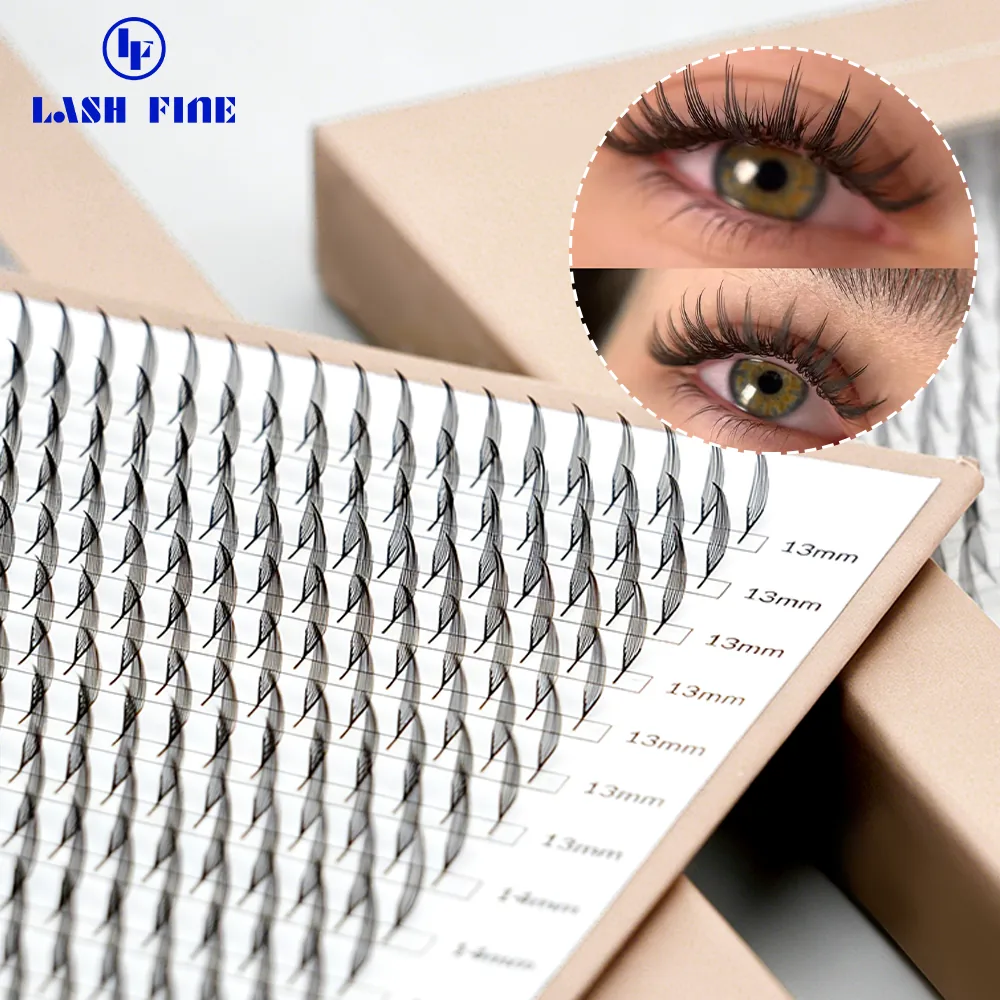
Rzęsy typu W składają się z trzech połączonych włókien ułożonych w kształt litery W. Ich celem jest natychmiastowe uzyskanie efektu 3D, przy czym proces aplikacji pozostaje bardziej zbliżony do metody klasycznej 1:1 niż do ręcznego tworzenia kępek objętościowych.
Dla dostawcy najbardziej funkcjonalnym sposobem opisu rzęs typu W jest przedstawienie ich struktury oraz funkcji oszczędzania czasu. Zapewniają one gęstszy wygląd, są pozycjonowane jako rozwiązanie przyspieszające zabieg i sprawdzają się u stylistek, które chcą zwiększyć gęstość optyczną bez modyfikowania swojej podstawowej techniki aplikacji.
W porównaniach produktowych kupujący często zestawiają rzęsy typu W z gotowymi kępkami (pre-made fans, promade fans) oraz innymi rozwiązaniami skracającymi czas tworzenia objętości.
C. Rzęsy typu YY
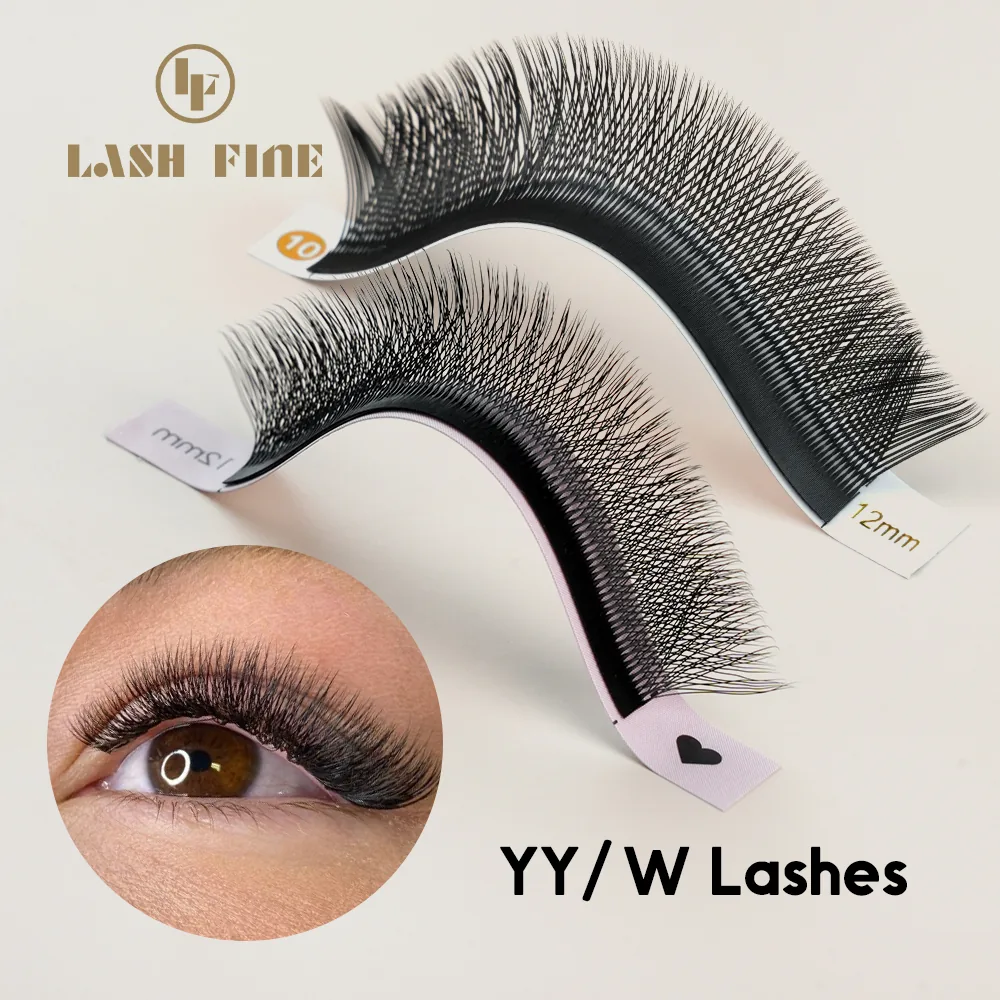
Rzęsy typu YY charakteryzują się rozwidloną lub krzyżującą się strukturą, która tworzy bogatszą teksturę niż tradycyjna pojedyncza rzęsa klasyczna. Są często stosowane do nadania stylizacji miękkości i wielowymiarowości przy zachowaniu stosunkowo prostej aplikacji.
Ważnym wyróżnikiem produktu jest to, że rzęsy typu YY tworzą gęstszy efekt wizualny bez konieczności formowania tradycyjnej kępki objętościowej. Sprawia to, że idealnie nadają się do stylizacji hybrydowych, efektu wispy oraz dla klientek oczekujących teksturowanego wykończenia przy zauważalnej oszczędności czasu.
D. Rzęsy typu U, W i YY z perspektywy dostawcy
W katalogach hurtowych kształty te najlepiej uporządkować według metody aplikacji:
- Rzęsy ustrukturyzowane kompatybilne z metodą klasyczną
- Rzęsy skracające czas stylizacji objętościowej
- Rzęsy o teksturze hybrydowej
- Oszczędzające czas alternatywy dla ręcznie tworzonych kępek
Ułatwia to kupującym dopasowanie asortymentu do usług rzeczywiście oferowanych w salonach.
IV. Specyfikacje produktów, które dostawcy powinni ustandaryzować
Aby podnieść jakość katalogu, każdy typ rzęs powinien być opisany za pomocą tych samych kluczowych parametrów technicznych. Pola te pomagają stylistkom porównywać różne rodzaje rzęs u różnych dostawców i eliminują niejasności w ofertach hurtowych.
Przydatny zestaw specyfikacji produktu obejmuje:
- Rodzaj włókna, np. syntetyczny PBT
- Wykończenie, np. matowe, półmatowe lub błyszczące
- Grubość, wpływającą na wagę i wielkość kępki
- Skręt, wpływający na uniesienie i efekt otwarcia oka
- Zakres długości, wpływający na elastyczność stylizacji
- Strukturę nasady, np. standardowa, płaska lub teksturowana
- Przeznaczenie do metody, np. klasyczna, objętościowa, hybrydowa lub aplikacja ekspresowa
Oprócz tych pól dostawcy często ułatwiają podejmowanie decyzji zakupowych, podając wskazówki dotyczące kompatybilności z klejami. Do popularnych kategorii profesjonalnych klejów należą formuły szybkoschnące, średnioschnące i o niskiej oparowości, przy czym ich dobór zależy od wilgotności, tempa pracy stylistki i warunków panujących w pomieszczeniu. Taki kontekst aplikacyjny pomaga kupującym dobrać rzęsy do klejów, z których już korzystają.
Taka struktura odzwierciedla rzeczywisty sposób dokonywania zakupów przez stylistki rzęs. Rzadko pytają one wyłącznie o nazwę produktu – pytają o profil skrętu, głębię czerni, zachowanie przy pobieraniu z paska oraz o to, czy produkt pasuje do ich kleju i techniki pracy.
A. Grubość, skręt a efekt końcowy stylizacji
Grubość i skręt należą do najważniejszych kryteriów doboru w każdej gamie rzęs. Grubość wpływa na odczuwalną wagę i gęstość aplikacji, podczas gdy skręt decyduje o uniesieniu, otwarciu oka i ostatecznym modelowaniu kształtu spojrzenia.
Dla kupujących hurtowych praktyczne znaczenie tych pojęć jest jednoznaczne:
- Mniejsze grubości są zazwyczaj stosowane do lżejszych aplikacji
- Większe grubości są zazwyczaj wybierane w celu uzyskania wyraźniejszego zagęszczenia
- Mocniejsze skręty zapewniają większe uniesienie i efekt mocniej otwartego oka
- Łagodniejsze skręty dają subtelniejszy efekt
Pola te dają kupującym powtarzalną metodę porównywania poszczególnych linii produktów.
B. Kategorie klejów powszechnie porównywane przez profesjonalistów
W branży stylizacji rzęs wybór kleju jest zazwyczaj omawiany pod kątem szybkości schnięcia i warunków pracy. Do popularnych kategorii profesjonalnych należą kleje szybkoschnące, średnioschnące oraz niskooparowe. Stylistki rzęs porównują te opcje pod kątem dopasowania do wilgotności w pomieszczeniu, tempa pracy i kontroli aplikacji.
Dlatego strony produktów, które wspominają jedynie o stylu rzęs bez kontekstu aplikacji, są niekompletne. Zależność między podstawą rzęsy, lepkością kleju i warunkami w pomieszczeniu ma kluczowe znaczenie dla efektu końcowego.
V. Profesjonalne zaopatrzenie i sygnały wiarygodności
Gdy dostawca opisuje rzęsy do przedłużania, sformułowania powinny odzwierciedlać standardy produkcyjne i profesjonalnego użytku. Oznacza to używanie konkretnego języka produktowego zamiast języka promocyjnego. Lepszy opis od dostawcy określa włókno, wykończenie i geometrię; wyjaśnia, jak rzęsa jest stosowana; oraz zachowuje spójność terminologii na wszystkich stronach produktów.
Jeśli linia jest wykonana z koreańskiego PBT, należy to wyraźnie zaznaczyć. Jeśli rzęsa jest półmatowa, powinno to być użyte określenie. Jeśli podstawa ma teksturę zwiększającą retencję, opis powinien wyjaśniać, że konstrukcja wspomaga kontakt z klejem.
Pomaga to również kupującym, którzy współpracują z programami szkoleniowymi salonów, ścieżkami edukacyjnymi w stylizacji rzęs lub profesjonalnymi systemami sprzedaży detalicznej. Jasna terminologia ułatwia stylistom, instruktorom i zespołom ds. zakupów ocenę stanów magazynowych. Wspiera także przejrzystość zaopatrzenia, gdy dostawcy przestrzegają wewnętrznych procedur kontroli jakości, takich jak weryfikacja spójności materiału, kontrola stabilności skrętu i inspekcja opakowań przed wysyłką.
A. Sygnały wiarygodności rozpoznawane przez kupujących
Wśród sygnałów wiarygodności kupujący często szukają dowodów na:
- Powtarzalność produkcyjną w zakresie skrętu i zwężenia
- Deklaracje dotyczące materiału włókna, takiego jak PBT
- Wyraźne oznaczenie grubości i długości
- Opakowania do użytku profesjonalnego i identyfikowalność partii
- Zgodność ze standardami edukacyjnymi salonów lub dokumentacją szkoleniową
Są to praktyczne standardy zaopatrzenia, a nie deklaracje, chyba że firma potrafi je udokumentować. Jeśli dostawca posiada dokumentację zgodności lub udokumentowane procedury jakościowe, należy się do nich bezpośrednio i precyzyjnie odwoływać w ofercie produktowej lub profilu marki.
B. Jak bezpiecznie formułować deklaracje produktowe
Bezpieczny opis produktu powinien oddzielać założenia projektowe od gwarantowanych rezultatów. Na przykład teksturowaną podstawę rzęsy można opisać jako zaprojektowaną w celu zwiększenia powierzchni kontaktu z klejem, ale dostawca nie powinien obiecywać określonego czasu trwałości aplikacji, chyba że wynik ten poparty jest udokumentowanymi testami.
Ta sama zasada dotyczy deklaracji na temat włókien. Jeśli rzęsa jest opisywana jako koreański PBT, deklaracja powinna odnosić się do deklarowanego źródła włókna lub kategorii włókna użytego w produkcji, a nie do wyników użytkowych, które nie zostały udokumentowane.
VI. Jak stylistki wybierają między rodzajami rzęs
Użyteczny katalog hurtowy robi więcej niż tylko wymienia produkty. Pomaga kupującemu zdecydować, który typ rzęs pasuje do konkretnej usługi.
1. Dla naturalnego wykończenia
Wybierz matowe lub półmatowe rzęsy pojedyncze o umiarkowanym skręcie i spójnym zwężeniu. Sprawdzają się one wtedy, gdy klientka oczekuje podkreślenia bez błyszczącego efektu.
2. Dla wyrazistego, spektakularnego wykończenia
Wybierz modele o wyższym połysku, takie jak rzęsy jedwabiste (silk). Tworzą one mocniejszy kontrast wizualny i są często wybierane do gęstych, wyrazistych aplikacji.
3. Dla usług nastawionych na szybkość aplikacji
Wybierz rzęsy w kształcie litery U, W lub YY. Zostały one zaprojektowane tak, aby skrócić czas stylizacji i umożliwić szybszą aplikację.
4. Dla aplikacji nastawionych na retencję (trwałość)
Wybierz rzęsy z teksturowaną podstawą, takie jak Laser Lashes, i połącz je z klejem dobranym do wilgotności oraz tempa pracy stylistki.
5. Dla zróżnicowanej oferty usług
Utrzymuj na stanie kombinację wykończeń, skrętów i grubości, aby stylistki mogły tworzyć stylizacje klasyczne, hybrydowe i teksturowane z linii tego samego dostawcy.
VII. Powiązane pojęcia porównywane przez kupujących w tym samym zamówieniu
Aby rozszerzyć zakres pojęć i ułatwić zespołom ds. zakupów porównywanie produktów, warto zgrupować powiązane terminy w spójnym języku katalogowym. Typowe terminy obejmują:
- Grubości rzęs: mniejsze grubości dla lżejszej wagi, większe grubości dla mocniejszej gęstości wizualnej
- Skręty rzęs: używane do uzyskiwania różnych poziomów uniesienia i efektów modelowania oka
- Rzęsy klasyczne: aplikacja pojedynczej rzęsy na jedną rzęsę naturalną
- Rzęsy objętościowe: stylizacja wielorzęsowa przy użyciu kępek tworzonych ręcznie lub gotowych (pre-made)
- Rzęsy hybrydowe: połączenie stylizacji klasycznej i objętościowej
- Kępki promade: wstępnie uformowane kępki objętościowe używane w celu przyspieszenia aplikacji
- Lepkość kleju: gęstość i płynność kleju do rzęs
- Szybkość schnięcia: jak szybko klej wiąże podczas aplikacji
- Zakres wilgotności: warunki w pomieszczeniu wpływające na działanie kleju
- Włókno PBT: popularny materiał syntetyczny stosowany w profesjonalnych rzęsach do przedłużania
Terminy te pomagają dostawcom zaprezentować katalog w sposób, w jaki stylistki rzęs myślą o doborze produktów.
Najczęściej zadawane pytania (FAQ)
Co dostawca powinien wymienić w pierwszej kolejności dla każdego typu rzęs?
Rodzaj włókna, wykończenie, grubość, skręt, strukturę podstawy oraz przeznaczoną metodę aplikacji.
Które rodzaje rzęs pomagają stylistkom zaoszczędzić czas?
Rzęsy w kształcie litery U, W oraz YY są powszechnie wybierane w celu szybszej aplikacji, ponieważ upraszczają tworzenie pełniejszych stylizacji.
Jaka jest główna różnica między rzęsami matowymi a rzęsami o wysokim połysku?
Rzęsy matowe redukują odbicia światła i wyglądają subtelniej, podczas gdy rzęsy o wysokim połysku tworzą mocniejszy, błyszczący efekt.
Dlaczego teksturowane podstawy są przydatne?
Teksturowane podstawy zostały zaprojektowane tak, aby zapewnić klejowi większą powierzchnię kontaktu, co może wspierać pewniejsze wiązanie u nasady rzęsy.
Co oznacza skrót PBT w kontekście przedłużania rzęs?
PBT oznacza włókno syntetyczne powszechnie stosowane w profesjonalnych rzęsach do przedłużania, ponieważ zachowuje stabilny skręt i zwężenie.

 English
  German
  French
  Spanish
  Romanian
  Portuguese
  Dutch
Dutch  Italian
  Swedish
  Polish