

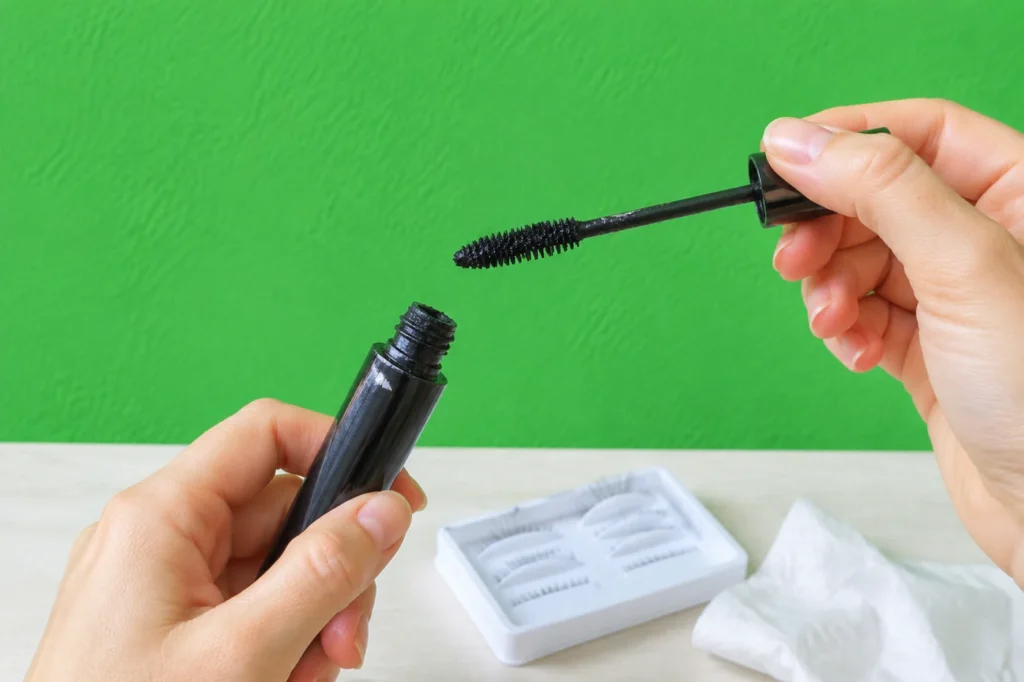
Search for whether you can use mascara on lash extensions and the US results split into two camps that contradict each other. One group of pages, including two of the largest lash franchises, says no – not on volume sets, and ideally not at all. Another group, including a national salon chain and a lash brand, says yes, provided it is a water-based, lash-safe formula.
Both camps are right. They are describing different sets, and neither explains the variable that decides which answer applies. That variable is not the mascara. It is how the extension was built and how much of the adhesive collar is exposed.
Why the Two Camps Contradict
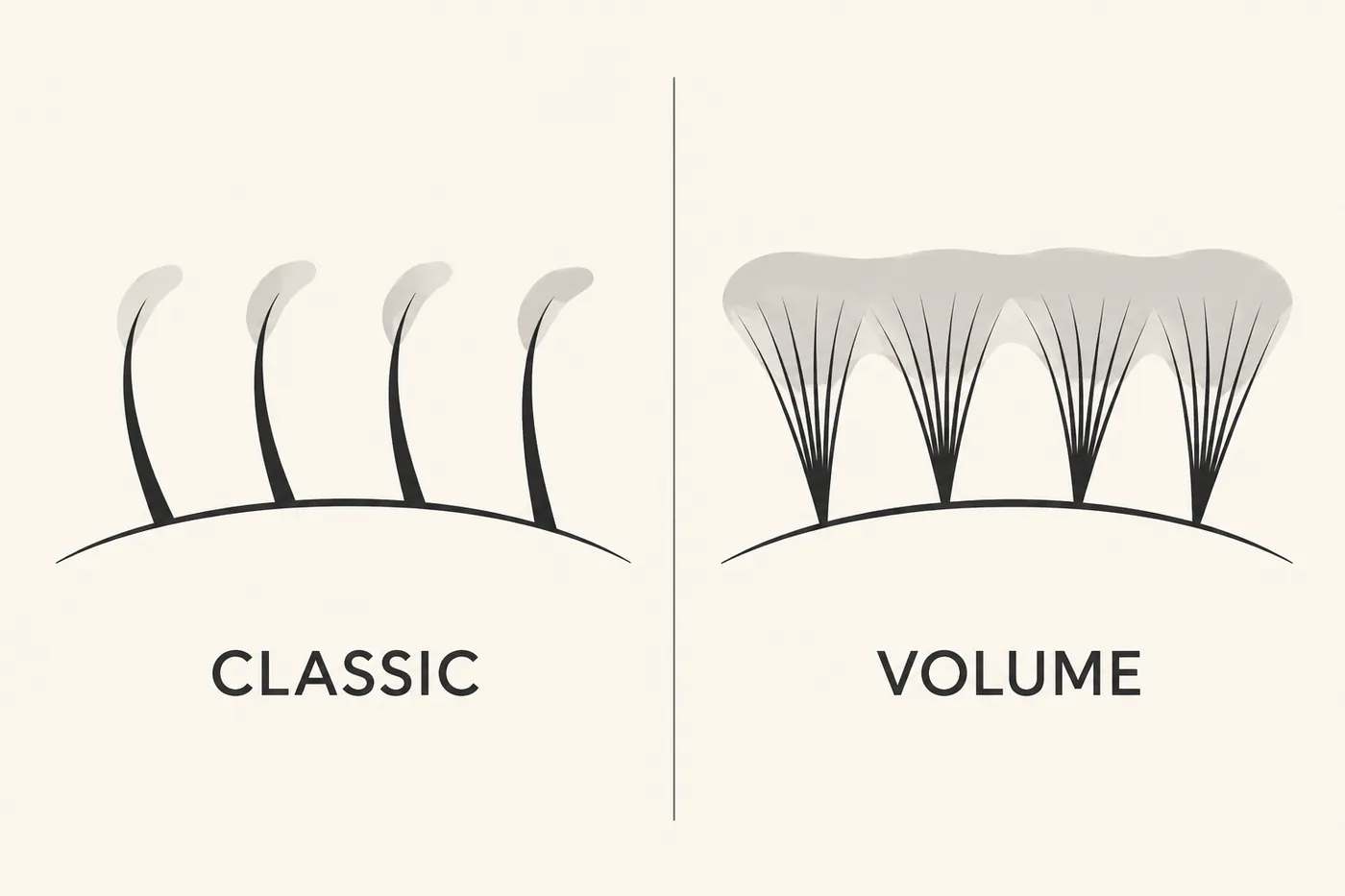
A classic set is built one extension per natural lash, with visible gaps between them. A volume set is built from fans – several fine extensions bonded together at a single point, then attached to one natural lash, deliberately isolated from its neighbours.
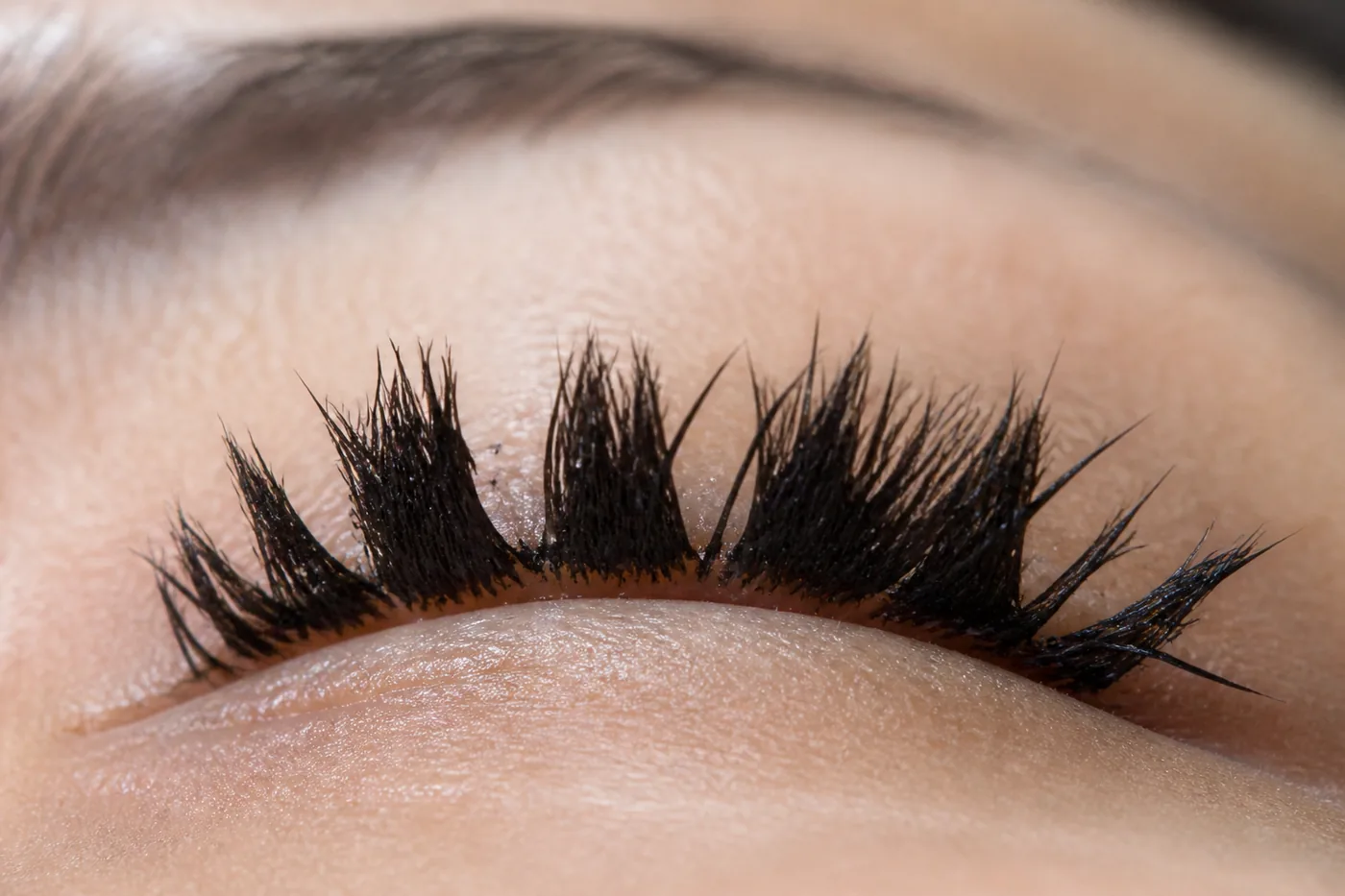
Mascara is a film former. It coats whatever surface it is applied to and then binds adjacent surfaces together as it dries. On a classic set with space between the extensions, there is less to bind, and a light coat on the tips mostly sits where it was applied. On a volume set, the gaps are the whole point, and mascara closes them: neighbouring fans fuse into blocks, and the separation the technician spent the appointment creating is gone.
That is why “do not use mascara on volume” and “water-based mascara is fine” can both be printed by people who know what they are doing. One is talking about fans. The other is talking about singles.
What “Lash-Safe Mascara” Actually Means
Less than the phrase implies. There is no standard, no certification and no test protocol behind “lash safe” or “extension friendly” – these are marketing descriptors, and a product carrying one has not been evaluated against any particular adhesive.
The useful specification sits in the ingredient list and in the removal behaviour. What a technician can actually check:
No oils and no waxes high in the list. Oils soften a cured cyanoacrylate bond over repeated contact, the same mechanism that makes oil-based makeup removers a bad idea. Waxes are the vehicles that make a mascara coat and cling.
Not waterproof. Waterproofing is achieved with ingredients designed to resist removal. That property is the problem, not a bonus: it guarantees the removal will involve more pressure, more product and more time spent working at the lash line.
Tubing formulas are the least bad option. A tubing mascara forms polymer sleeves around the fibre that slide off with warm water and gentle pressure, rather than requiring a solvent. It is still a film on the bond, but it comes off with the least mechanical work.
None of that makes mascara a good idea on a volume set. It makes it less destructive on a classic one.
The Real Cost Is the Removal
Ask what a client actually does at 11pm, not what the mascara contains.
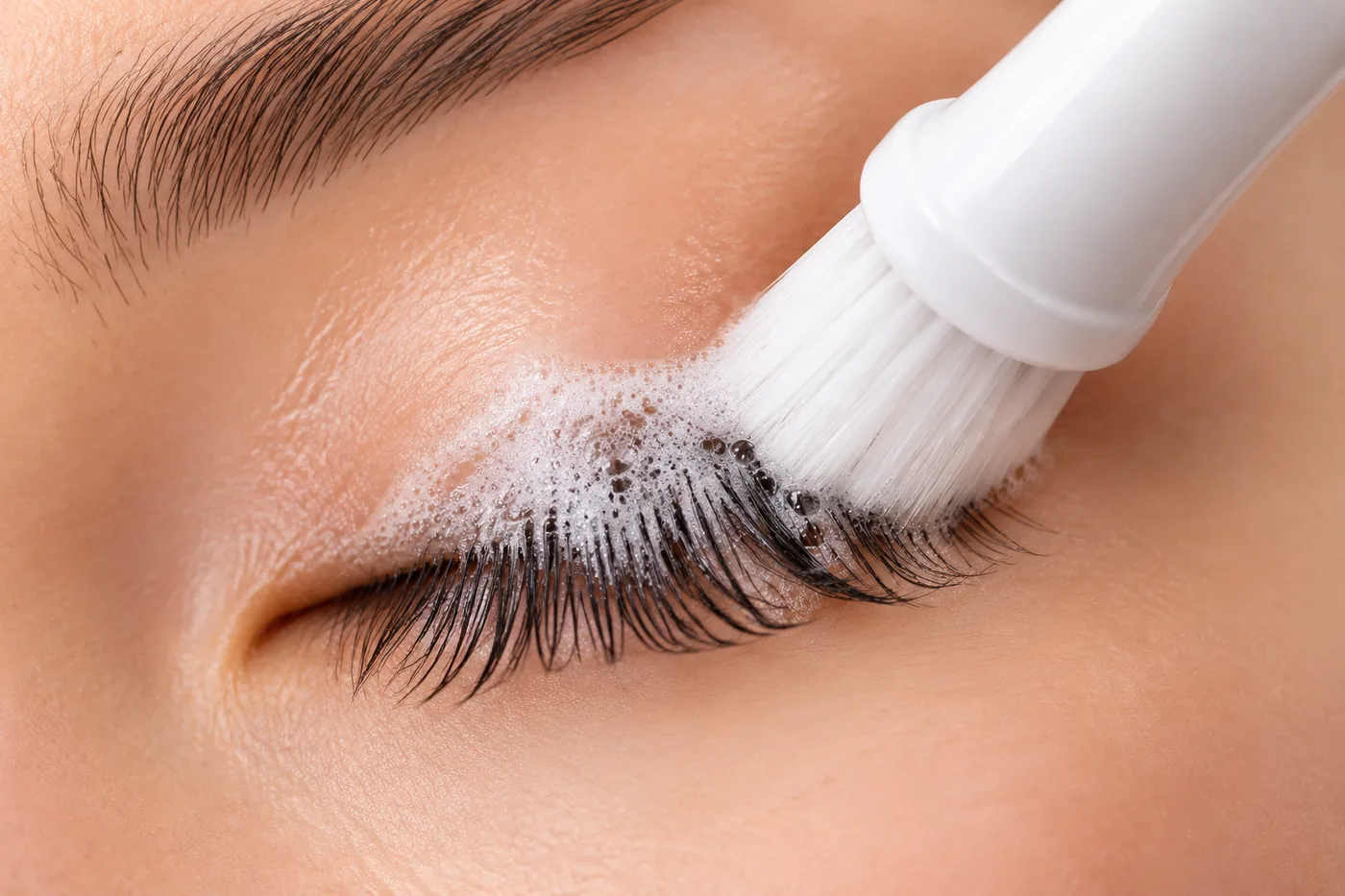
Removing mascara from extensions involves one of three things. Warm water and pressure, which is the mildest and still involves pressing on the lash line. A cleanser worked through the lashes, which is fine if it is a proper szamponem do rzęs and the client does not scrub. Or a makeup remover, which is where the damage usually happens – either because it is oil-based, or because it is applied with a cotton pad and dragged.
The pigment is not what removes extensions. The handling is. A client who applies a water-based tubing mascara once a week and removes it in the shower with warm water will do less damage than a client who uses a technically compliant mascara every day and works it out with a pad.
What to Use Instead
There are four options that cost the client nothing in retention, and three of them are cheaper than a lash-safe mascara.
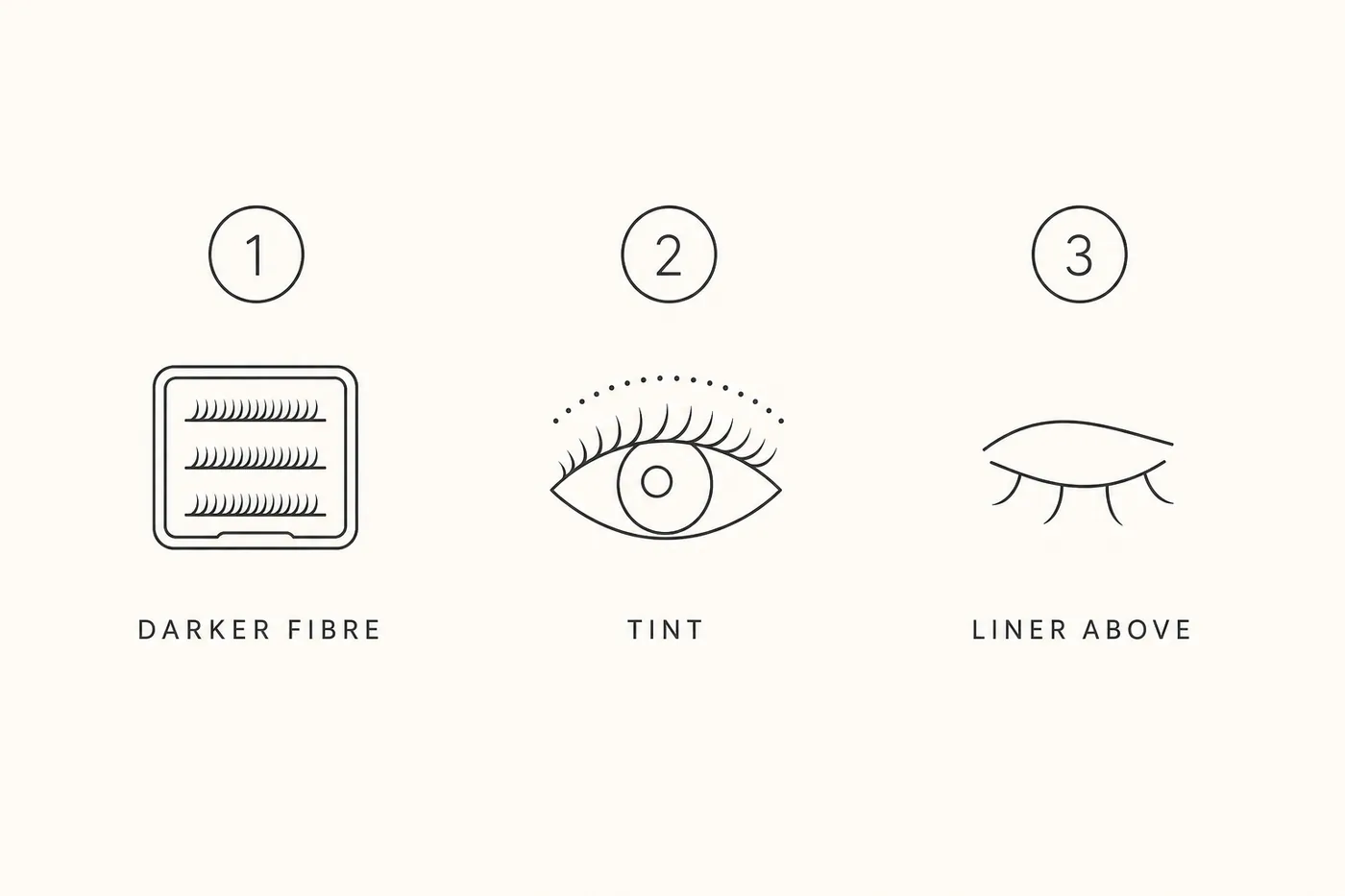
A darker fibre at the next refill. If the complaint is that the set is not dark enough, the answer is in the tray, not in a tube. Black or dark brown at the same diameter changes the read of a set more than a coat of mascara does.
A tint. Lifts and tints are a separate service, but a tint on extensions is not standard practice and should not be offered casually; for clients without extensions, a tint is often the honest recommendation over mascara.
Liner above the lash line. A fine water-based liner applied to the skin above the base adds definition without touching the bond, and the placement rules are set out in the guide to eyeliner with lash extensions.
Mascara on the lower lashes only. This is the one genuinely safe version of the habit, and it is the piece of advice the franchise pages get right. Lower lashes rarely carry extensions, so mascara there costs nothing – the asymmetry is worth explaining to clients, because it answers the “can I wear any makeup at all” question in one sentence.
If a Client Is Going to Do It Anyway
Some will. The realistic approach is harm reduction rather than prohibition, because a client who is told “never” and does it anyway will not use the least-damaging method.
The protocol that holds: classic sets only, a light coat on the tips rather than from the base, a water-based tubing formula, removal with warm water and a gentle downward motion in the shower, a proper cleanse afterwards, and not every day. The wider daily routine is set out in lash extension aftercare.
What to avoid outright: waterproof formulas, oil-based removers, cotton pads, lash curlers (mechanical crushing of the bond), and applying mascara to a volume set and then trying to separate the fans with a spoolie. That last one is how a set goes from clumped to sparse in a single evening.
The Honest Position
Mascara on extensions is not a chemical hazard. The adhesive is not dissolved by a compliant formula, and the fibre does not care. What suffers is the structure of the set and the mechanical handling during removal, and both of those are the client’s decision, made daily.
For a technician, the useful conversation is not “mascara will ruin your lashes”. It is: on a volume set, it will visibly close the fans within a week, and the fix is a darker fibre rather than a tube. That is a claim a client can verify in the mirror, which is why it lands.
What extensions do to shedding and retention is a separate question, covered in how long lash extensions last; none of it changes because of mascara.
Najczęściej zadawane pytania (FAQ)
Can you put mascara on lash extensions? On a classic set with gaps between extensions, a light coat of a water-based, non-waterproof formula on the tips is survivable. On a volume set, it is not recommended, because it bonds neighbouring fans together.
Does mascara damage lash extensions? The pigment does not. The removal does – particularly oil-based removers and the mechanical work of separating clumped fibres. Repeated exposure to oils also softens the cured adhesive over time.
What mascara is safe for lash extensions? There is no regulated definition of “lash safe”. The practical specification is water-based, non-waterproof, no oils or heavy waxes, and removable with warm water – tubing formulas meet it most reliably.
Can you use waterproof mascara with lash extensions? It is the worst of the options: it requires oil-based remover or sustained pressure to take off, and both are harder on the bond than the mascara itself.
Should you wear mascara on the bottom lashes? Yes, that is the safe exception. Lower lashes usually do not carry extensions, so mascara there has nothing to damage.
The Short Version
The answer depends on the set, not the mascara. Singles with visible gaps tolerate a light water-based coat; fans do not, because mascara’s job is to bind fibres and the fan’s job is to stay separated.
If a client wants more definition, the better answer is a darker fibre, a tint, or liner placed above the lash line – and mascara on the lower lashes, where it costs nothing.
One disclosure: we manufacture lash extensions, so we benefit when a set stays intact and when the answer is “change the fibre at your refill” rather than “buy a product”. That is also why this piece says plainly that mascara is not a chemical hazard, and that the removal is where the damage is done.

 English
 German
 French
 Spanish
 Romanian
 Portuguese
 Dutch
 Italian
 Swedish
 Polish