

UV Lash Extensions: How Light-Cure Works and What to Stock
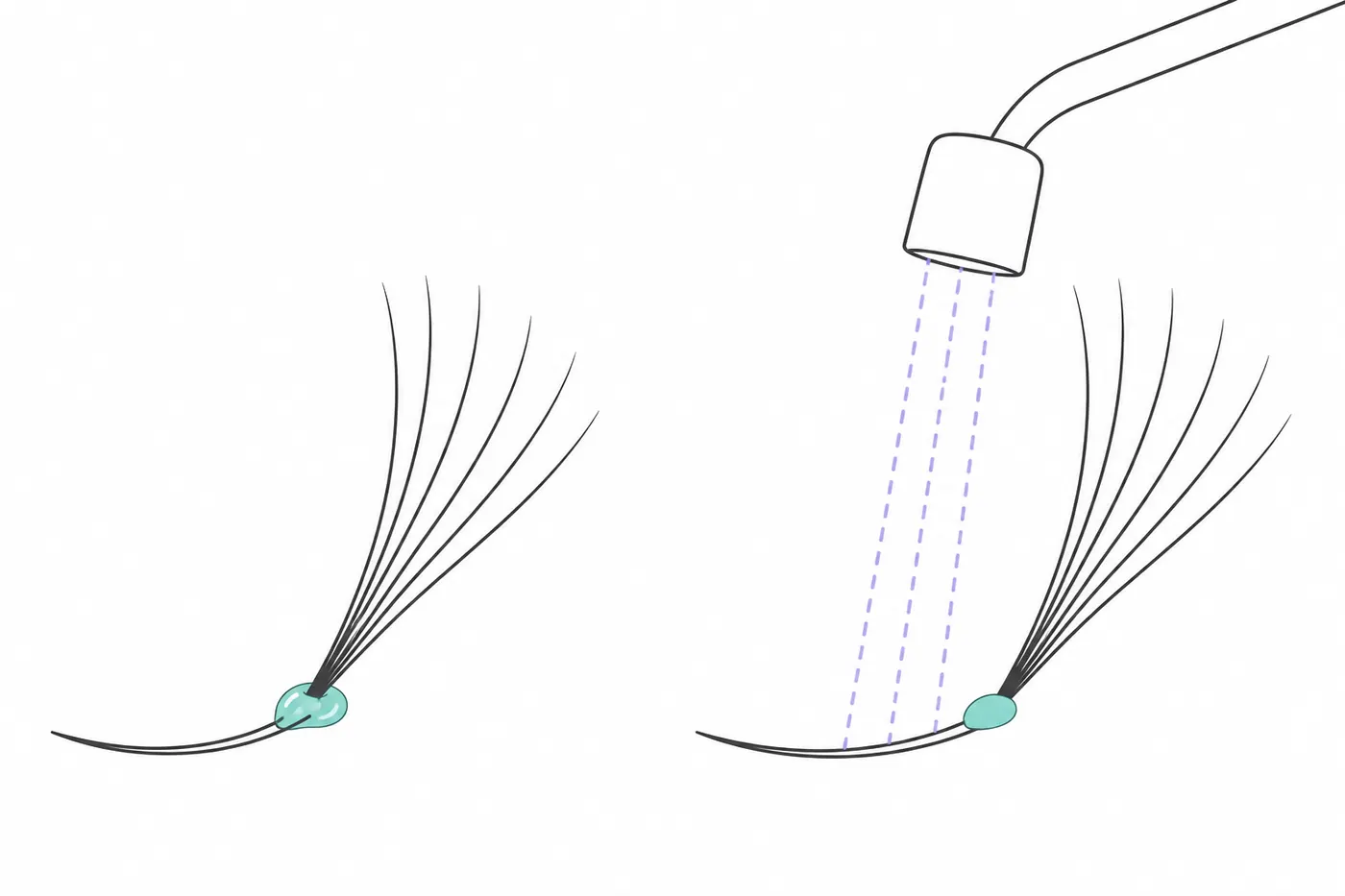
UV lash extensions are the same service with a different curing mechanism. Instead of a cyanoacrylate adhesive that sets on contact with moisture in the air, the fibre is placed with a light-cured adhesive and then exposed to a UV or LED lamp that hardens the bond in a single controlled step. The technician controls when the bond forms, rather than waiting for it to happen.
For a supplier, that changes which products belong together on the shelf: the adhesive and the lamp are one system, and a client who buys one without the other has an unusable product. This guide covers how the method works, what it demands from the technician, what to verify in the adhesive and lamp specification, and how to stock the pair.
Why the Method Exists
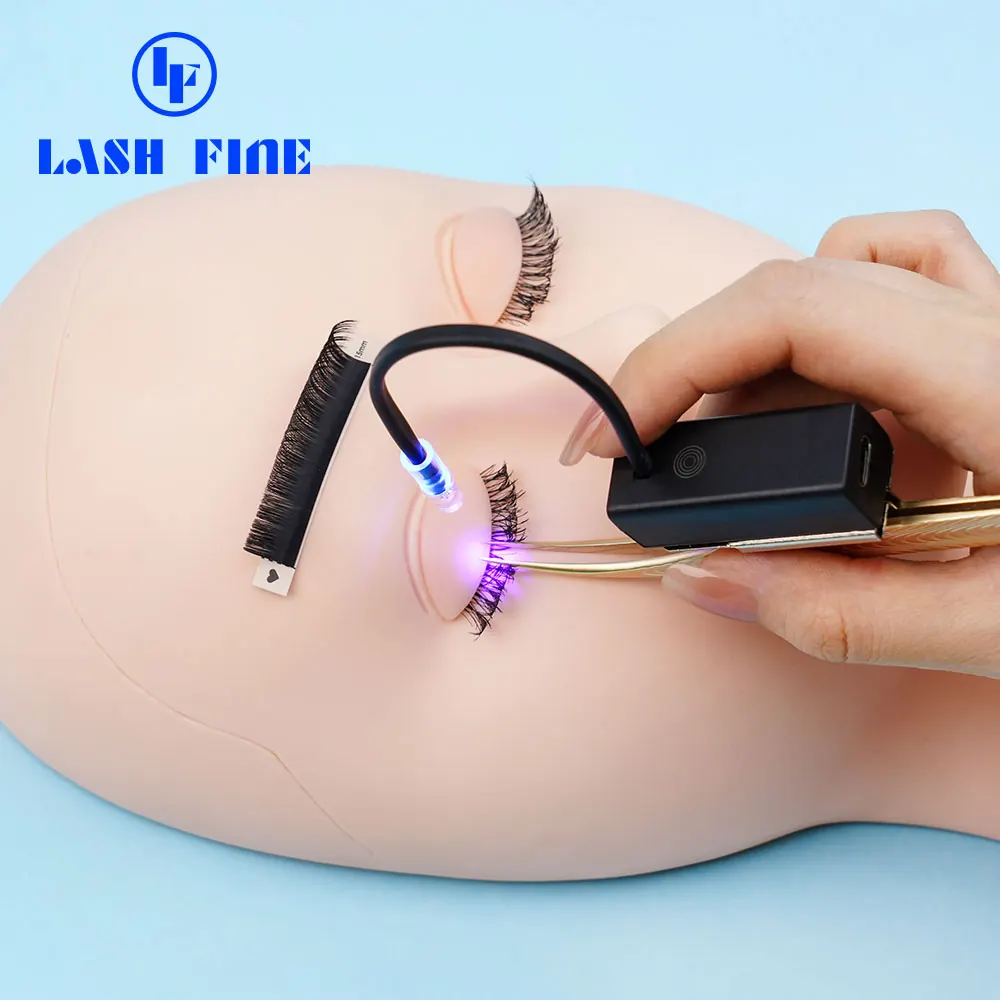
The appeal of a light-cured system is control. Conventional lash adhesive cures on a curve that depends on temperature and humidity, which is why the same bottle behaves differently in a dry studio in winter and a humid one in summer. A UV system removes that variable from the equation: the adhesive stays workable until the lamp is applied, then cures immediately, which shortens the time the technician spends holding a placement steady.
The second appeal is fume exposure. Cyanoacrylate adhesives release vapour as they cure, which is the reason some technicians and clients report irritation during or after a set. A light-cured adhesive hardens without that vapour release, which makes the method attractive for technicians who work long days and for clients who have reacted to conventional adhesive before 鈥?the same client group that a hypoallergene lijm is chosen for.
Two limits are worth stating plainly, because they decide whether the method suits a studio. A UV set is slower per placement than a fast conventional adhesive, since each lash passes under the lamp. And the system only works as a pair: an unmatched lamp and adhesive is the most common source of a complaint that has nothing to do with technique.
How a Light-Cured Set Is Applied
The routine follows the classic sequence with two additional controls.
The natural lashes are isolated and prepared as usual 鈥?cleansed, dried, and where the technician’s protocol calls for it, primed with a product such as the wimper primer that improves the surface the adhesive meets. The adhesive is then picked up and the extension placed; because a light-cured adhesive does not start to set on contact, placement is more forgiving than with a conventional glue.
The lamp is the second control. Each placement is cured individually, with the light held over the bond for the time the adhesive specification states rather than a time the technician guesses. Curing position matters as much as duration: the light has to reach the bond line, which is at the base of the lash and therefore easy to miss if the lamp is held at an angle.
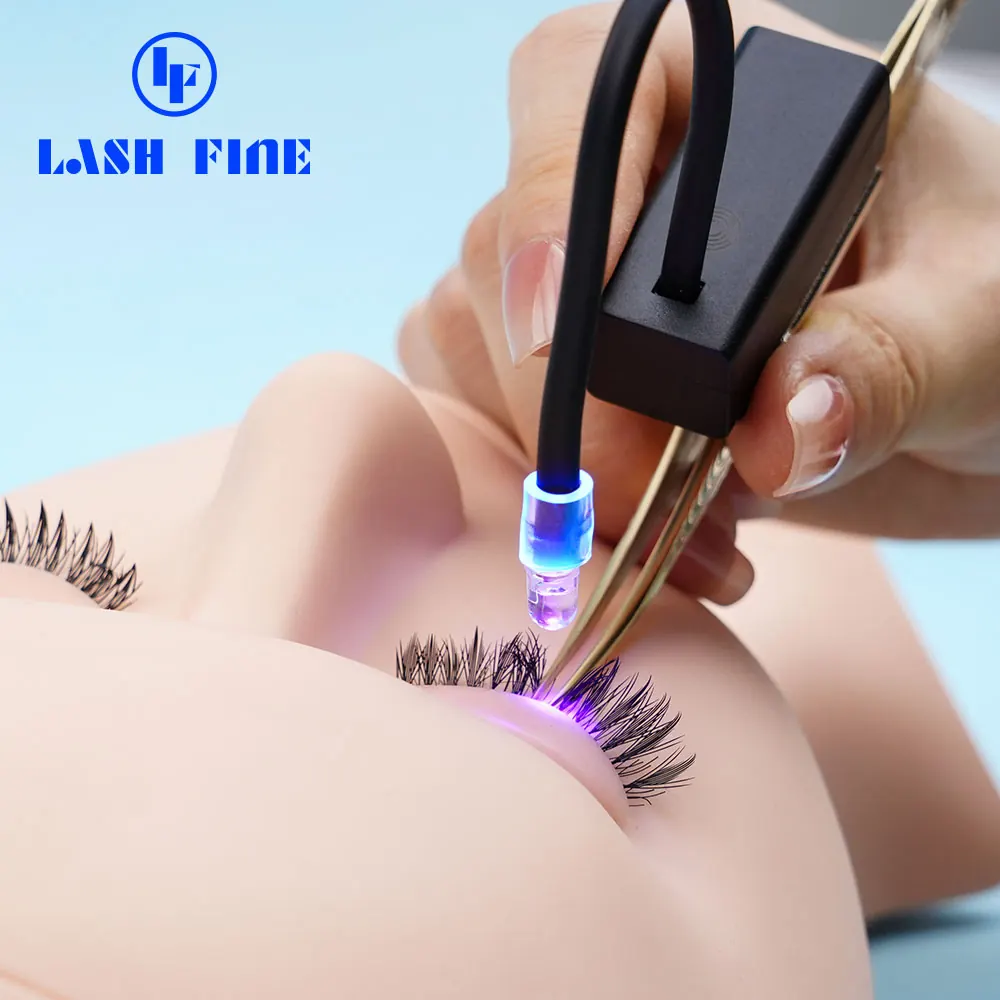
Between placements, the working surface should be shielded from stray light. A lamp left switched on across the workspace will partially cure adhesive on the strip, which changes its workability and produces the complaint that the glue “went thick halfway through” 鈥?a symptom the technician usually attributes to the bottle.
What to Verify in a UV Adhesive
Because the adhesive is half of a system, the specification matters more than the label. Four points are worth checking before a range is stocked.
Wavelength compatibility. The adhesive is formulated to cure at a specific wavelength band, and the lamp has to emit in that band. A lamp and adhesive sourced separately may both be described as “UV” and still fail to cure properly together, which is the reason to buy the pair from one supplier or to confirm the figures in writing.
Cure time under the specified lamp. The number that matters is the cure time with the lamp the technician will actually use, not a laboratory figure measured under a different source.
Viscosity and workability. A light-cured adhesive that is too thick drags the fibre out of position before curing; one that is too thin wicks into the lash line. The drop test used for conventional adhesives applies here too.
Shelf life and light-proof packaging. A light-cured adhesive that has been exposed to daylight in transit or on the shelf will not perform, so opaque or amber packaging and a documented shelf life are part of the product rather than a detail.
Client Suitability and Expectations
The client conversation is shorter than for a conventional set but no less important. A patch test remains standard practice, and sensitivity to the adhesive is still possible even without vapour 鈥?the reaction mechanism is different, not absent. The client should also be told what the lamp does: a visible light source held close to a closed eye is unfamiliar, and explaining the curing step before the appointment avoids a flinch in the middle of a set.
Wear time should be described in the same terms as any extension service, judged on the client’s natural lash cycle rather than on a promise. Where a client returns with early losses, the diagnostic order is the same as with conventional adhesive: preparation first, then placement, then the environment, and only then the product.
For removal, the same discipline as any extension set applies. A light-cured bond is not removed with heat or by picking; the removal product has to be matched to the system. Our guide to wimperextension-remover covers the safe routine, and a UV studio should confirm with the adhesive supplier that the remover they stock is compatible with the bond they place.
What a UV Range Needs on the Shelf
A UV line is short and its components are complementary, which makes it easy to stock and easy to sell as a set.
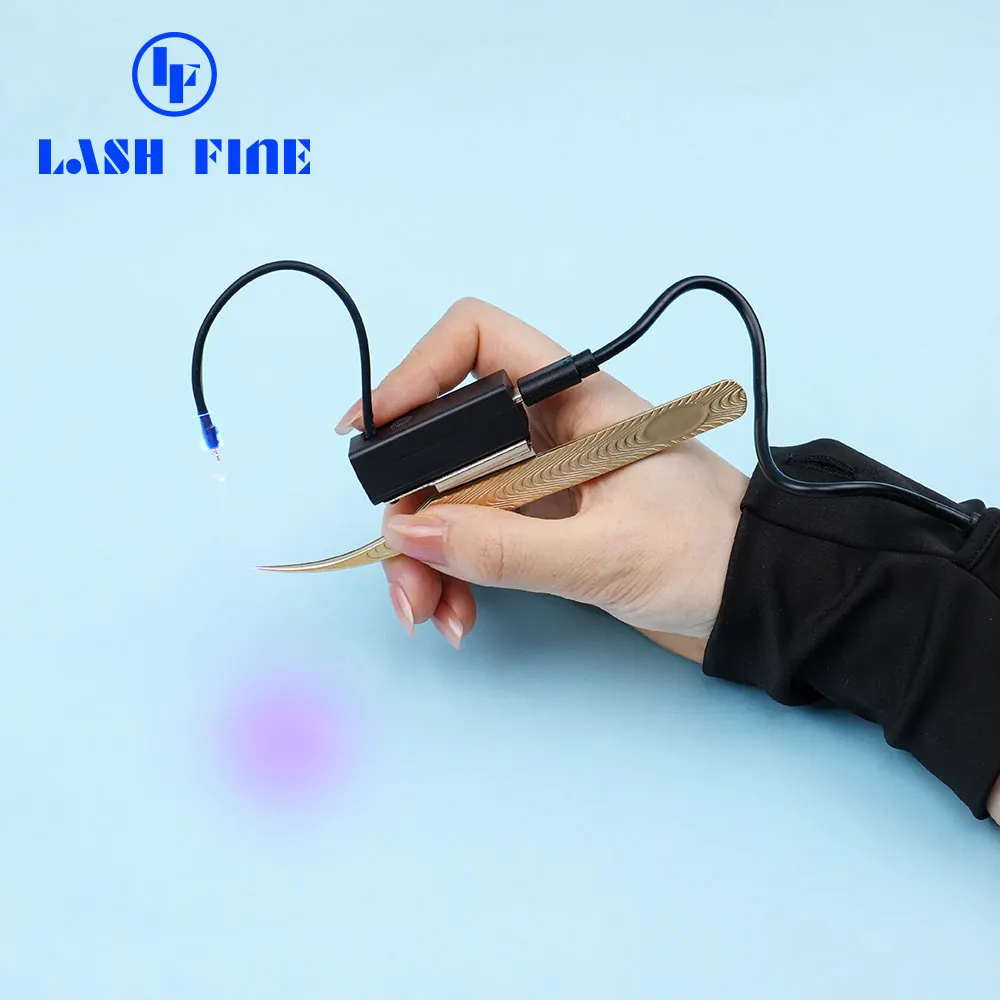
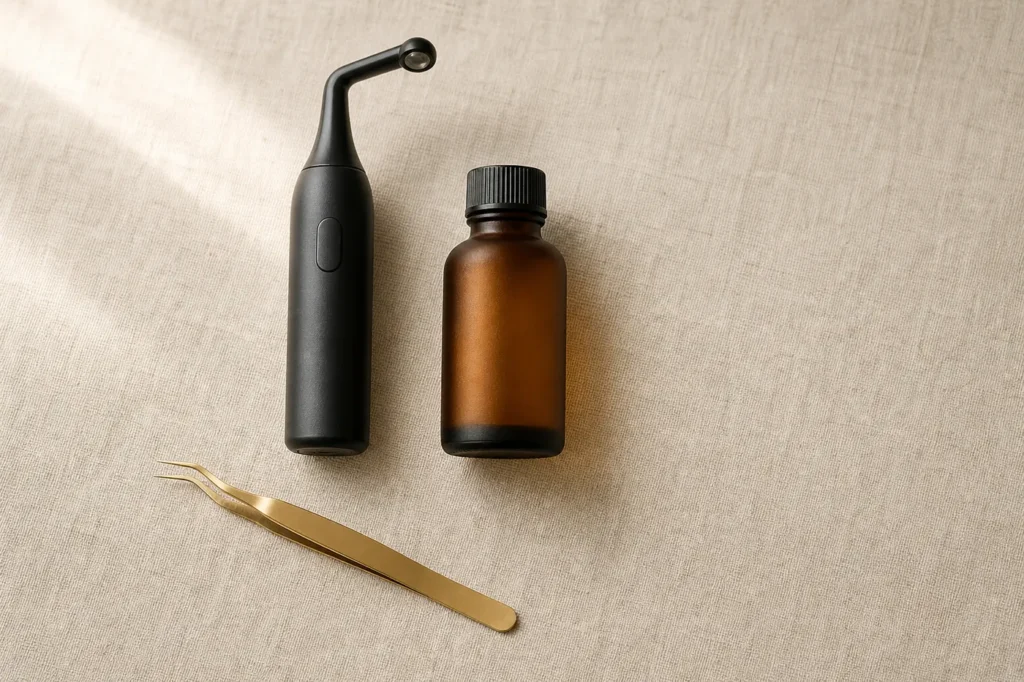
The minimum viable range is two products: the UV LED tweezer lamp that mounts on the tweezers and cures at the point of placement, and the UV adhesive formulated for it. Because the lamp is a durable tool and the adhesive is a consumable, the reorder pattern is asymmetric: the lamp sells once per technician, the adhesive sells repeatedly. That asymmetry is the reason a supplier should treat the lamp as the door to the line rather than as the profit centre.
Beyond the pair, three items complete the offer. A spare lamp head or charging cable, since the tool is battery-powered and a failed charge stops the service. Tweezers that hold the lamp securely, chosen for weight rather than for grip alone 鈥?our wimper pincet guide covers the shapes. And a compatible remover, so the client relationship does not end at the first bad removal.
A Buying Checklist for UV Systems
1. Buy the lamp and the adhesive as a matched pair, or confirm wavelength and cure time in writing.
2. Check cure time under the lamp you will actually use.
3. Confirm the adhesive ships in light-proof packaging with a dated shelf life.
4. Test viscosity with a drop test before committing to a carton.
5. Confirm the remover you stock is compatible with the light-cured bond.
6. Stock a spare lamp head or cable: the tool is a single point of failure.
7. Write the cure time into the service protocol, and cure each placement individually.
8. Shield the working strip from stray lamp light during the set.
9. Explain the light step to the client before the appointment, and keep the patch test.
Who Should Stock a UV Line
UV lashes are not a replacement for a conventional lash range; they are a second system that answers a specific client and a specific technician. The studio that keeps losing clients to adhesive sensitivity, or that works in an environment where humidity makes retention unpredictable, has a reason to add it. The studio that has a reliable conventional workflow and no sensitivity complaints in its client base does not need the extra step.
For a supplier the decision is therefore about coverage rather than volume. A UV pair on the shelf answers a question that the rest of the catalogue cannot, and it is a small, self-contained line: two products, one consumable, one tool, and a remover that the studio already buys. Stocked that way, it earns its space without competing with the classic and volume ranges that carry the order.


 English
  German
  French
  Spanish
  Romanian
  Portuguese
  Dutch
Dutch  Italian
  Swedish
  Polish