

A lash extension consent form is usually treated as paperwork – something printed in bulk, handed over with the aftercare card, signed without being read. That is a mistake, and not because of the legal theatre around it. The form is the only record of what the technician knew before the appointment started: what the client disclosed, what was tested, what product went on the lash, and what the client was told could happen. When something goes wrong three weeks later, that record is the difference between a conversation and an accusation.
None of that requires a lawyer’s template. It requires knowing what the form is actually for, and filling it in at the point where the information still exists.
What a Consent Form Is For
A consent form does three jobs, and only the first one is about permission.
The first is disclosure: the client is told what the procedure involves, what the realistic risks are, and what aftercare requires, before anything is applied. The signature is evidence that this happened, not the thing that makes it happen.
The second is a contemporaneous record. A form filled in at the start of the appointment captures what the client said while they still remembered it – the course of antibiotics last month, the lash lift four weeks ago, the reaction to a patch test two years back. Reconstructed from memory afterwards, that information is worth very little.
The third is decision support. A well-built form forces the technician to ask the questions that change the plan: is this client’s lash line healthy, is there a history of reaction, is there a reason this adhesive is the wrong choice today. Used properly it slows the first five minutes of an appointment down and prevents more problems than any aftercare instruction.
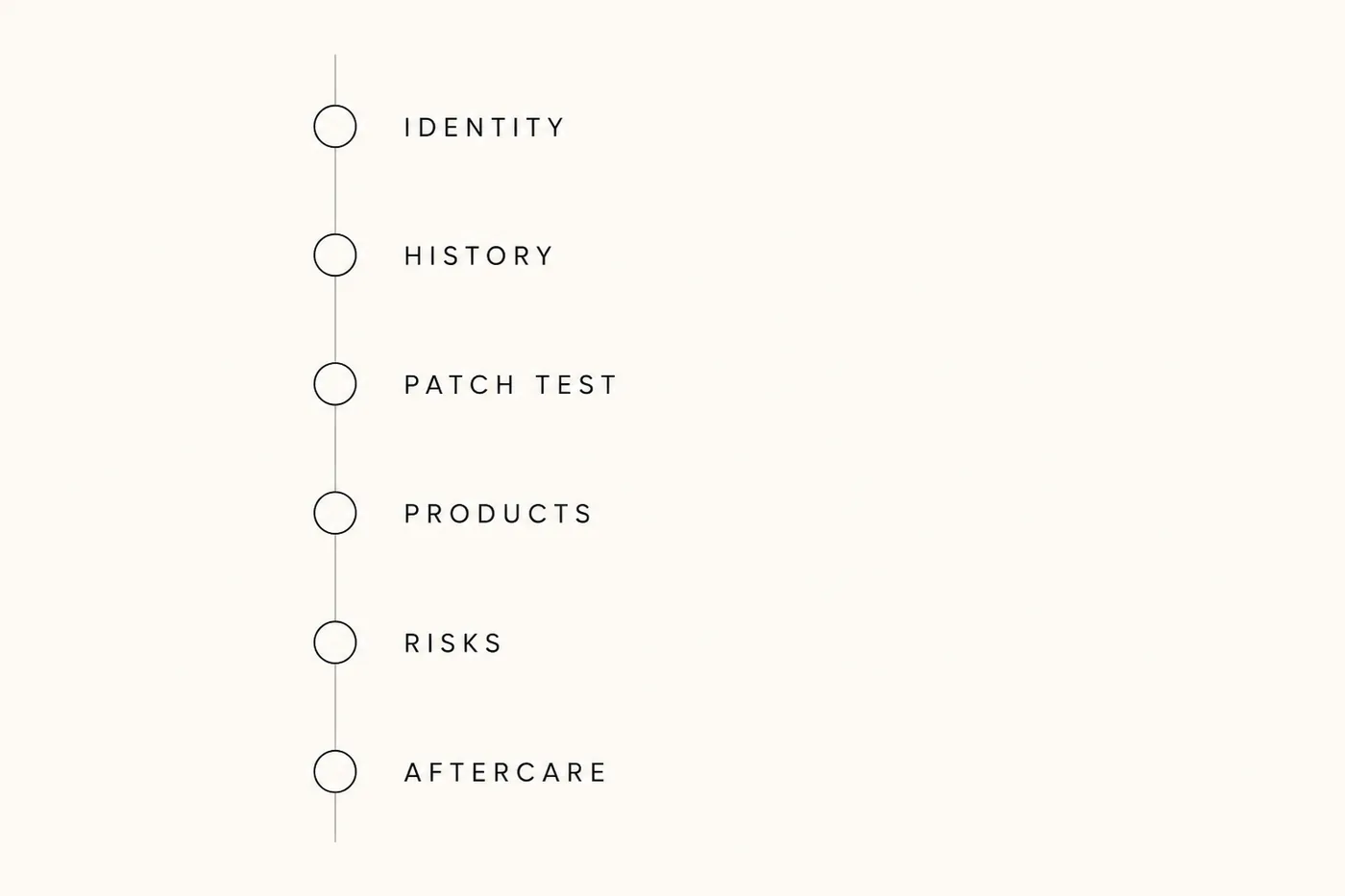
The Six Things It Has to Capture
Most weak forms are weak in the same way: they ask for a signature and a date, and nothing that would matter later.
Identity and contact details. Name, contact number, and date of birth where age matters for consent. This is also the record that lets you trace a problem back to a specific client if a batch of adhesive turns out to be faulty.
Medical history and contraindications. Not a full medical questionnaire – the specific things that change a lash appointment. Current eye infections or inflammation, recent eye surgery, known adhesive or acrylate allergy, skin conditions around the eye, pregnancy, and medication that affects skin sensitivity. Asking about these is not diagnosis; it is deciding whether today is the right day to proceed.
Patch test record. The date it was done, which product was used, where it was applied, and the result the client reported. A blank field is a gap in the record, and a gap is what gets argued about later.
Products used. The adhesive brand and batch where available, the sealant, the primer. Batch numbers sound excessive until a client reacts and you need to know whether anyone else had the same tray.
Risk disclosure and consent. What the client was told: that extensions are attached to natural lashes, that shedding is normal, that a reaction is possible even with a negative patch test, that the result depends on aftercare. Consent is to the procedure as described, which is why the description has to be on the form.
Aftercare acknowledgement. A short statement that the client received the aftercare instructions and understood them. It connects the appointment to the instructions, which matters when a client reports early loss after two weeks of oil-based cleanser.
The Patch Test Is a Record, Not a Guarantee
A patch test is the most misunderstood item on the form, in both directions. Some technicians treat a negative result as clearance; some skip it because they have never seen a reaction.
Neither position matches what a patch test can do. It can reveal an existing sensitivity to a specific product within the window it is read. It cannot rule out a reaction that develops later, because sensitivity to acrylates can build up over repeated exposure rather than appearing on first contact. A client who has worn extensions for two years without issue can still react to a new adhesive.
The practical consequence is that the form needs two fields, not one: whether the test was done, and whether the client was told that a negative result does not eliminate the risk. The second field is what makes the first one meaningful. Where a client declines the test, record the decline rather than leaving the space empty – a documented refusal is a very different thing from a missing entry.
The management of a reaction once it happens is a separate subject, covered in the guide to allergie voor wimperverlenging, and the choice of adhesive for reactive clients is set out in the guide to lijm voor gevoelige ogen.
When a Client Discloses Something
The form’s value shows up in the second half of the appointment, when an answer comes back that changes the plan. There are three honest responses, and all three belong in the record.
Proceed as planned, with the disclosure noted. This is right for most history that has no bearing on today – a childhood allergy to a food, a course of antibiotics that finished months ago.
Proceed with a modification, and write down what changed. A client with sensitive eyes might get a different adhesive, following the logic set out in choosing an adhesive by client type and retention; a client with a recent lash lift might get a lighter set, or a shorter one. The note matters because the next appointment should start from the same information.
Decline to proceed today, and record why. Active infection, inflammation along the lash line, recent eye surgery, or a disclosed allergy to the adhesive family are reasons to stop. Declining is not a lost booking; it is the outcome the form exists to produce, and a client who is sent away once and treated safely afterwards is a client who returns.
The one response that is never acceptable is proceeding while quietly noting a concern in your head. Anything not written down did not happen, as far as the record is concerned.

What the Form Cannot Do
A signed form does not transfer responsibility. It does not protect a technician who skipped isolation, over-weighted a lash, or used a product outside its instructions. Consent covers informed risk, not negligence, and no wording changes that.
It does not replace insurance either. Most policies specify what has to be recorded for a claim to be considered, which is one reason to check the policy wording before designing the form rather than after.
And it does not substitute for competence. A form signed by a client who was never told what could go wrong is not informed consent, however complete the fields look. The document is evidence of a process; if the process did not happen, the document is worse than useless.
Using It in the Appointment
Where the form sits in the appointment matters more than its length.
It belongs at the start, before the client lies down, because that is when they are thinking about the decision rather than about the result. Fifteen minutes of consultation is not excessive for a first appointment, and it is the part clients remember when they recommend a technician.
Digital forms are fine and often better, because the record is legible and searchable. What matters is that the completed version is stored somewhere the technician can retrieve it during a later appointment, not in a folder of unsigned templates. Records should be kept securely, shared only with the client and, where relevant, an insurer, and retained for the period the insurer or local rules require – check both, since they may differ.

For technicians building the rest of the business paperwork, the sequence from training to certification to operating legally is covered in the guide to lash tech certification, and the client-facing half of the appointment is covered in the guide to lash extension aftercare.
FAQ
Is a consent form legally required for lash extensions? It depends on where you work. Some jurisdictions require written consent for cosmetic procedures; others do not specify. Insurance providers frequently require one regardless, so the practical answer is to have one.
What should a lash consent form include? Identity and contact details, relevant medical history and contraindications, patch test date and result, products and batch where available, the risks disclosed, the client’s consent, and acknowledgement of aftercare instructions.
How long before an appointment should a patch test be done? Industry practice is commonly 24 to 48 hours before, so that a reaction has time to appear and the appointment can be postponed if one does. Follow the timing specified by the product manufacturer where one is given.
Can a client sign a waiver instead? A waiver that attempts to exclude all liability is unlikely to be worth much, and it is not the same as informed consent. Record what was disclosed and agreed rather than relying on a blanket exclusion.
Do I need a new form for every appointment? A full form is usual for a first visit and after any significant change in health, medication or products. Repeat appointments typically need an update confirming nothing has changed, which is faster and still a record.
The Short Version
A consent form is not there to protect the technician from the client. It is there so that the information that decides an appointment is captured while it is still accurate – what the client disclosed, what was tested, what was used, what they were told.
Fill it in before the client lies down, write the answers rather than the intentions, and keep the completed copy where you can find it a year later. Everything else about the form is formatting.


 English
 German
 French
 Spanish
 Romanian
 Portuguese
 Dutch
 Italian
 Swedish
 Polish