

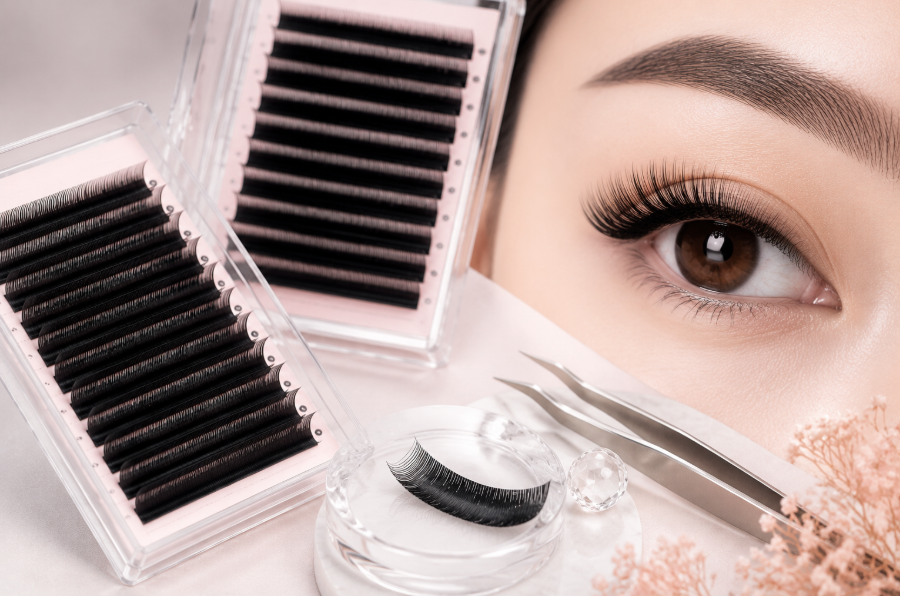
Koreaanse PBT wimpers zijn een eersteklas synthetische wimpervezel die bekend staat om het zachtere gevoel, de matte afwerking en het sterke krulbehoud. In moderne wimperextensions hebben ze geholpen een hogere standaard te zetten voor realisme, comfort en consistentie.
Wat zijn Koreaanse PBT wimpers?
PBT staat voor polybutyleentereftalaat, Een thermoplastisch polymeer dat veel wordt gebruikt in synthetische wimpervezels. In de wimperproductie wordt het gewaardeerd omdat het warmtevormend is en de krul betrouwbaarder vasthoudt dan veel goedkopere alternatieven.
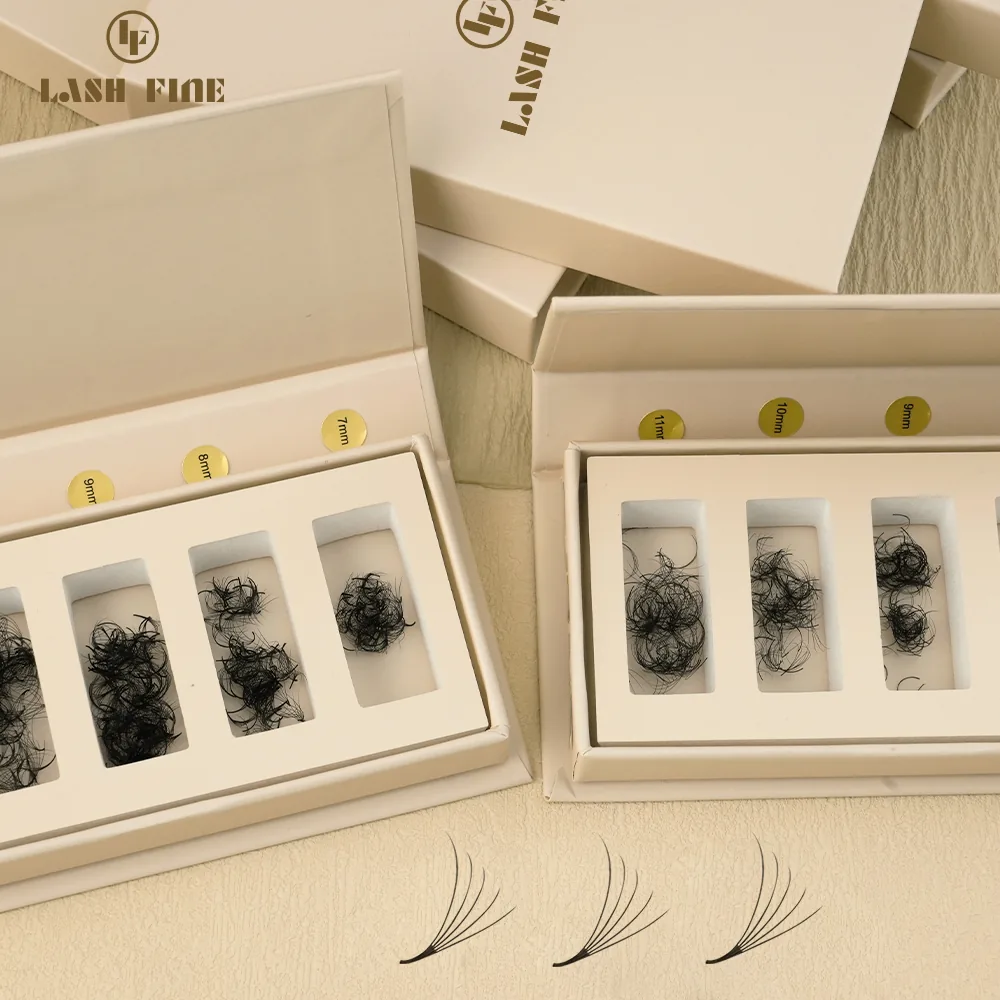
Koreaanse PBT wimpers worden vaak aangeprezen als een hoogwaardigere wimpervezel omdat ze vaak goed zijn:
- een zachtere textuur
- een meer natuurlijke look
- een matte in plaats van glanzende afwerking
- betere krulstabiliteit
- lichtgewicht kleding voor klanten
Waarom wimpermerken PBT gebruiken
PBT kan een uniforme, flexibele vezel produceren die de natuurlijke wimpers beter nabootst dan stijvere kunststoffen. Voor wimperartiesten en distributeurs betekent dat meestal betere visuele resultaten en voorspelbaardere productprestaties.
Koreaanse PBT-wimpers vs. acrylwimpers
| Functie | Koreaans PBT | Acryl |
|---|---|---|
| Waargenomen kwaliteit | Hoger segment | Goedkoper |
| Krulbehoud | Over het algemeen sterker | Meer kans op vormverlies |
| Textuur | Zachter, natuurlijker | Stijver, kunstmatiger |
| Afwerking | Meestal mat | Vaak glanzender |
| Prijs | Meestal hoger | Meestal goedkoper |
| Kijk op | Realistischer | Meer synthetisch |
In de meeste gevallen wordt de voorkeur gegeven aan Koreaanse PBT als het doel zachtheid, comfort en een meer natuurlijke afwerking is. Om budgetredenen kan voor acrylwimpers worden gekozen, maar deze gaan vaak ten koste van krulbehoud en realisme.
Hoe Koreaanse PBT de wimperindustrie veranderde
Voordat PBT dominant werd, voelden veel wimpervezels zwaarder aan, zagen ze er glanzender uit of hielden ze de krul minder constant. Naarmate de industrie volwassener werd, richtten fabrikanten in Korea, China en andere productiecentra zich meer op vezeluniformiteit en krulstabiliteit.
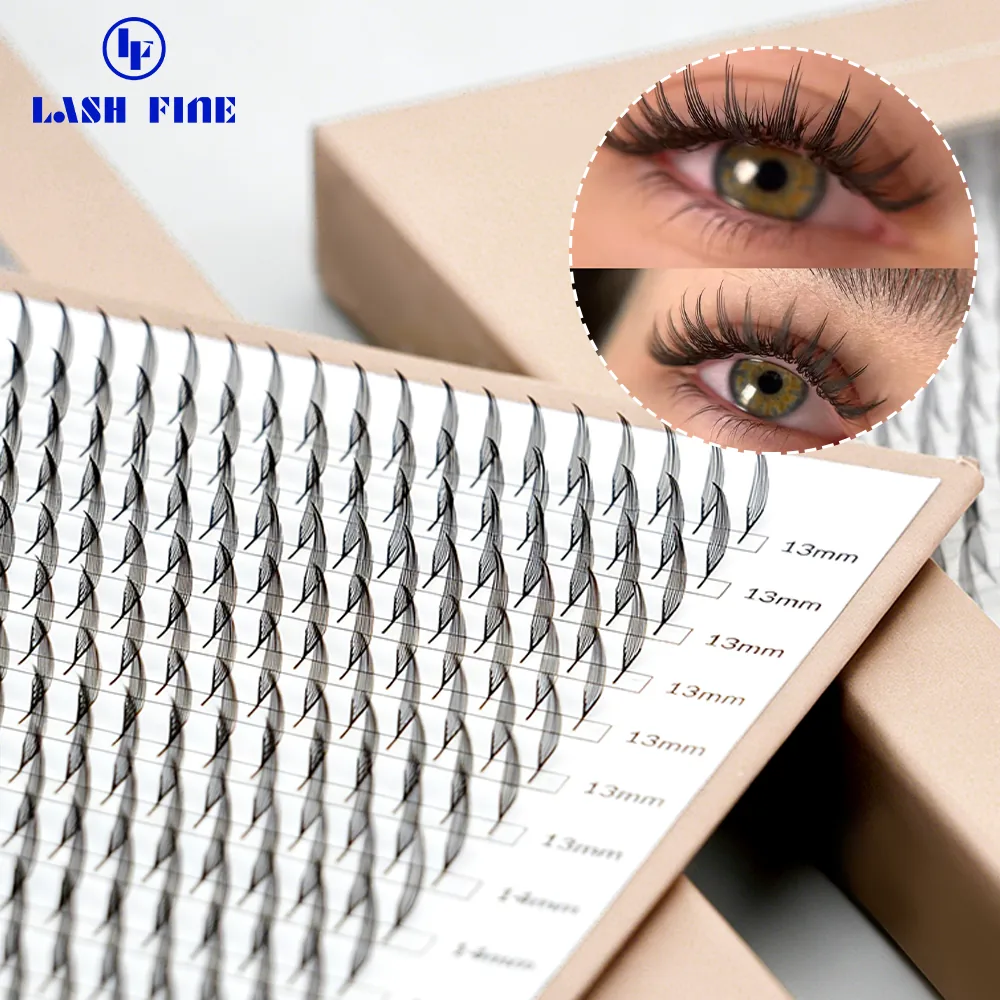
Koreaanse PBT hielp de markt in de richting van:
- zachtere synthetische vezels
- consistentere krulstandaarden
- lichter aanvoelende wimpersets
- betere nabootsing van natuurlijke wimpers
Waar kopers van wimpers op moeten letten
Niet elk product met het Koreaanse PBT-label presteert even goed. Kopers moeten de productkwaliteit controleren aan de hand van documentatie en steekproeven.
Nuttige leverancierscontroles
Vraag leveranciers naar:
- details vezelsamenstelling
- krulspecificaties
- afwerking beschrijving
- informatie over batchconsistentie
- gegevens over hittebestendigheid of krulgeheugen
Tekenen van inferieure filamenten
Let op deze waarschuwingssignalen:
- overmatige glans in plaats van een matte afwerking
- ongelijke krul over trays
- stugge of plakkerige textuur
- zwakke terugkeer na buigen
- inconsistente zwarttint tussen batches
- vage materiaalbeschrijvingen zonder vezelspecificaties
Overwegingen met betrekking tot standaarden en naleving
De wimpermarkt wordt bepaald door productveiligheid, nauwkeurigheid van etikettering en importvereisten. Afhankelijk van de markt moeten kopers rekening houden met:
- regels voor de veiligheid van cosmetische producten
- bekendmaking vezelsamenstelling
- productietraceerbaarheid
- consistentie van verpakking en etikettering
- risicocontroles op allergie en irritatie
Merken zoals Lashfine positioneren hun PBT wimperproducten rond kwaliteit, consistentie en ondersteuning voor professionele kopers. Voor wimperartiesten en private-labelklanten is de belangrijkste factor niet alleen het merk, maar ook of de leverancier een stabiele kwaliteit kan aantonen voor alle productieruns.
Tot slot
Koreaanse PBT wimpers werden populair omdat ze de verwachtingen voor zachtheid, krulstabiliteit en een natuurlijkere afwerking van wimperextensions verhoogden. Hoewel claims van leveranciers altijd geverifieerd moeten worden, blijft PBT een van de belangrijkste materialen in de moderne wimperindustrie.
Voor kopers die op zoek zijn naar betrouwbare synthetische wimpervezels, is Koreaans PBT vaak de benchmark om mee te vergelijken.
 English
  German
  French
  Spanish
  Romanian
  Portuguese
  Dutch
Dutch  Italian
  Swedish
  Polish