

Lash Brushes: Types, Uses and How to Buy Them Wholesale
A lash brush looks like the cheapest item in a lash catalogue, and it is usually the one that gets reordered fastest. Brushes are touched during every appointment, handed to clients for aftercare, worn out, and thrown away 鈥?a consumable with a short cycle and almost no substitution. That is why a range built from a single “lash brush” line item tends to grow into four products within a season.
This guide covers what buyers actually mean by a lash brush, which of the four types belongs in which part of the service, how the materials and formats differ, and what to verify before placing a wholesale order.
Four Different Products Called a Lash Brush
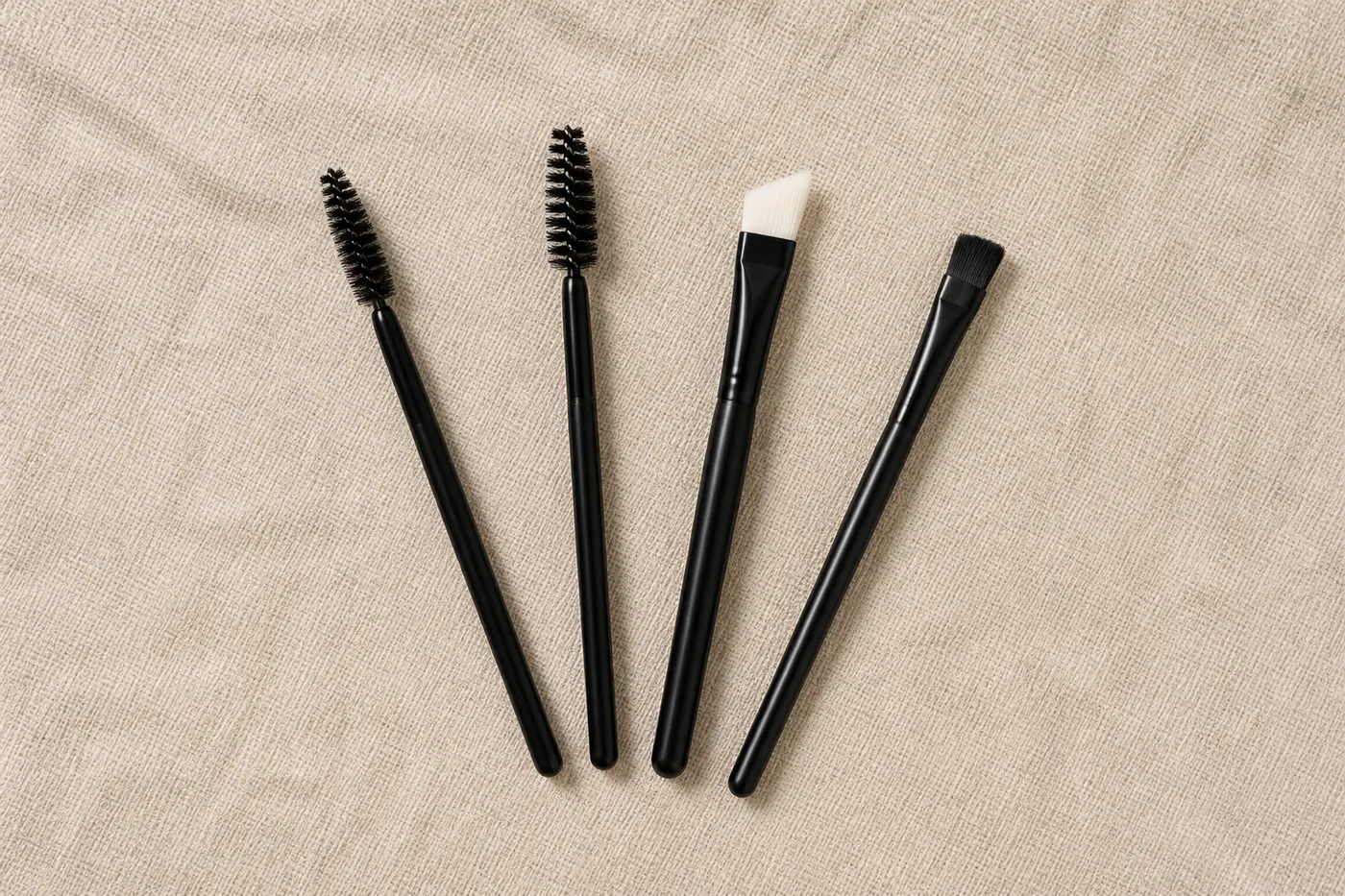
The category splits by job rather than by shape, and the four products are rarely interchangeable.
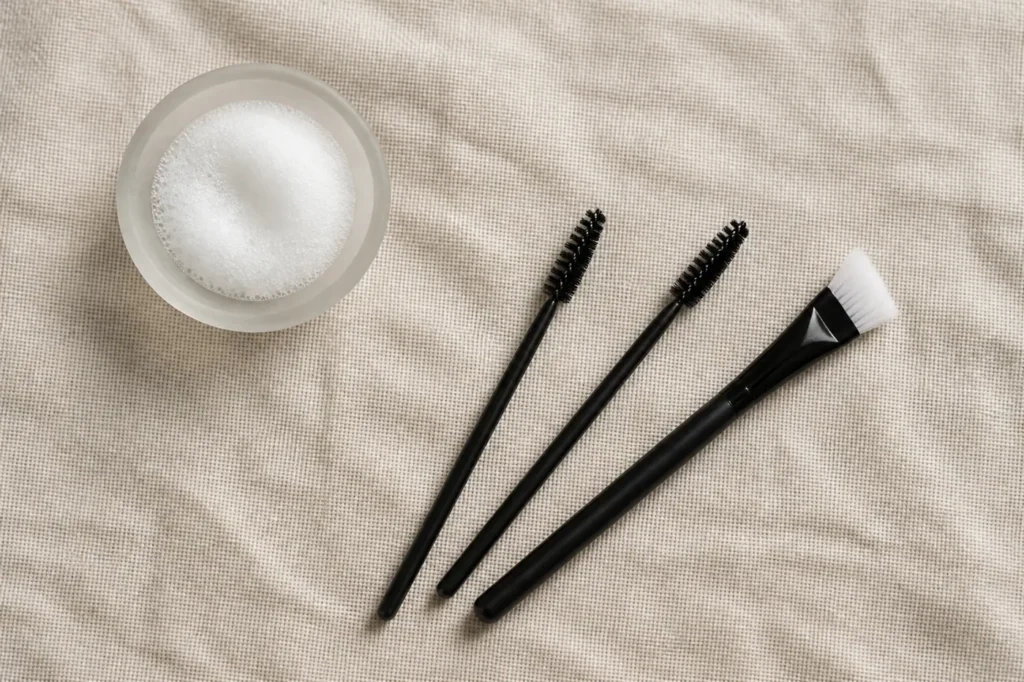
A spoolie wand is the mascara-style brush used to comb lashes and separate them during preparation, and to groom the set afterwards. A cleaning brush has softer, longer bristles and is used with a lash shampoo or foam cleanser to work product along the lash line without dragging the extensions. An applicator or micro brush carries a small amount of liquid 鈥?a primer, an adhesive, an at-home bond 鈥?to a precise spot. A wand for at-home products, often sold alongside a bond and seal kit, is technically a spoolie with a slimmer handle, chosen because it is the tool an untrained customer can hold comfortably.
Recognising the four jobs matters for a buyer because it explains reorder behaviour: cleaning brushes and applicator brushes are bought by the studio in bulk, while wands are bought in kit quantities by whoever assembles a retail box. Our guide to extensions de cils DIY shows where the wand sits inside that kit.
Spoolie Wands: What Separates a Good One
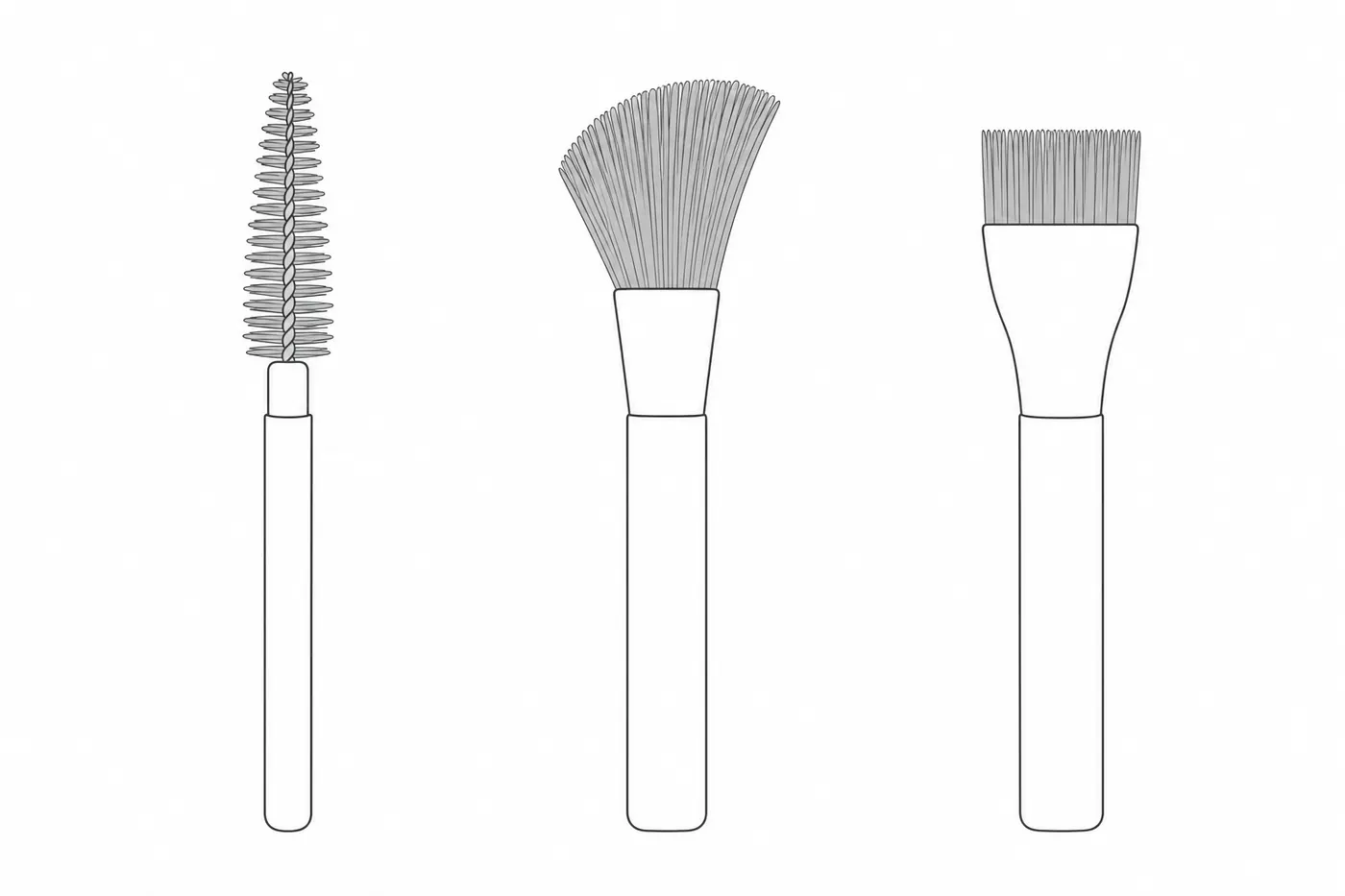
The spoolie is the simplest tool in the range and the one technicians judge instantly. Three details decide whether it is used or abandoned in a drawer.
The first is bristle density. A dense head separates lashes cleanly; a sparse head drags them together and pulls at the lash line, which is the opposite of what the step is for. The second is the taper: a slightly tapered head reaches the inner corner without covering the whole lash line at once. The third is the handle 鈥?a full-length handle suits salon work where the brush stays in the technician’s hand, while a short handle is chosen for a kit because it fits the box.
Hygiene then decides the format. In professional use, a disposable spoolie is the norm because the tool touches the lash line and the client’s skin, and reusable versions must be cleaned between clients. If you sell a reusable spoolie, say so explicitly on the product page and pair it with a cleaning routine 鈥?a nettoyeur de pincettes covers the same hygiene problem for the metal tools.
Cleaning Brushes and the Aftercare Routine
The cleaning brush is where a brush range earns its place, because it is the tool that makes the cleansing step work. Soft, long bristles angled to reach the base of the lashes can work foam along the lash line without pulling; a stiff brush does the opposite and loosens the bond it is supposed to protect.
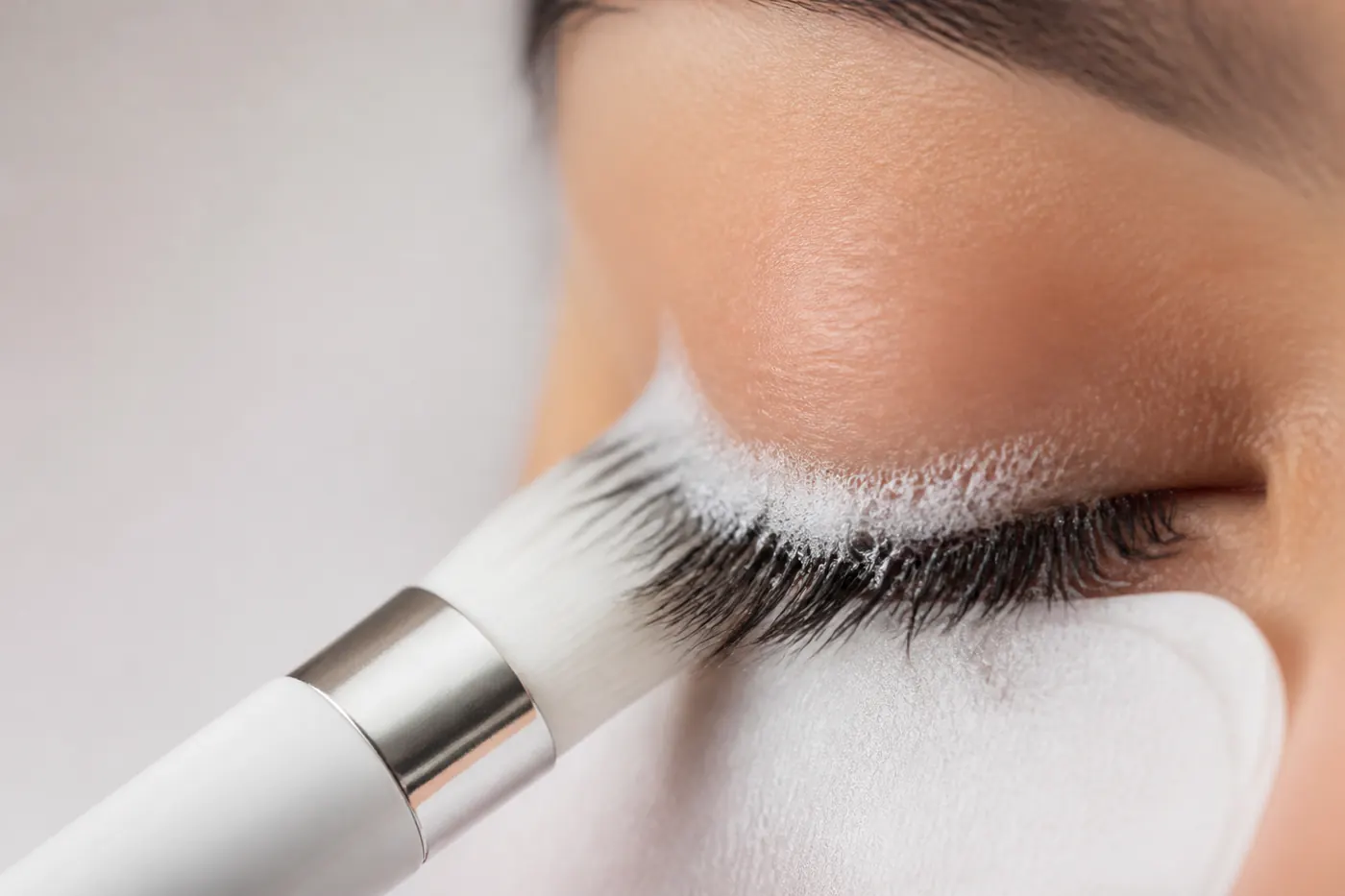
Applied correctly, the brush is used with a small amount of cleanser, in small circles along the lash line, followed by a rinse and a blot. The brush choice and the cleanser choice are therefore made together: a foaming dispenser suits a soft angled brush, while a thicker cream cleanser needs a slightly firmer head. Our guide to shampooing pour cils covers the cleanser side of that pairing, and the format-specific mousse nettoyante pour cils article covers foam.
For the studio, the practical stocking decision is volume: cleaning brushes are consumables at a rate of roughly one per client for hygienic use, so they should be bought in bulk packs rather than singly. Selling them as an add-on line at the aftercare stage 鈥?one brush with every new set 鈥?converts a low-cost tool into a routine the client repeats.
Applicator Brushes and Wands
Applicator brushes carry liquid, so their specification is about control rather than comfort. A micro brush with a fine, firm tip places primer or adhesive exactly where it is needed; a brush that is too soft spreads the product and wets more of the lash than intended, which matters more with adhesives than with cleansers. Our guide to Apprêt pour cils sets out the step these brushes serve.
Wands sold with at-home systems are a packaging decision as much as a tool decision. A slim handle, a head small enough to work a few clusters at a time, and a length that fits inside the kit box are the three constraints 鈥?and the wand is often the item that makes a kit feel complete. If you are assembling a bond and seal kit, specifying the wand alongside the tubes is cheaper than sourcing it later, and it prevents the customer from substituting a mascara wand from her own makeup bag.
Materials, Claims and Hygiene
Nylon bristles are the default: they hold their shape, tolerate cleansing, and can be made fine enough for lash work. Silicone heads are chosen where a softer touch is wanted, particularly for sensitive clients, but they splay more over time and are often specified as reusable rather than disposable.
Three claims are worth clarifying with a supplier rather than repeating from a catalogue. Cruelty-free status applies to the bristle material and to any testing, and it should be documented if it appears on the label. Recyclability depends on whether the handle is a single plastic or a composite, which determines whether the brush can be recycled at all. And “sterile” is a claim with a defined meaning 鈥?a brush that has been packed hygienically is not the same as a sterile instrument, and the difference matters if you sell into a clinical setting. Documentation for this type of claim follows the same standard as the one behind a adhésif hypoallergénique.
Bulk Formats and Packaging
Brushes are sold in three formats, and the choice is driven by the channel. Loose bulk packs serve studios that restock continuously and dispose of the tool after use. Individually wrapped brushes suit training environments and clinics where the hygienic presentation matters. Dispenser boxes sit on a counter and hand out one brush at a time, which suits retail counters and kit assembly lines.
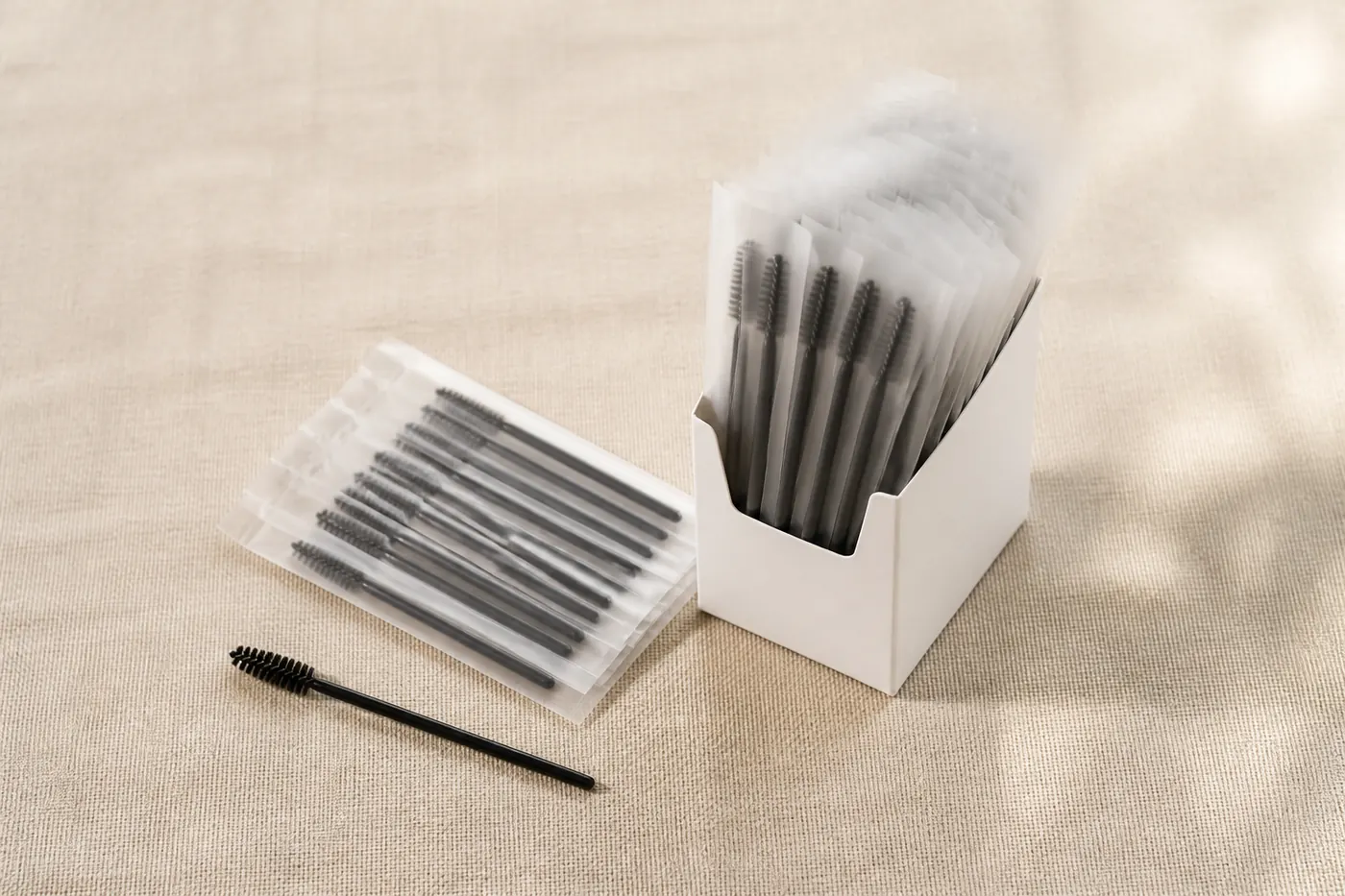
For private label, the cheapest layer to change is the sleeve and the dispenser box rather than the brush itself, which is why a branded brush line can be launched without new tooling. Specify the head shape, the bristle density, the handle length and the wrapping; those four choices are what the customer actually experiences, while the print is only what she reads.
A Buying Checklist for Lash Brushes
1. Separate the four types 鈥?spoolie, cleaning brush, applicator, kit wand 鈥?and stock each for its own job.
2. Confirm bristle density and taper on a sample: a spoolie that drags lashes together is unusable.
3. Choose disposable heads for professional use, and state reusability clearly where it applies.
4. Check the handle length against the format: full length for salon use, slim for kits.
5. Test the cleaning brush with the cleanser you sell, not on its own.
6. Confirm cruelty-free and material claims in writing before repeating them on your listing.
7. Match the pack format to the channel: bulk, individually wrapped, or dispenser box.
8. Price the brush as a consumable and sell it as one, in packs rather than single units.
9. Bundle a brosse à cils and a mini brosse à cils with every aftercare order, so the reorder happens on its own.
Why Brushes Belong in the Same Range as the Cleanser
Brushes have no glamour and a predictable margin, which makes them the ideal add-on to the products that need them. A lash wand belongs with the bond and seal kit, a cleaning brush belongs with the shampoo, and an applicator brush belongs with the primer and adhesive collection. Sold this way, a brush line stops being an accessory and becomes part of the routine a technician performs and a client repeats.
That is also the argument to give a buyer who is considering a single SKU: the brush is the least expensive item in the order that gets used the most often, and the one most likely to be reordered before anything else on the shelf. For the tools it sits beside, see our guides to pince à cils and to the colle pour extensions de cils that the applicator brush carries.


 English
  German
  French
  Spanish
  Romanian
  Portuguese
  Dutch
Dutch  Italian
  Swedish
  Polish