

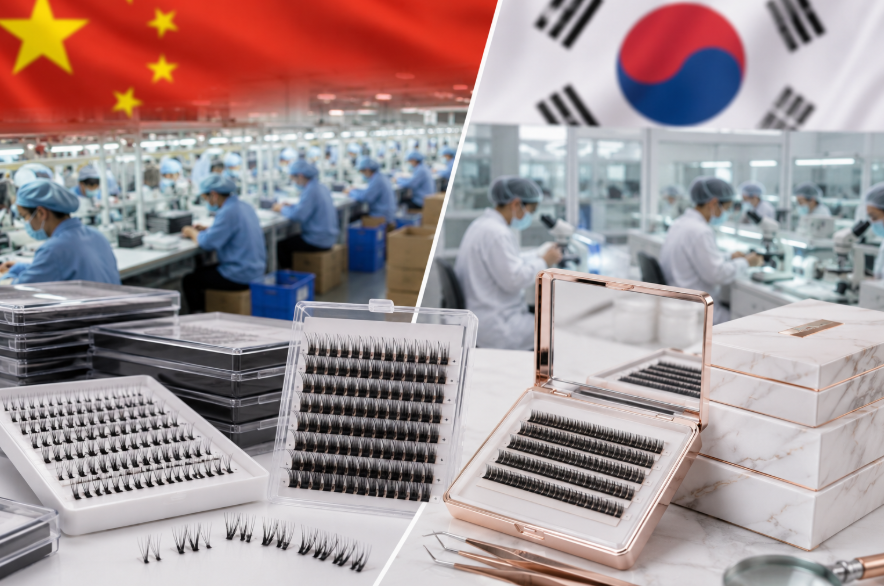
Il n'y a pas de vainqueur universel dans le Fabricants de cils chinois et coréens La Corée est souvent associée à un positionnement de premier ordre en matière de matériaux et à des normes de production sophistiquées. La Corée est souvent associée à des matériaux haut de gamme et à des normes de production raffinées, tandis que la Chine est souvent plus forte en termes d'évolutivité des exportations, de personnalisation et de structures de fabrication à accès réduit.
Lorsque vous lancez ou développez une marque d'extension de cils, le choix du bon partenaire de fabrication est l'une des décisions les plus importantes que vous aurez à prendre. Pour les marques travaillant avec Lashfine, Ce choix se résume souvent à la comparaison habituelle : Fabricants de cils chinois et coréens. Dans la pratique, la meilleure option dépend de vos priorités : matériaux de qualité supérieure, moindres quantités à produire, service plus rapide axé sur l'exportation ou flexibilité totale en matière d'OEM/ODM.
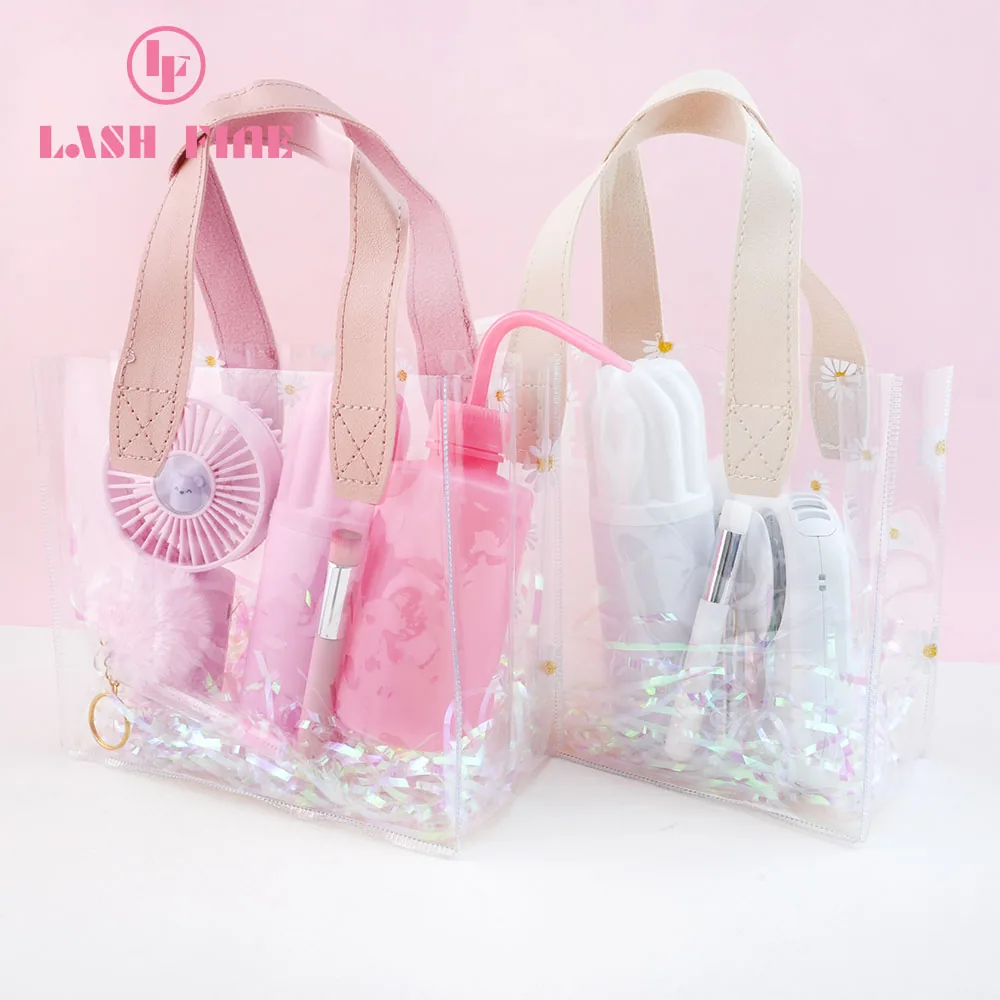
Pour de nombreux propriétaires de marques, le modèle le plus pratique n'est pas une simple décision de vainqueur. Il s'agit d'une décision d'approvisionnement façonnée par les normes des produits, les besoins en matière d'emballage et la capacité d'un fournisseur à honorer des commandes répétées.
Comprendre les deux modèles de fabrication
Avant de comparer les fournisseurs, il est utile de comprendre comment les deux écosystèmes se positionnent généralement. Il s'agit de schémas d'approvisionnement généraux et non de règles absolues applicables à chaque usine.
Le modèle manufacturier coréen : L'accent mis sur le marché intérieur de première qualité
La Corée du Sud est souvent associée au développement de l'extension moderne des cils et à la chaîne d'approvisionnement de la K-Beauty au sens large. Dans la catégorie des cils, les fabricants coréens sont souvent associés à un positionnement haut de gamme, à une finition raffinée et à des matières premières de haute qualité telles que la fibre PBT.
PBT, ou polybutylène téréphtalate, L'huile d'olive est un polyester thermoplastique largement utilisé dans les extensions de cils car elle peut être transformée en fibres souples et flexibles avec une rétention stable de l'enroulement et un aspect mat.
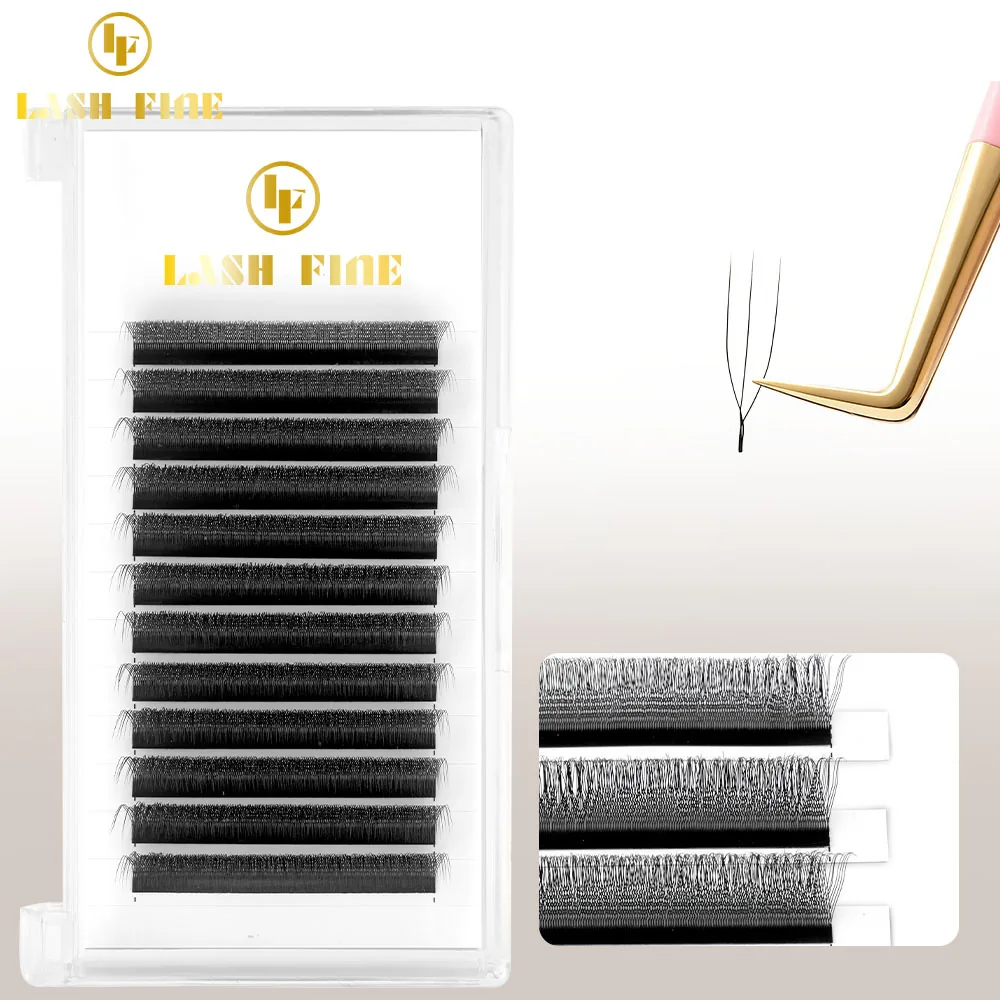
Dans les conversations entre fournisseurs, l'expression “PBT coréen” est souvent utilisée pour désigner une norme d'intrants de qualité supérieure, et non pour garantir que tous les produits fabriqués en Corée sont automatiquement meilleurs. Pour les acheteurs, la question utile n'est pas simplement de savoir où l'article a été fabriqué. Il s'agit de savoir si le fournisseur peut expliquer la source de la matière première, la méthode de thermofixation, la cohérence des lots et la manière dont il vérifie la mémoire des boucles et l'uniformité des bandes.
Le modèle manufacturier chinois : Échelle d'exportation et flexibilité
La force de la Chine en matière de fabrication de cils réside généralement dans une plus grande capacité de production, une infrastructure d'exportation et une gamme plus large de niveaux de service OEM/ODM. De nombreuses usines chinoises sont conçues pour répondre aux besoins des acheteurs internationaux en matière d'emballage, de marques privées, d'unités de stock mixtes et de réapprovisionnement.
Pour les marques qui ont besoin d'une itération plus rapide, de volumes d'entrée plus faibles ou d'options d'emballage plus nombreuses, la Chine est souvent la base d'approvisionnement la plus souple sur le plan opérationnel. Cette flexibilité est particulièrement importante pour les marques DTC, les vendeurs de marques privées de type Amazon, les distributeurs de salons de coiffure et les acheteurs en gros qui ont besoin de plusieurs styles dans une même ligne.
Comparaison tête à tête : 6 facteurs clés
Vous trouverez ci-dessous une comparaison pratique entre Fabricants de cils chinois et coréens à travers les facteurs qui comptent le plus souvent pour les propriétaires de marques.
1. Qualité des produits et matériaux
Pour les extensions de cils, la qualité de la fibre brute influe fortement sur la douceur, la conicité, la mémoire des boucles et la sensation finale de la bande.
Ce qu'il faut rechercher dans une fibre à cils de qualité supérieure :
- Fibre PBT avec un diamètre constant et une faible variation d'un lot à l'autre
- Maintien stable des boucles après thermofixation
- Finition mate ou peu brillante pour un aspect plus naturel
- Alignement lisse des bandes et pointes des cils propres
Les fournisseurs coréens sont généralement positionnés sur la base de fibres PBT de qualité supérieure et d'une finition minutieuse. Les fournisseurs chinois peuvent également fournir des cils de qualité supérieure, en particulier lorsqu'ils utilisent des fibres PBT coréennes importées et qu'ils respectent des normes de traitement internes strictes.
La différence ne réside pas seulement dans le pays d'origine, mais aussi dans l'approvisionnement en matières premières, les contrôles de production et la cohérence du fournisseur. Si vous évaluez un fournisseur chinois, demandez-lui si l'usine utilise des fibres PBT coréennes importées, avec quel denier ou quelle spécification de fibre elle travaille, et comment elle vérifie la rétention des boucles et l'uniformité des bandes.
Critères de décision à utiliser pour l'évaluation :
- Le cil semble-t-il uniforme à la loupe ?
- La boucle tient-elle après la manipulation et l'emballage ?
- La bande se détache-t-elle proprement du plateau ?
- La finition est-elle mate plutôt que plastique ou trop brillante ?
- Le fournisseur peut-il présenter des échantillons reproductibles sur plus d'un lot ?
2. Structure des prix et des coûts
Les différences de prix sont généralement liées à la structure de la main-d'œuvre, à l'échelle de l'usine et à l'étendue des services. Le prix d'un fournisseur basé en Corée est souvent plus élevé lorsque le produit est entièrement fabriqué et emballé dans le pays. Ce prix plus élevé reflète généralement des lots de production plus petits, une manipulation à plus forte intensité de main-d'œuvre et un positionnement sur le marché haut de gamme.
Les fournisseurs chinois proposent généralement des niveaux de prix plus souples parce qu'ils desservent un marché d'exportation plus vaste et peuvent répartir les coûts de production fixes sur des volumes plus importants. Cela ne signifie pas automatiquement “bon marché”. Un cil chinois haut de gamme avec PBT importé, emballage sur mesure et contrôle de qualité rigoureux peut encore être proposé à un prix supérieur à celui d'un article domestique coréen de base.
Variables de tarification typiques au niveau de l'acheteur à demander dans un devis :
- Coût de l'échantillon par style
- Frais d'expédition des échantillons
- Prix unitaire à 1 000 paires, 5 000 paires et 10 000 paires
- Coûts de mise à niveau de l'emballage
- Frais d'installation de plaque, de moule ou de marquage
- Prix de commande après approbation de l'outillage
Comment comparer correctement les prix :
- Demandez le même style de cils, le même type de fibres et les mêmes spécifications d'emballage aux deux fournisseurs.
- Confirmez si le devis comprend l'impression de la boîte, les plateaux d'insertion, les étiquettes et l'assemblage final.
- Séparer le prix du produit des frais de transport et de douane.
- Vérifiez si le fournisseur propose un prix direct ou un prix de société commerciale.
Deux devis qui semblent similaires sur le papier peuvent être très différents une fois que la personnalisation et l'emballage sont ajoutés. Un prix unitaire plus bas peut encore être plus cher s'il exclut l'impression, l'assemblage ou la documentation d'exportation.
3. Quantité minimale de commande (MOQ)
Le MOQ est souvent l'une des différences pratiques les plus évidentes entre les deux types de fournisseurs.
Modèles de MOQ courants au niveau des fournisseurs :
- Usines d'exportation chinoises : commencent souvent autour de 500 à 1 000 paires par style pour les cils de marque privée standard, avec des MOQ plus élevés pour les boîtes personnalisées, les plateaux spéciaux ou les emballages hautement personnalisés.
- Des fournisseurs chinois plus flexibles ou hybrides : peuvent offrir des quantités d'échantillonnage ou d'essai plus faibles, parfois de quelques dizaines à quelques centaines de paires, en fonction de l'UGS
- Fabricants coréens : exigent souvent des engagements plus importants pour les productions nationales, en particulier lorsque l'acheteur souhaite une marque personnalisée, un emballage spécialisé ou un assemblage manuel en petites séries.
Pour les nouvelles marques, le MOQ n'est pas seulement une question de budget. Il influe également sur la stratégie en matière d'UGS. Un MOQ moins élevé peut vous permettre de tester plusieurs styles avant de vous engager dans une collection complète, tandis qu'un MOQ plus élevé peut mieux convenir à des marques établies dont la demande est prévisible et récurrente.
Questions pratiques à poser à un fournisseur au sujet de la qualité des produits :
- La MOQ est-elle par style, par boucle, par longueur ou par UGS complète ?
- Le MOQ change-t-il si l'emballage est imprimé sur mesure ?
- Existe-t-il une différence de qualité entre les commandes d'échantillons et les commandes de production ?
- Le fournisseur peut-il combiner plusieurs styles en une seule commande afin de réduire le risque de premier tirage ?
Si un fournisseur n'est pas en mesure d'expliquer clairement si le MOQ s'applique au cil lui-même ou à l'ensemble de l'unité finie, c'est le signe qu'il faut clarifier la situation avant de poursuivre.
4. Capacités OEM/ODM et de personnalisation
Les capacités OEM et ODM sont les domaines dans lesquels les usines chinoises ont souvent l'avantage opérationnel le plus net.
- OEM signifie que l'usine fabrique la conception du produit que vous avez spécifié.
- ODM signifie que l'usine aide à développer ou à adapter un produit pour votre marque.
De nombreuses usines chinoises sont structurées pour travailler sous label privé. Elles peuvent souvent apporter leur soutien :
- Plateaux et inserts à cils sur mesure
- Boîtes extérieures imprimées
- Emballage à fermeture magnétique
- Logos en feuille et marquage en relief
- Collections mixtes
- Graphisme de la marque privée et emballage prêt pour la vente au détail
Les fournisseurs coréens peuvent également proposer une personnalisation, mais la gamme et la vitesse peuvent être plus limitées selon que l'usine est optimisée pour la production nationale de qualité supérieure ou pour les travaux OEM à l'exportation.
Lorsque vous comparez des fournisseurs, ne vous contentez pas de demander si la personnalisation est “disponible”. Demandez quel est le niveau de personnalisation habituel. Il est généralement plus facile de travailler avec un fournisseur qui s'occupe fréquemment de l'impression de logos et de changements de boîtes qu'avec un fournisseur qui traite chaque changement comme un projet spécial.
5. Communication et délais
La communication est un facteur important pour les marques qui se réapprovisionnent fréquemment ou qui gèrent des lancements saisonniers.
Les délais d'exécution les plus couramment demandés par les acheteurs :
- Échantillonnage : souvent de 5 à 10 jours pour les produits standard, mais les demandes personnalisées peuvent prendre plus de temps.
- Production de masse : souvent 3 à 4 semaines pour les usines d'exportation chinoises organisées, une fois que la maquette et les spécifications ont été approuvées
- Commandes à emballage lourd ou hautement personnalisé : peut prendre plus de temps en raison des cycles d'impression, d'approvisionnement en matériel et d'approbation
Les usines chinoises disposent souvent de systèmes de communication davantage axés sur l'exportation, en particulier lorsqu'elles travaillent quotidiennement avec des acheteurs internationaux. Les usines coréennes peuvent être excellentes sur le plan technique, mais la vitesse de communication peut varier en fonction de leur orientation vers l'exportation, de l'assistance en anglais et de la structure interne des comptes.
Pour l'un ou l'autre pays, les délais doivent être confirmés par écrit. Une usine qui est rapide pour les cils standard peut être plus lente pour les plateaux personnalisés ou les cartons de vente au détail haut de gamme.
Points de contrôle utiles pour les délais :
- Temps de préparation de l'échantillon
- Délai d'épreuvage de la maquette
- Temps d'approvisionnement en matériaux d'emballage
- Délai de production après dépôt
- Inspection finale et délai d'expédition
Si votre marque organise des lancements par saison ou des campagnes de pré-commande, ces points de contrôle sont aussi importants que le numéro de production du titre.
6. Certifications et contrôle de la qualité
Pour les marques de cils, le contrôle de la qualité ne se limite pas à l'inspection visuelle. Il comprend également la traçabilité des matériaux, la cohérence de l'emballage et la documentation pour les acheteurs internationaux.
Catégories communes de conformité et de documentation que les acheteurs peuvent demander :
- ISO 9001 pour les systèmes de gestion de la qualité
- ISO 22716 pour les pratiques de fabrication cosmétiques de type BPF, le cas échéant
- FICHE DE DONNÉES DE SÉCURITÉ ou la documentation sur la sécurité des matériaux pour les matières premières
- REACH-la documentation relative à la conformité pour les marchés qui requièrent des considérations de sécurité chimique
- RoHS uniquement lorsqu'il s'agit de composants ou de matériaux d'emballage, et non en tant qu'exigence universelle en matière de cils
Les organismes et cadres désignés sont importants parce qu'ils aident les acheteurs à ancrer les revendications des fournisseurs. Les normes ISO sont publiées dans le cadre de l'Organisation internationale de normalisation, tandis que REACH fait référence au régime de conformité des produits chimiques de l'Union européenne.
Un fournisseur ne devient pas un fournisseur de haute qualité simplement en nommant ces termes, mais un fournisseur qui les comprend est généralement mieux préparé pour les documents d'exportation. Lors des discussions avec les fournisseurs, demandez-leur si l'usine peut fournir des registres d'inspection au niveau des lots, des contrôles des matériaux entrants et des procédures de contrôle qualité du produit final.
Un fournisseur crédible doit être en mesure d'expliquer comment il vérifie l'uniformité des fibres, la liaison entre l'adhésif et la base, l'uniformité des boucles et la précision de l'emballage.
Les détails du contrôle qualité au niveau du fournisseur méritent d'être demandés :
- Inspection des matières premières à l'entrée
- Inspection en cours de fabrication des bandes
- Contrôle final de l'apparence avant l'emballage
- Vérification du nombre de cartons avant l'expédition
- Politique de traitement des défauts pour le remplacement ou la refonte
Les fournisseurs coréens mettent souvent l'accent sur la discipline nationale en matière de qualité et sur des environnements de production contrôlés. La question n'est donc pas simplement de savoir si le pays dispose d'un système de contrôle de la qualité. La question est de savoir si l'usine dispose de systèmes documentés, d'étapes de contrôle de la qualité reproductibles et de documents d'exportation répondant aux exigences de votre marché.
L'approche du “meilleur des deux mondes” : Usine chinoise + matériaux coréens
Pour de nombreux propriétaires de marques de cils, la meilleure stratégie d'approvisionnement consiste à combiner les éléments suivants Fibre PBT de qualité coréenne avec Fabrication de produits d'exportation chinois.
Cette approche peut vous apporter
- Fibre de cils de première qualité
- Des options plus souples en matière de qualité de fabrication
- Forte assistance en matière d'emballage OEM/ODM
- Une communication plus rapide axée sur l'exportation
- Une meilleure évolutivité pour les marques nouvelles et en croissance
Cela dit, le résultat dépend entièrement de la sélection des fournisseurs. Une usine chinoise utilisant des fibres importées de première qualité et un contrôle de qualité rigoureux peut surpasser un fournisseur national de moindre capacité dans n'importe quel pays.
Pour les marques qui s'approvisionnent par l'intermédiaire de Lashfine, L'essentiel est de vérifier la qualité des matériaux, la cohérence de la production et les termes commerciaux dont votre marque a réellement besoin, plutôt que de se fier uniquement à l'origine.
Liste de contrôle pratique pour l'acheteur
Si vous comparez des fabricants de cils chinois et coréens, demandez les mêmes informations aux deux parties :
- Spécification exacte des fibres et origine des matières premières
- Coût de l'échantillon et si l'expédition est incluse
- MOQ en fonction du style, de l'emballage et de la couleur
- Délai d'échantillonnage et de production en série
- Possibilité d'OEM/ODM, y compris la conception de la boîte et l'application du logo
- Processus de contrôle de la qualité et méthode d'inspection des lots
- Documentation disponible telle que les normes ISO 9001, ISO 22716, les fiches de données de sécurité ou les dossiers de conformité spécifiques au marché.
Il est également utile de comparer les fournisseurs en utilisant la même commande de test ou le même dossier d'échantillons. Il est ainsi plus facile d'évaluer les différences de toucher de la fibre, de qualité des bandes, de précision de l'emballage et de réactivité.
Conclusion
Il n'y a pas de vainqueur universel dans le Fabricants de cils chinois et coréens débat. La Corée est souvent associée à des matériaux de première qualité et à des normes de production raffinées, tandis que la Chine est souvent plus forte en termes d'évolutivité des exportations, de personnalisation et de structures de fabrication à moindre coût.
Si votre marque a besoin de matières premières de qualité supérieure et d'une flexibilité de production pratique, une usine chinoise utilisant des fibres PBT coréennes est souvent l'option la plus équilibrée. Si votre priorité est un positionnement national haut de gamme avec un modèle de production plus étroitement contrôlé, un fournisseur coréen peut s'avérer plus adapté.
Pour les acheteurs qui construisent avec Lashfine, la bonne décision est celle qui correspond au marché cible de votre marque, au volume de commande, aux besoins d'emballage et aux attentes en matière de contrôle de la qualité.
FAQ
Les fabricants coréens de cils sont-ils tous meilleurs que les fabricants chinois ?
Le meilleur fournisseur dépend de l'usine, des matières premières, du processus de contrôle qualité et du modèle de service. Les fournisseurs coréens sont souvent associés à un positionnement haut de gamme, tandis que les fournisseurs chinois se distinguent par leur flexibilité à l'exportation et leur personnalisation.
Quel est le niveau de qualité attendu par une nouvelle marque de cils ?
Les usines d'exportation chinoises commencent généralement par 500 à 1 000 paires par modèle pour les commandes standard sous marque de distributeur. Les fournisseurs flexibles ou hybrides peuvent proposer des quantités d'essai inférieures. Les séries de production coréennes peuvent nécessiter des engagements plus importants, en particulier pour les emballages personnalisés ou l'assemblage de petites séries.
Quelle est la durée habituelle d'un prélèvement de cils ?
Le délai d'échantillonnage est généralement de 5 à 10 jours pour les produits standard. Les emballages personnalisés, les modifications de maquettes ou l'approvisionnement en matériaux spéciaux peuvent allonger ce délai.
Quelles certifications dois-je demander à un fournisseur de cils ?
Les demandes les plus courantes concernent les normes ISO 9001 et ISO 22716, le cas échéant, les fiches de données de sécurité et tout document de conformité spécifique au marché de la région ciblée. Vous devez également demander les enregistrements de contrôle de qualité et les procédures d'inspection des lots.
Quelle est la stratégie d'approvisionnement la plus pratique pour de nombreuses marques ?
Pour de nombreux acheteurs, le meilleur équilibre est la fibre PBT de qualité coréenne associée à la fabrication chinoise pour l'exportation, en particulier si le fournisseur peut documenter le contrôle de la qualité et prendre en charge l'emballage sous marque privée.

 English
  German
  French
  Spanish
  Romanian
  Portuguese
  Dutch
Dutch  Italian
  Swedish
  Polish