

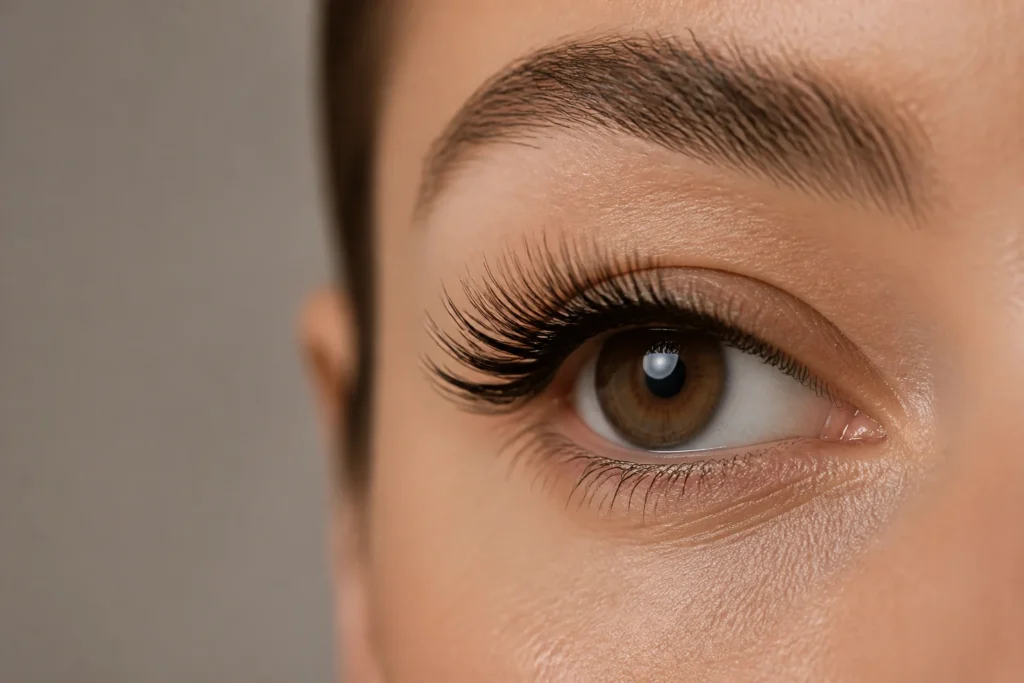
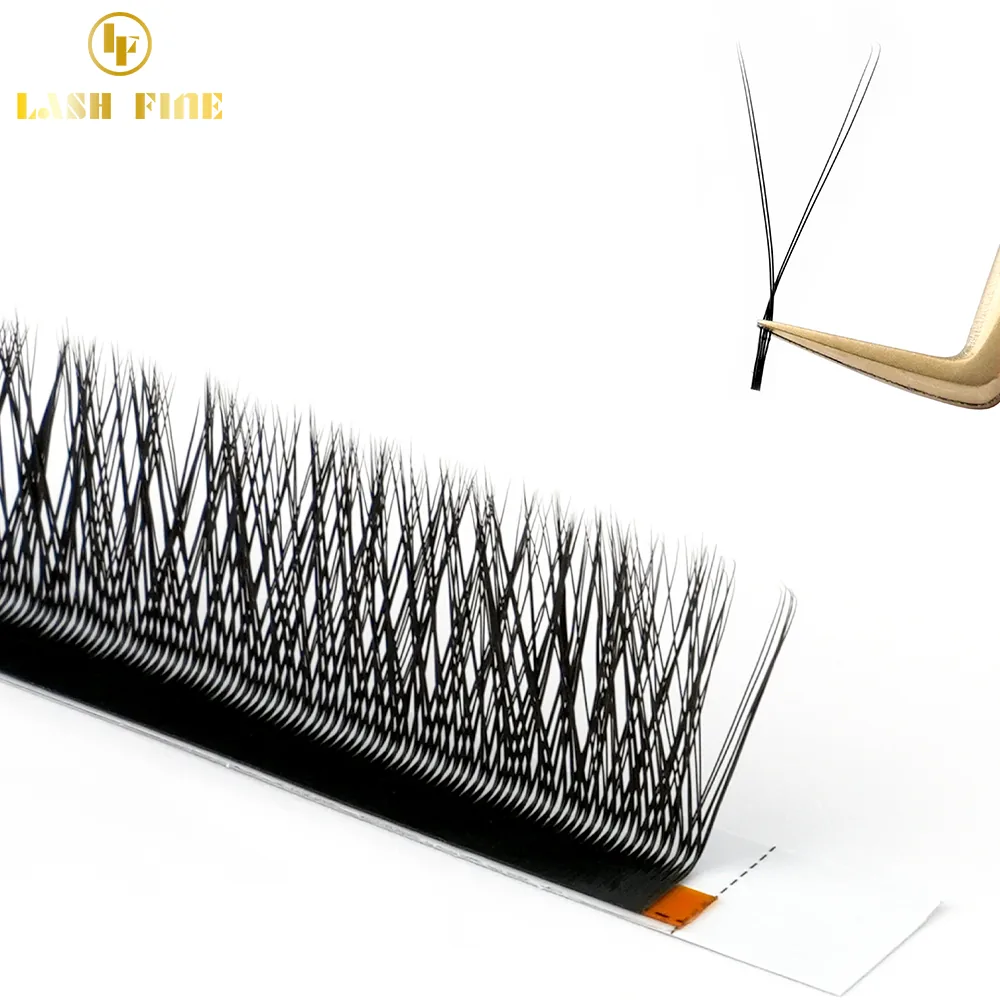
If you have browsed premade fan trays lately, you have probably seen “YY lashes” sitting between classic singles and volume fans, with very little explanation of what the name actually means. Are they a curl? A fan style? A marketing label? This guide answers the practical questions: what the Y-shaped structure is, how it behaves differently from other premade options, which clients it suits, and how to apply it cleanly from isolation to placement.
What YY Lashes Actually Are
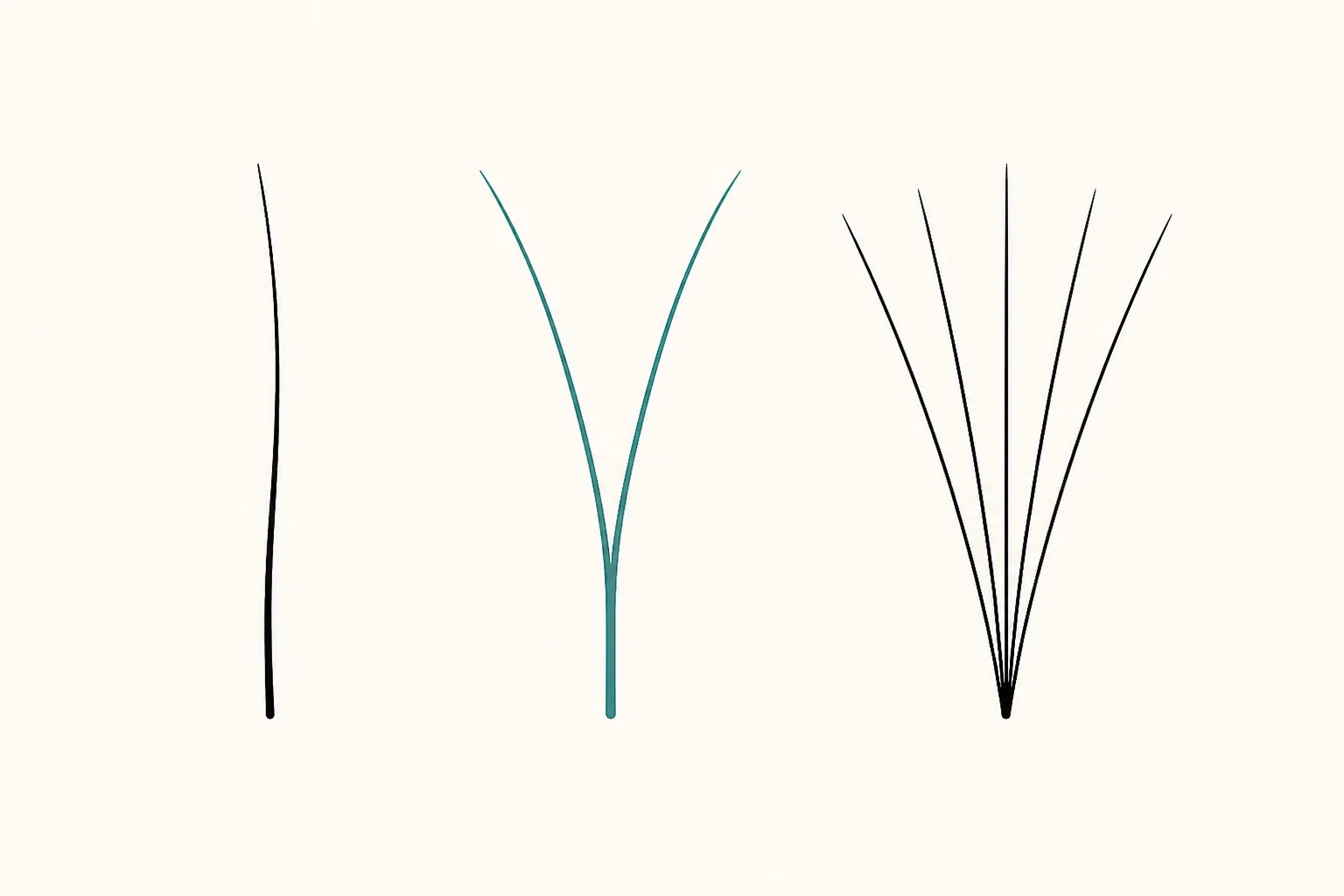
A YY lash is a premade extension whose tip splits into two fine branches, forming a narrow “Y” silhouette when viewed from the side. Instead of one solid strand (as in a classic extension) or a hand-formed fan of several strands (as in volume work), each YY unit is manufactured as a single base that forks near the top. That fork is the whole story: it adds visible texture and a slightly feathered edge while keeping the base thin and light.
Three structural consequences follow from that fork. First, the tip catches light from two angles, so the lash line reads softer and less “solid” than a classic set of the same thickness. Second, because the split happens above the base, the bonding surface that touches the natural lash stays a single narrow point, which keeps isolation straightforward. Third, the feathered tip creates small gaps between neighbouring units, so a full YY set looks airier than a classic set at equal length, without the dense wrap of a volume fan.
In short, YY lashes occupy the middle ground: more texture than a classic single, less density and less technique overhead than handmade volume fans. If you want the fuller look of a fan but your client’s natural lashes are too fine to carry a multi-strand fan, the Y-split is usually the compromise that works.
YY Lashes vs Classic, Volume, Hybrid and W Lashes
The fastest way to place YY lashes is to compare them against the options a client or buyer actually chooses between.
| Option | Tip structure | Lash-line look | Typical best fit |
|---|---|---|---|
| Classic single | One solid strand | Clean, defined, natural | Clients wanting subtle length |
| YY lash | One base forking into two tips | Soft, feathered, slightly textured | Fine natural lashes wanting visible texture |
| Handmade volume fan | 2-6 strands fanned at the base | Dense, wrapped, dramatic | Healthy natural lashes, glam looks |
| Hybrid mix | Classics plus fans alternated | Textured with depth | Clients between natural and glam |
| W lash | Base forking into three tips | Wispy, spiky texture | Clients wanting pronounced separation |
Two comparisons matter most in practice. Against classic singles, YY lashes give a softer edge and a little more perceived fullness without adding weight at the base. Against volume fans, YY lashes give up density but win on speed and on tolerance: a premade YY unit needs no fan-forming skill, and its single-point base is more forgiving on sparse natural lashes. For a fuller discussion of how premade units compare with hand-formed fans in cost and consistency, see our breakdown of handmade versus premade lash fans, and for the wider vocabulary of extension types a buyer meets, our guide to the Verschiedene Arten von Wimpernverlängerungen für Käufer covers the full range.
Which Clients Suit YY Lashes
YY lashes earn their place with three client groups. The first is clients with fine or sparse natural lashes who still want a visible, textured result. A multi-strand volume fan can over-load a fine natural lash; a YY unit keeps the base load close to a classic while the forked tip supplies the visual interest the client asked for.
The second group is clients migrating from classic sets who find their usual look “flat” but reject anything dramatic. YY lashes change the edge quality of the lash line rather than its density, which reads as an upgrade without a style shock. The third group is time-constrained appointments: because the units arrive premade with a consistent fork, a full YY set applies faster than a handmade volume set of comparable visual impact, and the result is uniform across both eyes.
They are a poorer fit for two situations. Clients wanting a truly dense, makeup-like lash line will find YY sets too airy; that request belongs to volume or hybrid work. And clients whose natural lashes grow in a strongly crossed or chaotic pattern may show the forked tips as extra disorder rather than texture; there, a clean classic mapping usually photographs better.
Application: From Isolation to Placement
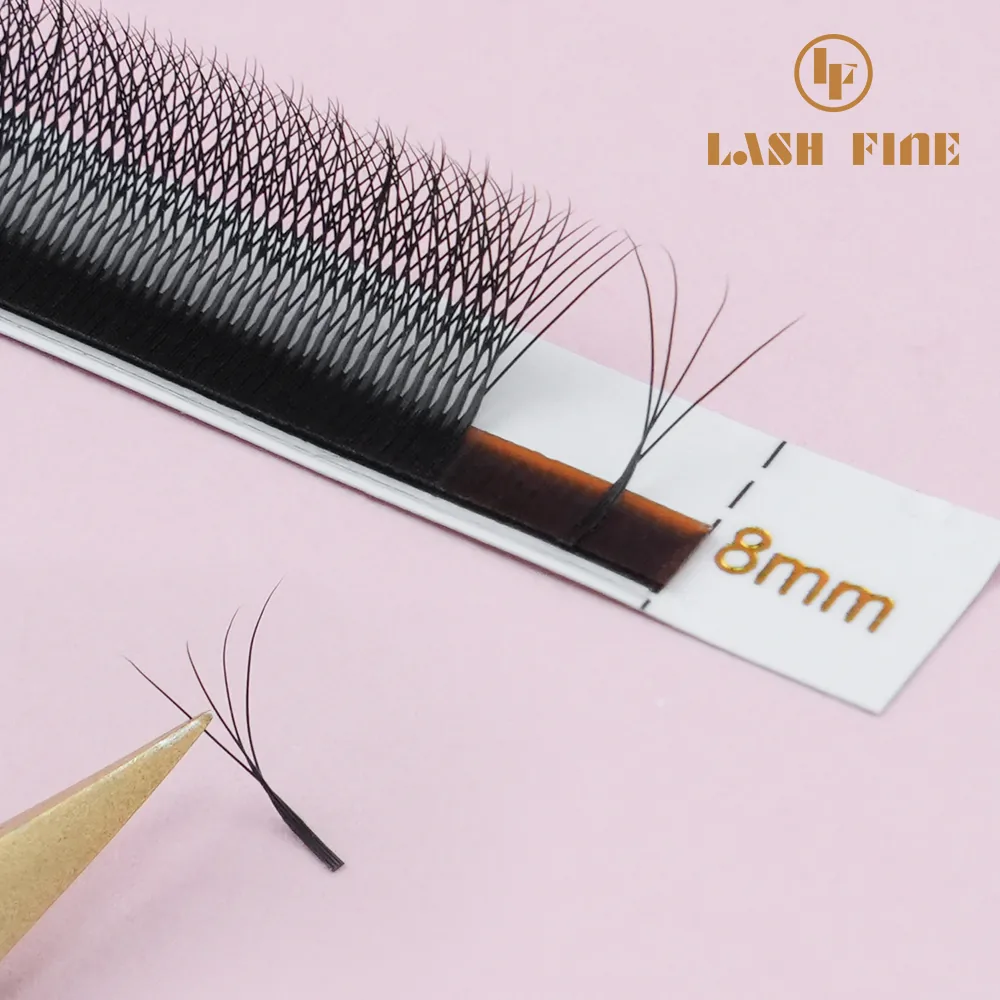
Application follows the same discipline as any premade set, with two YY-specific checks.
- Eine Naturwimper isolieren. The YY base is narrow, but a stuck neighbour still shows as a doubled fork at the tip. Isolate as you would for classics.
- Dip shallow. Dip only the base, not the fork. Adhesive on the split tips makes neighbouring YY units cling together and destroys the airy edge that is the point of the style.
- Match direction of the fork. Place the unit so the Y opens in the same plane as the natural lash’s growth direction. A fork rotated sideways reads as a bent tip once the set cures.
- Keep weight consistent. Use one thickness across the set unless the mapping deliberately varies it; mixing thicknesses in a YY set shows up as uneven feathering.
- Check the edge line before curing finishes. Step back and look at the lash line from below: the forked tips should form a soft, even fringe, not clumps.
Because the units are premade, the main variable left in your control is placement, which is where mapping decides whether the texture flatters the eye shape or fights it.
Mapping and Placement Patterns
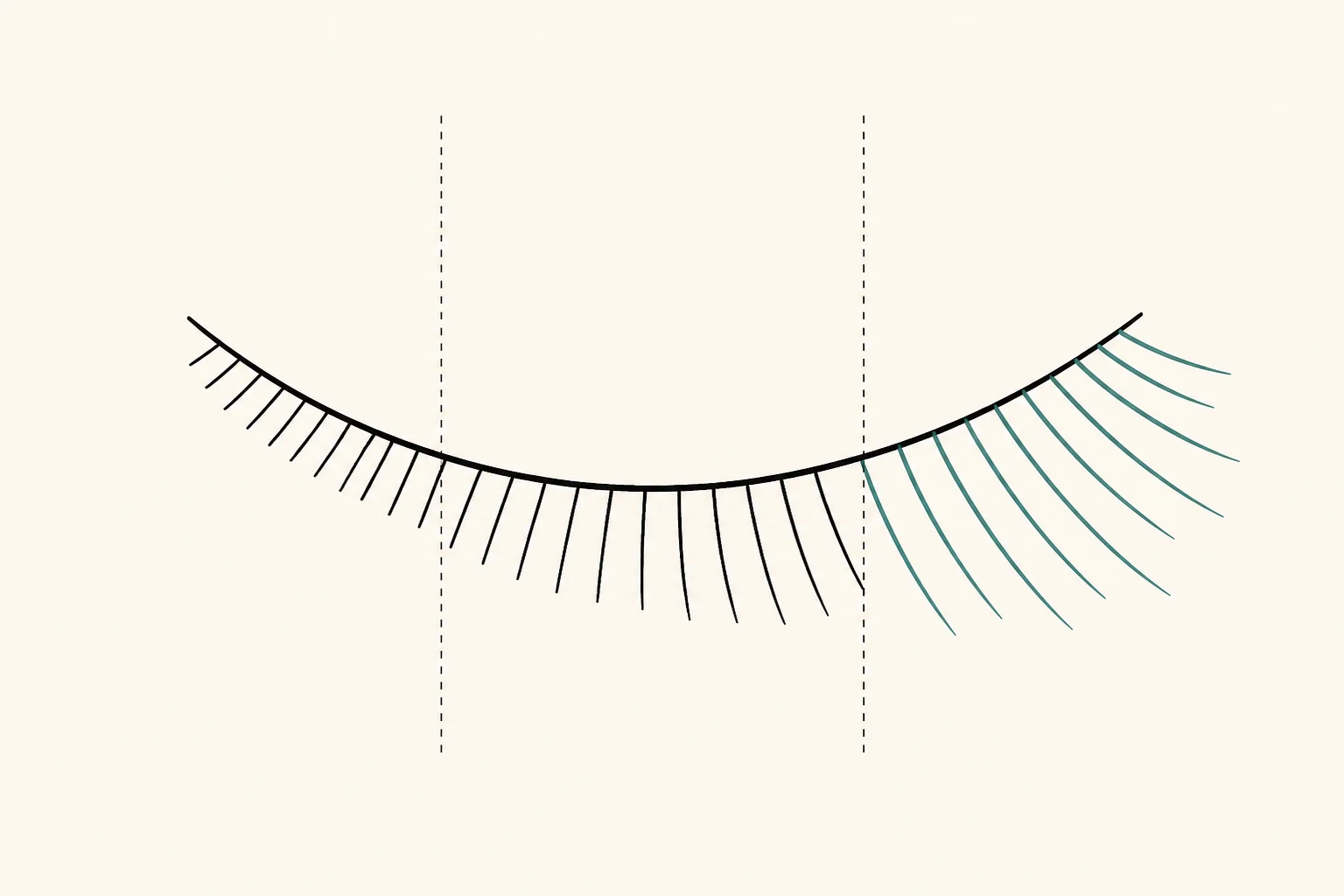
YY lashes respond well to three mapping patterns. A uniform map (same length across the zone, fork tips aligned) gives the cleanest feathered fringe and is the safest default for round or wide-set eyes. An open-eye map (longer units in the centre zone) amplifies the airy texture into a wide-awake look; it suits round eyes and clients who want brightness rather than lift. A squirrel-style map (lengths rising toward the outer zone) uses the forked tips to draw a soft outward sweep; it flatters almond and down-turned eyes.
Two placement habits keep the texture readable. Leave slightly more space between YY units than between classics, because each unit already carries two tips; crowding them merges the forks into a solid line and wastes the style. And keep the inner corner to shorter, finer units: the fork on a long unit in the inner zone tends to catch and bend during sleep, which clients report as the first thing that “goes wrong” with a textured set.
Common Mistakes With YY Lashes
The most frequent error is treating YY units like volume fans and trying to “close” or reshape the fork with tweezers. The split is set during manufacturing; squeezing it narrows the Y into a thick single tip and the set loses its softness. The second error is over-dipping adhesive, covered above, which glues forks together across units. The third is mixing YY units with classic singles in the same zone without a plan: the two edge qualities alternate visibly and the lash line looks patchy rather than layered. If a mixed texture is the goal, that is hybrid work and should be mapped as hybrid, zone by zone.
A fourth mistake is buying on curl alone. YY units are produced in the same curl range as other extensions, but the fork changes how the curl reads on the eye: a strong curl plus a fork can look spiky on hooded lids, where a gentler curl keeps the feathered edge lying in the lid’s shadow line.
A Buying Checklist for Salons and Wholesale Buyers
When you evaluate YY lash trays, check four things before price. Material and finish: PBT fibre with a matte or semi-matte finish keeps the forked tips from shining as plastic under salon lighting. Base quality: the base should be a clean single point with no bulb of adhesive at the fork; a bulged base adds weight exactly where the natural lash carries it. Fork consistency: pull a dozen units from different rows; the split height and angle should match, because inconsistency shows as uneven texture across the set. Curl and length range: a usable tray offers the curls your mapping actually uses, in graduated lengths for inner-to-outer zones.
For a concrete reference point, our own Lashfine YY Wimpern tray is built to those four checks, and the full YY Lashes collection lists the available curls and lengths for wholesale and private-label orders. If you are deciding whether YY or another premade style fits your menu, our 2026 comparison of premade fan options is the natural next read.
Schlussfolgerung
YY lashes are not a curl and not a marketing label: they are a premade unit whose tip forks into two, giving a feathered edge with a classic-weight base. That single structural fact explains everything else — why they suit fine natural lashes, why they apply faster than handmade volume, why crowding and over-dipping ruin them, and why mapping should leave them room to breathe. Choose them when the client wants visible texture without density, map them with space between units, and check fork consistency on every tray you buy.

