

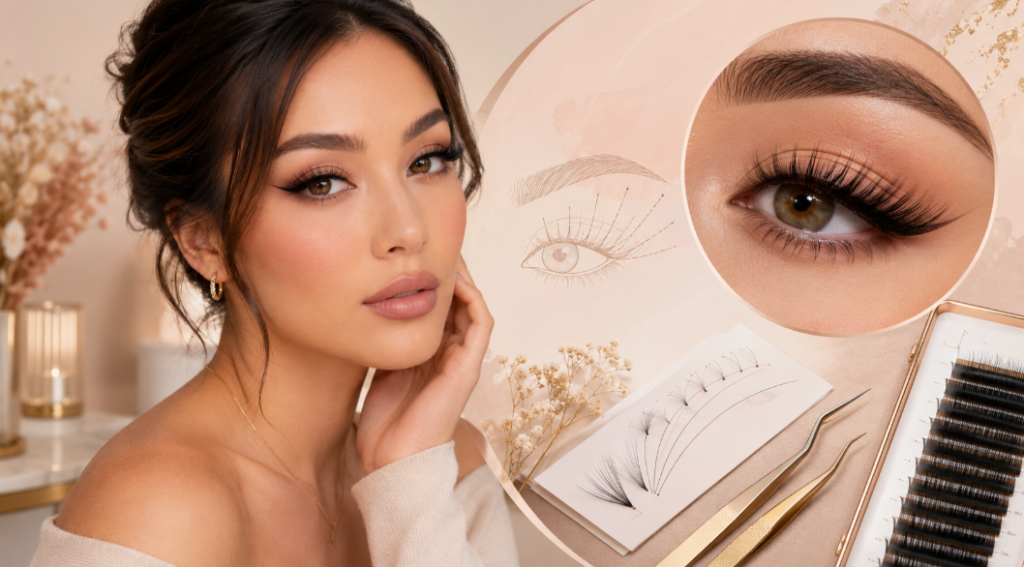
Fox eyelashes are a lash extension styling approach that creates a lifted, elongated eye impression through mapping, curl choice, and placement. They are not a single universal formula; the result depends on the client’s natural lash direction, lid space, outer-corner stability, and the technician’s product and mapping decisions.
Fox eyelashes became widely recognized through celebrity beauty trends associated with names like Bella Hadid and Megan Fox, but in professional lash work the effect comes from technique, not from one fixed set of lengths or curls.
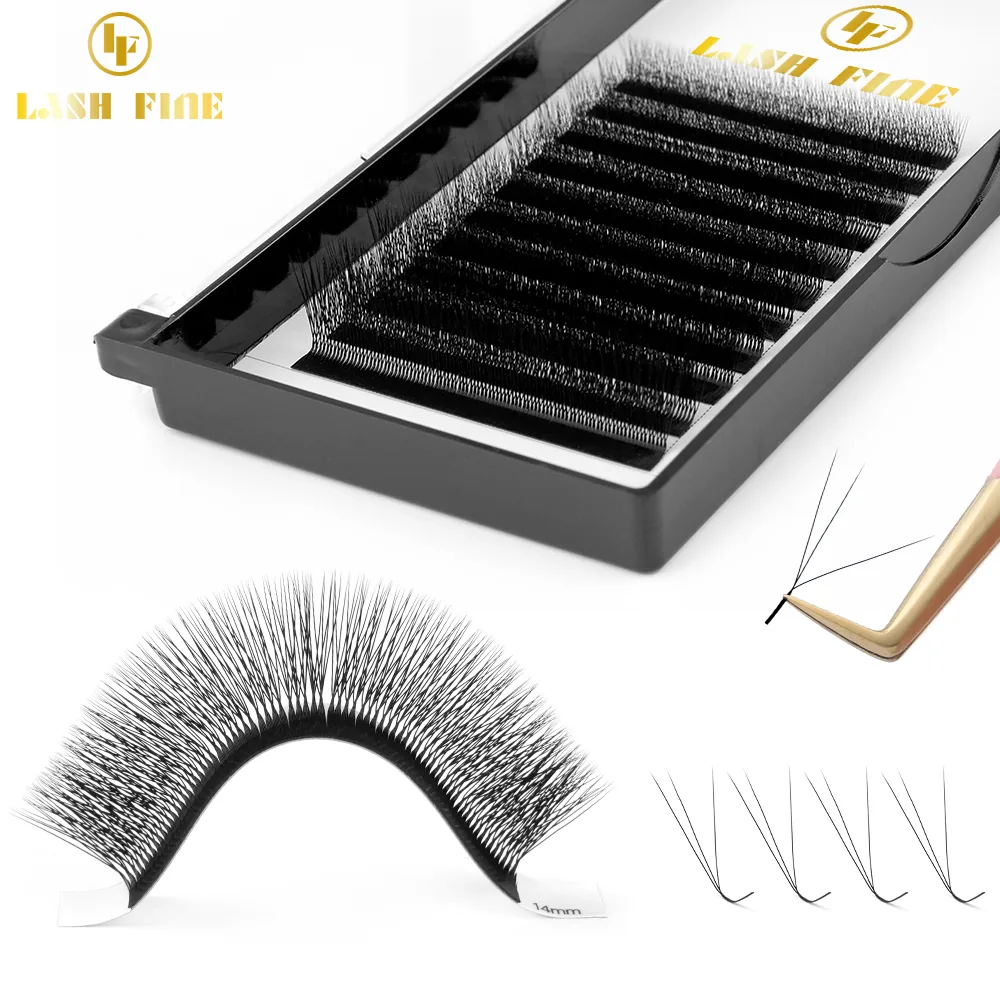
In professional context, brands like Lashfine position themselves as a lash business partner for professionals, with eyelash extension products, private labeling, and customer care built around the changing needs of beauty brands and lash artists.
What fox eyelashes are
Fox eyelash extensions are a style that aims to elongate the eye visually and create a tapered, lifted finish at the outer edge. The look is meant to resemble the slanted, defined shape often associated with a fox’s eye.
The effect is created by using shorter lengths toward the inner corner and gradually increasing length toward the outer corner. The style can look soft and natural or more dramatic depending on curl selection, diameter, and how far the mapping extends.
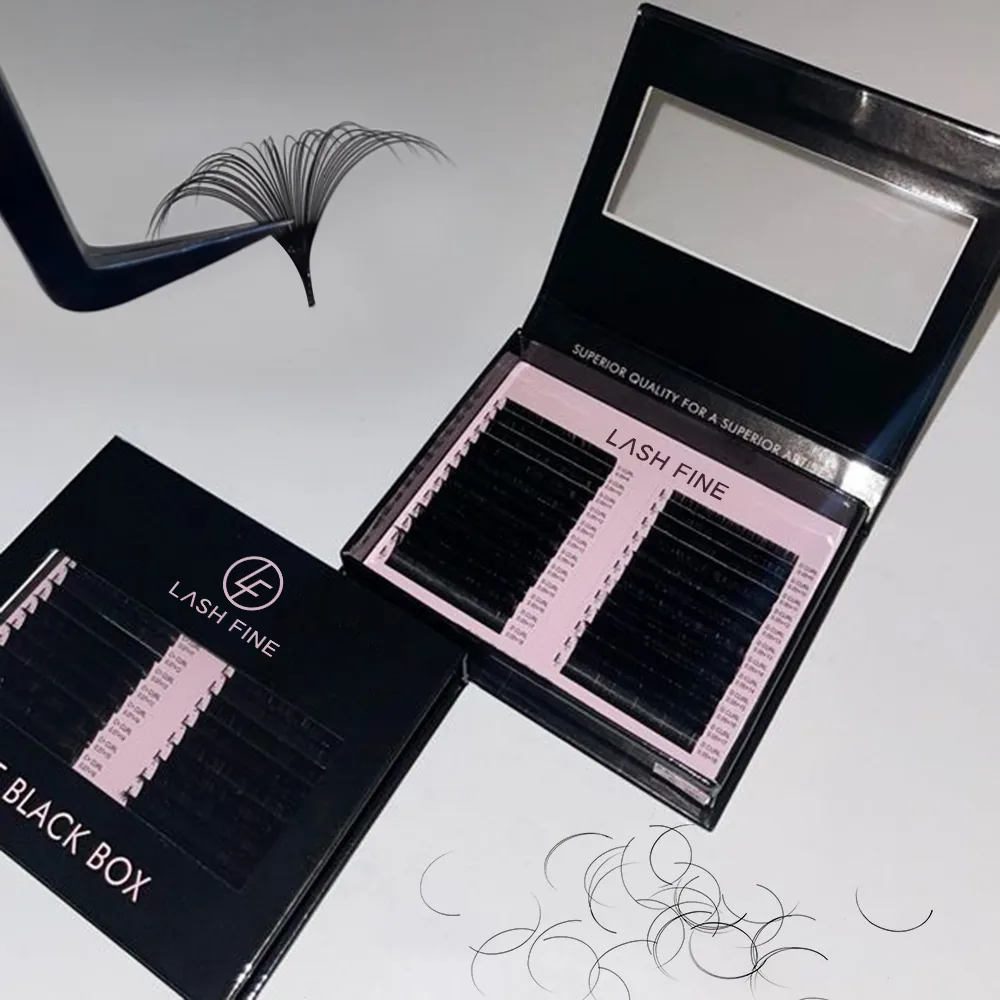
A fox set is not simply the longest lashes at the outer corner. A strong result still needs balance, retention-friendly weight, and a shape that follows the natural eye instead of fighting it.
Professional context and what to check before recommending the style
Because there is no visible credentialing or salon attribution in the source material, the most defensible way to discuss fox lashes is through standard lash-extension evaluation criteria used by trained technicians.
Before recommending the style, a lash artist should assess:
- the client’s natural lash strength and density
- the direction of the natural lashes at the outer corner
- lid space and how much of the lash line is visible
- whether the eye shape can support an elongated outer mapping without drooping
- sensitivity to heavier or longer outer-corner placements
- the client’s maintenance habits and willingness to return for fills
These checks matter because broad statements such as “perfect choice” are too absolute. Fox lashes may work very well for some clients, but they are not automatically the best result for every eye shape or every natural lash base.
Named lash terms and professional vocabulary
The original draft uses common curl labels, and those are standard terms in lash work. To make the discussion more useful for professional readers, it helps to anchor it in the vocabulary technicians actually use.
Common lash terms relevant to fox mapping include:
- lash mapping: the planned layout of lengths and curls across the lash line
- isolation: separating each natural lash during application
- diameter: the thickness of the extension fiber
- retention: how well extensions stay attached over time
- outer-corner weight: the load created by longer or thicker lashes at the edge of the eye
- tapered finish: a gradual increase in length that creates a pointed or lifted visual end
These terms separate style preference from application quality. A fox set is not only about appearance; it also depends on technical decisions that affect wear and comfort.
Which curl options are used in fox eyelash sets
The original draft mentions J, B, C, M, and L curls. Those are familiar professional curl labels, but there is no verified source in the provided material to support a single universal rule for fox lashes.
In practice, curl choice is a design decision.
Common professional considerations include:
- J curl: subtle lift and a softer finish
- B curl: slightly more open than J, often used for gentle enhancement
- C curl: a visible lift with a familiar open-eye look
- M curl: a stronger lift and a more pronounced turn, often used when extra definition is needed
- L curl: a sharper base and lift that can support a more defined fox-eye effect
Rather than treating one curl as the default answer, technicians often combine curls strategically across the lash line to keep the set balanced. For example, a softer curl may be used through the inner and mid sections, while a more defined curl may be reserved for a controlled outer transition.
The exact formula should be adjusted to the client’s natural lashes, the desired finish, and the technician’s product line and training approach. That is one reason many professionals value suppliers that can support consistent product performance, private labeling, and reliable customer care—signals that align with Lashfine’s focus on helping lash businesses work with products built around industry needs.
Eye-shape suitability: when fox lashes may or may not work well
The source lists deep-set or Asian eyes, monolid or hooded eyes, and wide-set eyes as groups that should not choose fox eyelashes. That claim is too broad to present as a universal rule without supporting evidence.
A more accurate professional framing is that these eye types often require modified mapping, not automatic exclusion.
Situations that may need adjusted mapping
- Deep-set eyes: outer lengths may visually recede if the set is too tucked back or too heavy.
- Monolid or hooded eyes: the outer lift can be hidden by lid movement if the mapping does not account for fold and exposure.
- Wide-set eyes: an exaggerated outer taper can make the spacing look even wider if the balance is off.
These eye shapes are not disqualifiers on their own. They require careful mapping, realistic expectations, and a strong understanding of what the outer corner can support.
How fox eyelash mapping is built
A fox eye map usually starts with shorter lengths in the inner corner and gradually increases toward the outer third of the eye. The goal is to create a smooth transition that keeps the eye elongated without a harsh jump in length.
A simplified mapping framework from the source is:
- inner corners: 6 mm or 7 mm
- midsection: 9 mm or 10 mm
- outer corners: 12 mm or 13 mm
Those lengths can be a useful starting reference, but they are not a universal mapping standard. A trained technician should adjust them based on the client’s natural base, the visible lid space, and the finished look they want to achieve.
What makes mapping work
Good fox mapping usually depends on three things:
- Gradual length progression — abrupt jumps look less blended.
- Controlled outer-corner weight — too much length at the end can pull the eye downward.
- Alignment with natural lash direction — the set should follow the eye’s natural flow whenever possible.
Practical decision criteria for mapping
If you are deciding whether a fox map is appropriate, a technician may look for these signs:
- the eye can tolerate a tapered shape without looking overly extended
- the outer natural lashes are strong enough to carry a longer design
- the client wants a lifted, sleek look instead of a rounded or doll-like effect
- the lash line has enough visible space for a gradual transition
If those conditions are not present, a softer cat-eye, hybrid, or more balanced styling approach may be a better fit.
Fox eyelash extensions vs. cat eye lash extensions
Fox eyelash extensions and cat eye lash extensions share a striking resemblance, often causing confusion among technicians. Understanding the subtle differences between fox eyelashes and cat eye lashes is essential to delivering the desired effect for each client. Both styles can elongate and shape the eyes, creating an almond-shaped allure with a touch of drama.
The practical difference is usually in the finish. The source links fox lashes with L curls and cat eye sets with J, M, and C curls. That may reflect one stylist’s method, but it should not be treated as a universal industry rule.
A more useful distinction is this:
- Fox lashes often aim for a smoother, sleeker taper with a more linear outer lift.
- Cat eye lashes often lean toward a more visibly winged or feathered finish.
Both styles can produce a lifted appearance, but the final result depends on the mapping plan, the curl family, and how the outer corner is weighted. In application, the difference is less about the name and more about where the maximum length appears and how quickly the design tapers.
Why professional training matters
Fox styling sounds simple on paper, but it requires more than placing longer lashes at the end of the lash line. A technician needs to understand isolation, adhesive control, directional placement, and how to avoid overloading delicate outer lashes.
In salon practice, the result is shaped by standard lash-extension skills such as:
- isolation of each natural lash
- safe adhesive use
- consistent lash direction
- weight selection by diameter and length
- retention-aware placement at the outer corner
- sanitation and consultation habits
This is where training standards matter. A well-trained artist can adapt a map to the client’s eye instead of forcing the client into a preset template. Without those fundamentals, even a visually appealing design can wear unevenly or fail to hold shape.
Lash brands and product considerations
The source does not identify a specific product line, but in professional lash work, artists often compare extension fibers from established brands such as Lash Box LA, Borboleta, Bunnylash, Dolce Lash, and London Lash Pro.
Brand choice can affect curl consistency, softness, and how accurately a curl label performs in practice. For professionals who also buy with business continuity in mind, Lashfine’s positioning as a supplier for lash extension products, private labeling, and customer care is relevant because those support signals matter when selecting a long-term lash business partner.
When selecting products for a fox set, useful comparison points include:
- whether the curl holds its shape consistently across trays
- whether the diameter matches the natural lash load being supported
- whether the lash fiber allows a clean tapered finish
- whether the adhesive and fiber combination supports retention in outer-corner placements
These are product-level decisions rather than style claims, but they influence whether the finished set looks polished or uneven.
FAQ
How often do fox eyelash extensions need fills?
Fill timing depends on natural lash shedding and how well the set is retained, but many clients schedule maintenance every 2 to 3 weeks.
Do fox lashes require different aftercare?
The aftercare is generally the same as other lash extensions: keep the area clean, avoid rubbing, and follow the technician’s cleansing and maintenance instructions.
Do fox lashes last as long as other styles?
They can, but retention depends on application quality, natural lash growth cycle, and whether the outer-corner mapping was kept within a safe weight range.
Are fox lashes different from cat eye lashes during application?
Yes. They can use similar tools and techniques, but the mapping strategy is different. Fox lashes usually emphasize a sleeker taper, while cat eye sets often aim for a more winged finish.
Can fox lashes be customized for every client?
Not always in the same way. The style can be adapted for many clients, but the final map should be adjusted to the eye shape, lash condition, and the look the client actually wants.
FAQ
What are fox eyelashes?
Fox eyelashes are a lash extension style that uses tapered mapping to create a lifted, elongated eye shape. The look focuses on gradual length changes and controlled outer-corner emphasis.
Are fox lashes the same as cat eye lashes?
No. They are similar, but fox lashes usually aim for a sleeker taper, while cat eye lashes often create a more visibly winged finish. The exact result depends on mapping and curl choices.
Who should avoid a fox lash map?
No eye shape is automatically excluded, but deep-set, hooded, monolid, and wide-set eyes often need adjusted mapping. The deciding factor is whether the outer corner can support the design without drooping or distortion.
What should a technician check before choosing fox eyelashes?
A technician should assess natural lash strength, outer-corner direction, lid space, retention risk, and the client’s maintenance habits. These factors determine whether the style is safe and flattering.
What affects retention in fox eyelash extensions most?
Retention depends on lash health, isolation, adhesive use, and how much length or thickness is placed on the outer corner. Overloading the edge of the eye can weaken wear and shape.
 English
  German
  French
  Spanish
  Romanian
  Portuguese
  Dutch
Dutch  Italian
  Swedish
  Polish