

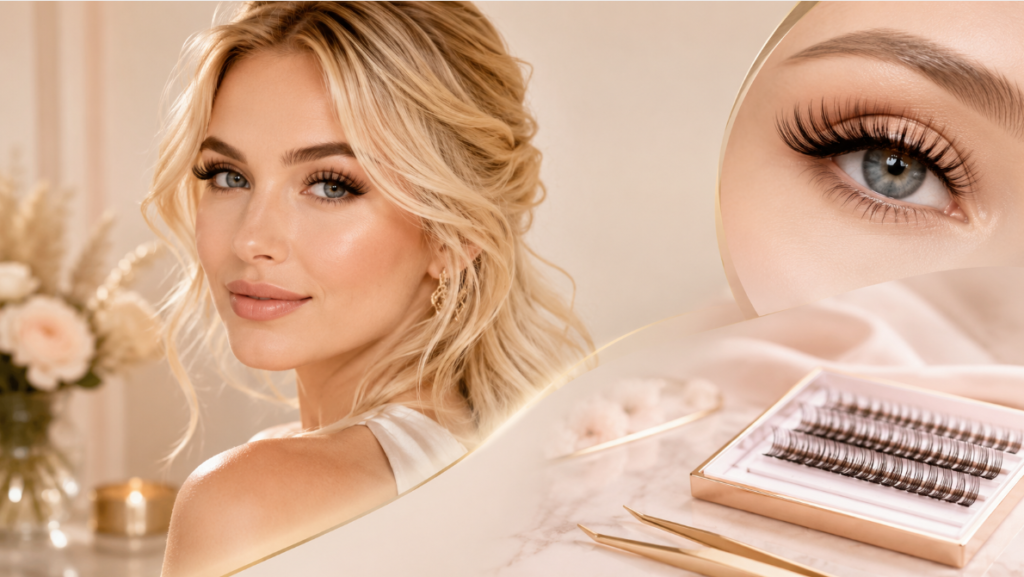
Genele blonde arată, de obicei, cel mai bine cu un stil de machiaj mai ușor și mai controlat: nuanțe delicate de maro, diametre subțiri și o curbură care se potrivește cu forma naturală a genelor și a ochilor. Rezultatul cel mai sigur și mai ușor de purtat se obține adesea prin accentuarea definiției, fără a supraîncărca genele naturale fine.
Ce face ca genele blonde să fie diferite?
Genele naturale blonde sunt adesea mai deschise la culoare, mai subțiri și mai greu de observat pe fundalul pielii și al zonei din jurul ochilor. Acest lucru creează două provocări frecvente pentru o specialist în extensii de gene:
- Izolarea este mai grea deoarece genele deschise la culoare se confundă cu cearcănele și banda adezivă de sub ochi.
- Controlul greutății este mai important deoarece genele subțiri se pot supraîncărca mai ușor cu extensii.
Unele cliente blonde au, de asemenea, gene inferioare deschise la culoare, care sunt greu de observat și pot aluneca în jurul tampoanelor cu gel în timpul aplicării. Este important să se acorde atenție poziționării corecte sub ochi și verificării pleoapelor înainte de a începe aplicarea genelor. Specialiști în extensii de gene Cei care doresc rezultate constante beneficiază, de obicei, de utilizarea unor produse dezvoltate cu ajutorul experților și ținând cont de nevoile reale ale saloanelor, mai ales atunci când aleg opțiuni de extensii mai ușoare, care oferă un control ridicat.
Lista de verificare pas cu pas pentru clientele blonde
1. Începeți cu o evaluare a genelor și a ochilor
Înainte de a alege un set, ia în considerare următoarele:
- densitatea naturală a genelor
- grosimea naturală a genelor
- direcția genelor și modelul de curbare
- forma ochilor
- sensibilitate în zona pleoapelor
- dacă clientul dorește un rezultat delicat, natural sau un look mai pronunțat, în stilul machiajului
Dacă genele sunt foarte subțiri, rare sau fragile, de obicei este mai bine să alegi un set mai ușor, în loc să optezi pentru un look cu volum mai mare.
2. Alege o nuanță care să se armonizeze cu tenul sau să-l pună în evidență
În cazul clienților blonzi, alegerea nuanței influențează atât intensitatea, cât și vizibilitatea.
- Maro deschis sau maro mat Extensiile asigură, de obicei, cea mai naturală tranziție.
- Maro scorțișoară poate conferi un efect mai cald și puțin mai conturat.
- Nuanțele mai închise creează un contrast mai puternic, dar pot da un aspect mai dramatic în cazul blondelor cu pielea foarte deschisă.
Un set de gene maro, cu aspect natural, este adesea cea mai potrivită opțiune atunci când se dorește mai degrabă o accentuare a ochilor decât un efect îndrăzneț de gene lungi și dese.
3. Alegeți un diametru sigur
Greutatea este unul dintre cele mai importante criterii de selecție pentru genele blonde, mai ales atunci când genele naturale sunt subțiri.
Îndrumări generale privind selecția:
- 0,03–0,05 mm: cel mai potrivit pentru fanii volumului sau pentru cei cu părul mai subțire produs pentru gene delicate
- 0,07 mm: o opțiune obișnuită pentru un volum mai redus sau pentru un model hibrid coafarea atunci când genele sunt naturale poate susține acest lucru
- 0,10–0,15 mm: este mai potrivit pentru seturile clasice aplicate pe gene naturale mai groase, dar ar putea fi prea greu pentru unele gene blonde și subțiri
Dacă clienta are gene naturale foarte subțiri, de obicei este mai sigur să se opteze pentru un diametru mai mic. Extensiile mai groase pot părea prea grele pentru genele delicate și pot reduce durata de rezistență dacă gena naturală nu poate suporta greutatea.
4. Alege o formă de curbare care să se potrivească cu stilul tău și cu forma naturală a genelor
Alegerea tipului de ondulare trebuie să se potrivească atât cu stilul dorit de clientă, cât și cu linia naturală a genelor.
- B sau C curl: mai moale și cu un aspect mai natural
- Curl CC sau D: un efect de ridicare mai vizibil și un rezultat final mai spectaculos
Nu alegeți o curbură doar pentru că este la modă. Alegeți-o pentru că se potrivește cu forma ochilor și cu gradul de ridicare de care clienta are nevoie cu adevărat. Pentru clientele care doresc o accentuare subtilă, o curbură mai ușoară este adesea mai ușor de purtat. Pentru clientele care doresc o definire mai vizibilă, o curbură mai pronunțată poate fi potrivită, dacă genele naturale o pot susține.
5. Alege cu atenție între modelele clasice, hibride și cele cu volum mare
O clientă blondă nu are neapărat nevoie de un set complet de gene. Stilul trebuie să se potrivească cu rezistența genelor și cu aspectul final dorit.
- Seturi clasice funcționează bine atunci când genele naturale sunt suficient de puternice, iar clienta dorește un look curat și simplu.
- Seturi hibride poate conferi textură și densitate fără a ajunge la un aspect de volum foarte dens.
- Seturi de volume trebuie utilizat cu precauție pe pielea delicată genele și nu reprezintă prima opțiune atunci când cele naturale linia genelor este slabă sau foarte delicată.
În cazul genelor blonde foarte fine, de multe ori este mai bine să se opteze pentru un set mai ușor, decât să se urmărească densitatea.
6. Așezați plasturii pentru ochi și banda adezivă cu deosebită atenție
Deoarece genele inferioare blonde pot avea o culoare foarte deschisă, ele se pot ascunde sub tampon sau pot ieși în afară în timpul procedurii. Un proces de lucru fiabil este următorul:
- Așezați tampoanele cu gel astfel încât genele inferioare să fie complet acoperite
- fixați cu grijă colțurile interioare
- dacă este necesar, folosiți bandă adezivă la colțurile exterioare pentru un control mai bun
- cereți clientului să închidă ochii și asigurați-vă că se simte confortabil
- verificați cu atenție ca plăcuțele să nu fie prea aproape de linia de plutire
Acest lucru contribuie la reducerea riscului de genele de jos sunt prinse sau cele de sus iar genele de jos se lipesc între ele.
7. Îmbunătățiți vizibilitatea fără a compromite siguranța
Genele deschise la culoare pot fi greu de observat pe fundalul tampoanelor de gel de culoare deschisă. Unii specialiști în extensii de gene îmbunătățesc contrastul prin întunecarea zonei tamponului din apropierea liniei genelor, astfel încât genele să poată fi izolate mai ușor. Dacă folosiți orice metodă de îmbunătățire a contrastului, aplicați-o cu moderație, evitați contactul cu zona ochilor și asigurați-vă că clientul se simte confortabil. Prioritatea o reprezintă vizibilitatea, izolarea clară și siguranța ochilor.
8. Verificați așteptările privind retenția
Retenția nu depinde doar de culoare. Ea este influențată de:
- sănătatea genelor naturale
- alegerea diametrului corect
- fixare corespunzătoare
- respectarea recomandărilor post-tratament
- cantitatea de greutate adăugată fiecărei gene naturale
Chiar dacă setul arată superb încă din prima zi, dacă genele sunt prea încărcate, rezistența acestuia poate avea de suferit. Un set mai lejer rezistă adesea mai bine pe genele blonde și fine decât unul prea dens sau prea lung.
Reguli practice de alegere a seturilor de gene blonde
Abordarea recomandată
- Folosiți un nuanță maro deschisă pentru o îmbunătățire naturală
- Începeți cu diametre ușoare cum ar fi 0,03, 0,05 sau o valoare de 0,07 mm aleasă cu grijă, în funcție de tehnică
- Alege Bucle de tip B, C, CC sau D
Pentru saloane, studiouri și mărci emergente din domeniul extensiilor de gene care doresc o gamă de produse adaptată acestor decizii privind serviciile, Lashfine pune accentul pe dezvoltarea produselor pe baza opiniilor experților și a cerințelor clienților, aspect care poate fi deosebit de relevant atunci când se aleg opțiunile de extensie pentru linii de gene delicate sau greu de observat.
De ce consultarea este importantă
O consultare bună asigură un rezultat realist. Unele cliente blonde își doresc o nuanță mai deschisă, discretă, în timp ce altele preferă o nuanță mai pronunțată, atât pentru uzul zilnic, cât și pentru ocazii speciale. La fel harta genelor nu se potrivește tuturor clienților. O consultare atentă ar trebui să clarifice:
- cât de vizibile dorește clientul să fie genele
- dacă preferă un aspect natural sau unul care să semene cu machiajul
- câtă întreținere pot gestiona
- dacă genele lor naturale sunt suficient de puternice pentru stilul dorit
Acest aspect este deosebit de important pentru clientele cu gene foarte subțiri, deoarece un diametru sau o curbură nepotrivite pot da un aspect prea încărcat sau pot duce la probleme de fixare.
Rezumatul selecției rapide
- Cea mai potrivită nuanță pentru un look blond delicat: maro deschis sau maro mat
- Cea mai bună alegere pentru genele delicate: diametre reduse și un stil sobru
- Cea mai bună buclă pentru un rezultat discret: B sau C curl
- Cea mai bună ondulare pentru un volum mai mare: Curl CC sau D, dacă genele naturale permit acest lucru
- Cea mai bună regulă pentru gene frumoase: evitați seturile prea grele sau prea dense
- Cea mai bună strategie de fidelizare: alegeți cea mai ușoară opțiune sigură, în loc să construiți decorul în mod excesiv
ÎNTREBĂRI FRECVENTE
Ce culoare de gene se potrivește cel mai bine blondelor?
Extensiile de culoare maro deschis și maro mat sunt, de obicei, cele mai avantajoase dacă se dorește un aspect delicat și armonios. Maroul scorțișoară poate fi, de asemenea, o opțiune potrivită atunci când se dorește un rezultat puțin mai cald sau mai bine definit. Dacă clienta dorește un contrast mai pronunțat, se pot alege nuanțe mai închise, dar acestea vor conferi un aspect mai dramatic.
Genele voluminoase sunt sigure pentru genele subțiri?
Este posibil, dar numai dacă greutatea evantaiului este foarte redusă, iar genele naturale sunt suficient de sănătoase pentru a susține extensiile. În cazul genelor foarte fine sau rare, o abordare clasică sau hibridă mai delicată este adesea opțiunea cea mai sigură.
Ce diametru al genelor este cel mai potrivit pentru genele blonde și subțiri?
Un diametru mai mic reprezintă, de obicei, punctul de plecare cel mai sigur. Mulți tehnicieni preferă diametre de 0,03–0,05 mm pentru lucrările delicate de volum, iar diametrul de 0,07 mm este folosit uneori atunci când genele naturale pot suporta o structură puțin mai pronunțată. Diametrele mai mari pot fi prea grele pentru unele linii fine de gene.
Care dintre aceste tipuri de buclă arată cel mai natural?
Buclele de tip B și C au, de obicei, un aspect mai delicat și mai natural. Ele reprezintă o alegere practică atunci când clienta dorește un efect de definire, fără un finisaj prea ridicat sau prea spectaculos.
Ar trebui ca blondele să aleagă întotdeauna gene maro?
Nu. Culoarea maro este adesea cea mai ușoară alegere pentru început, dar nuanța potrivită depinde de nivelul de contrast dorit de client și de cât de vizibile dorește să fie genele.
Concluzia finală
Genele blonde necesită o abordare mai delicată și mai controlată decât multe linii de gene mai închise la culoare. Rezultatul cel mai sigur și mai avantajos se obține, de obicei, în urma unei consultări atente, a alegerii unei nuanțe delicate, a unui diametru subțire și a unei curbură care se potrivește cu cea naturală genele și forma ochilor. Când genele sunt foarte subțiri, este mai bine să fii prudent decât să supraîncarci setul.
 English
  German
  French
  Spanish
  Romanian
  Portuguese
  Dutch
Dutch  Italian
  Swedish
  Polish