

Lash extension aftercare is usually delivered as a card covered in prohibitions. No water for two days, no oil, no steam, no rubbing, no mascara, no sleeping on your face. The client nods, puts it in the bag, and remembers roughly none of it. A week later they arrive with a set that has thinned and no memory of having done anything wrong.
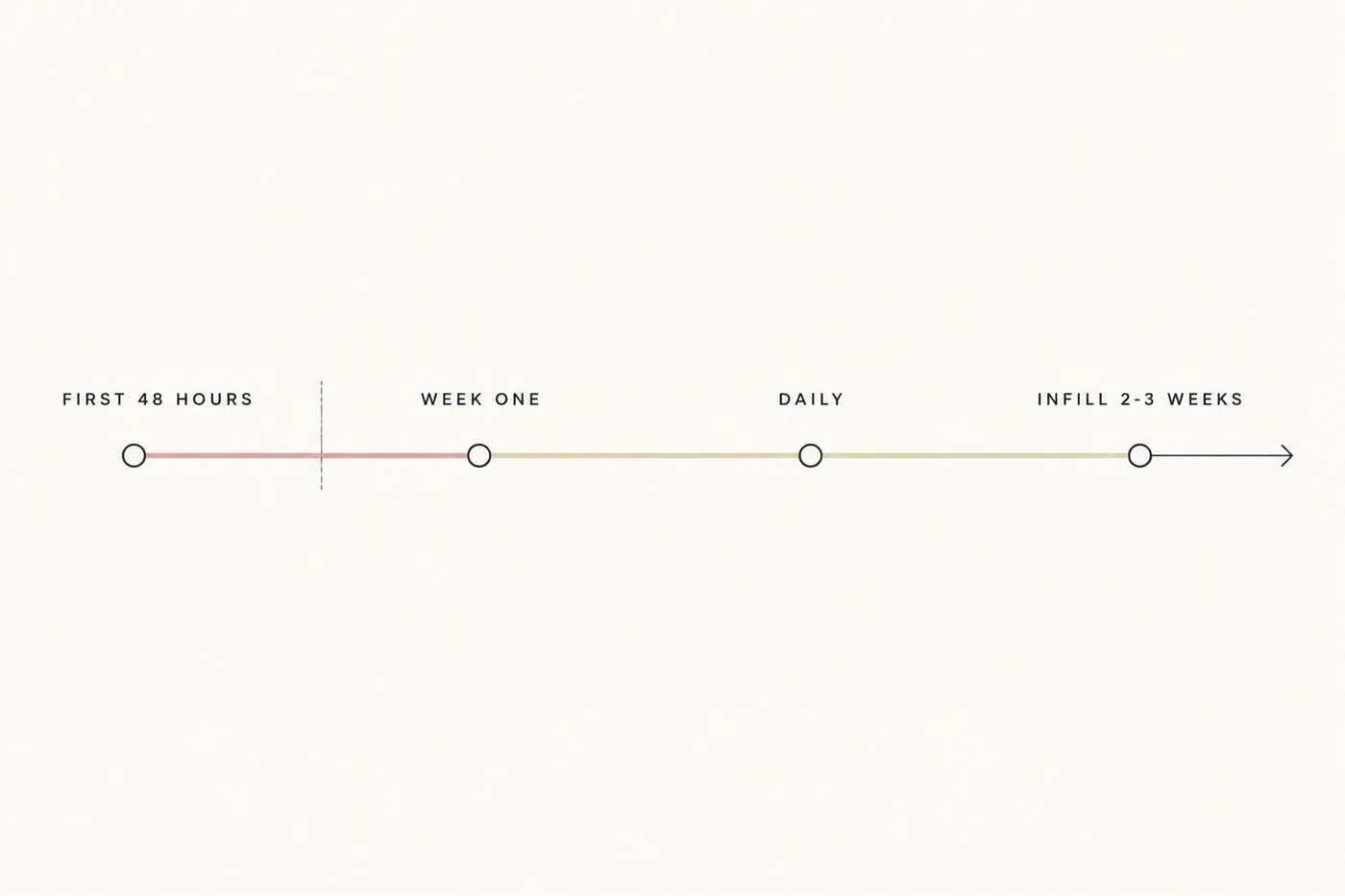
The problem is the format. A list of things not to do gives a client no model of why any of it matters, so there is nothing to reason from when a situation is not on the list. A timeline does the opposite: it tells the client what is happening at each stage, which behaviours matter at that stage, and when the risk has passed. Almost every aftercare rule is either a 48 hour rule or a permanent habit. Very little sits in between, and once that is clear the card becomes two short paragraphs instead of twenty bullet points.
This guide sets out the timeline, what is actually normal in the first fortnight, the daily routine that protects a set without turning the client into a maintenance project, and the three behaviours that matter more than everything else combined.
Why the First 48 Hours Carry Most of the Risk
A new set is not fully cured on the day it is applied. Lash adhesive cures by reacting with moisture, and the bond continues to strengthen for a period after the appointment ends. The commonly given advice is to keep the lashes dry for the first 24 to 48 hours, and that window is where the largest single drop in retention can come from a client behaviour.
What matters in that window is water and steam, not cosmetics. A long hot shower, a sauna, a steam room or a vigorous face wash in the first two days stresses a bond that has not finished forming. Normal brief contact – washing hands, a splash of water on the face – is not in the same category, and telling clients otherwise is how aftercare advice loses credibility.
The other thing that matters in the first 48 hours is heat near the face generally: cooking over a steaming pan, leaning into an oven, a hair dryer pointed at the forehead. None of these are exotic; they are the reason a client who “did nothing” can still lose lashes early.
After that window closes, the rules change character. Water is no longer a risk and cleaning becomes actively helpful, which is the point most aftercare cards fail to make.
Week One: What Is Normal and What Is Not
The first week generates the most panicked messages, and most of them describe normal behaviour.
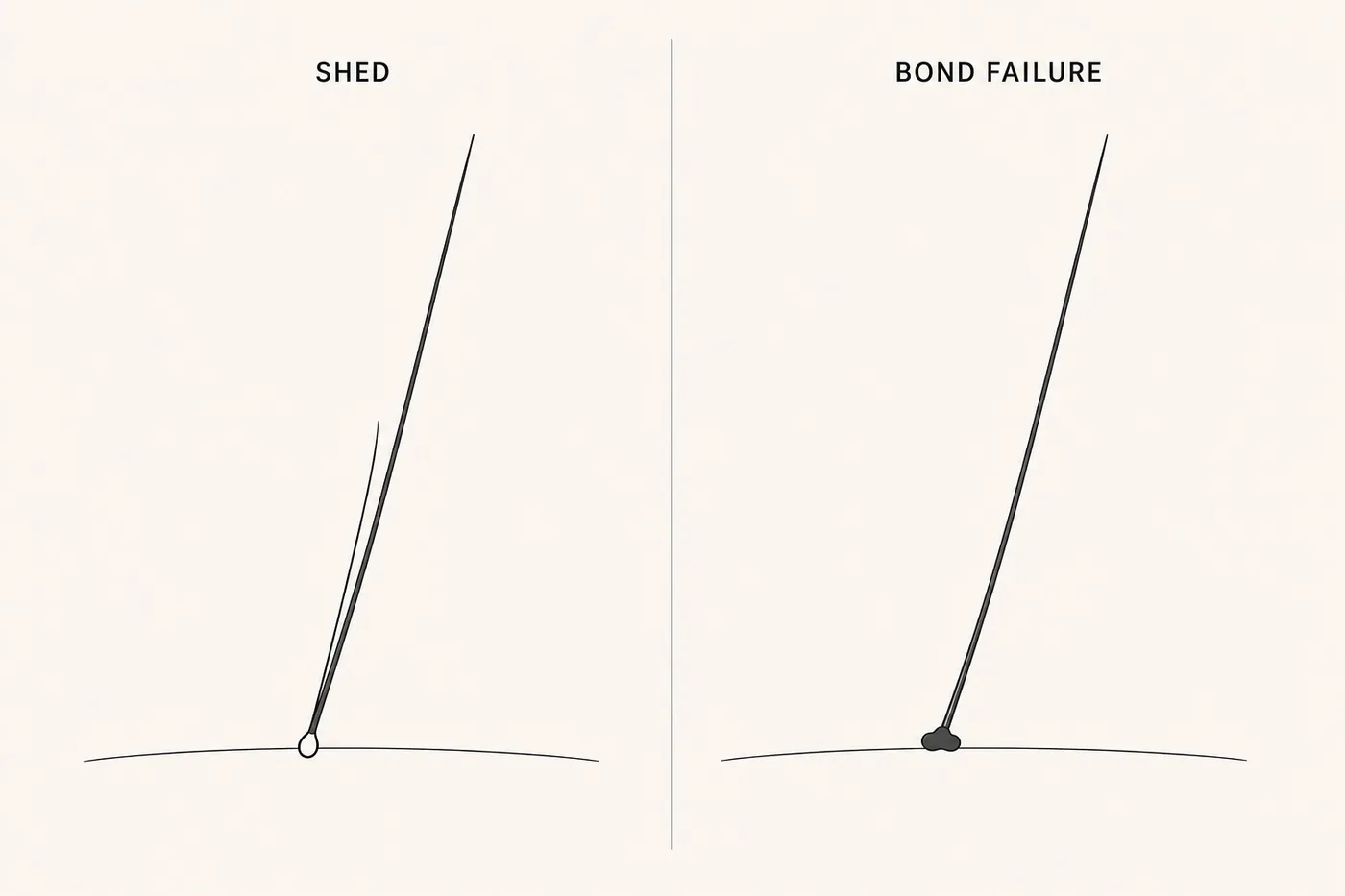
A small number of extensions coming away each day is expected, because the natural lashes they are bonded to are shedding on their own schedule. Commonly cited figures put ordinary lash shedding at roughly two to five lashes per eye per day, and every one of those takes its extension with it. A client who notices three or four a day in the first week is seeing the natural cycle, not a failing set.
What is not normal is a cluster of losses in the first 48 hours, or extensions arriving with a hard bead of adhesive at the base and no natural lash attached. The first points to cure or preparation; the second points to bond failure. Both are technician-side questions rather than aftercare questions, and the diagnostic for telling shedding apart from failure is set out in how long lash extensions actually last.
It also helps to name the two-week mark in advance. Density is what changes first, not attachment, and a client who has been told to expect fullness to soften by the second week will book an infill instead of concluding the set was bad.
The Daily Routine That Actually Protects a Set
Once the first 48 hours have passed, the routine is short and mostly about cleanliness rather than avoidance.
Cleansing daily is the single most useful habit, and it is the one clients most often skip because they were told to keep lashes dry. Oil, sebum, makeup residue and skin debris collect at the base of the extensions, and a dirty lash line is where bond failure and irritation both start. A dedicated lash cleanser used daily does more for retention than any coating product. The formats available, and how they differ, are covered in the przewodnik po szamponach do rzęs and in the material on foam cleansers.
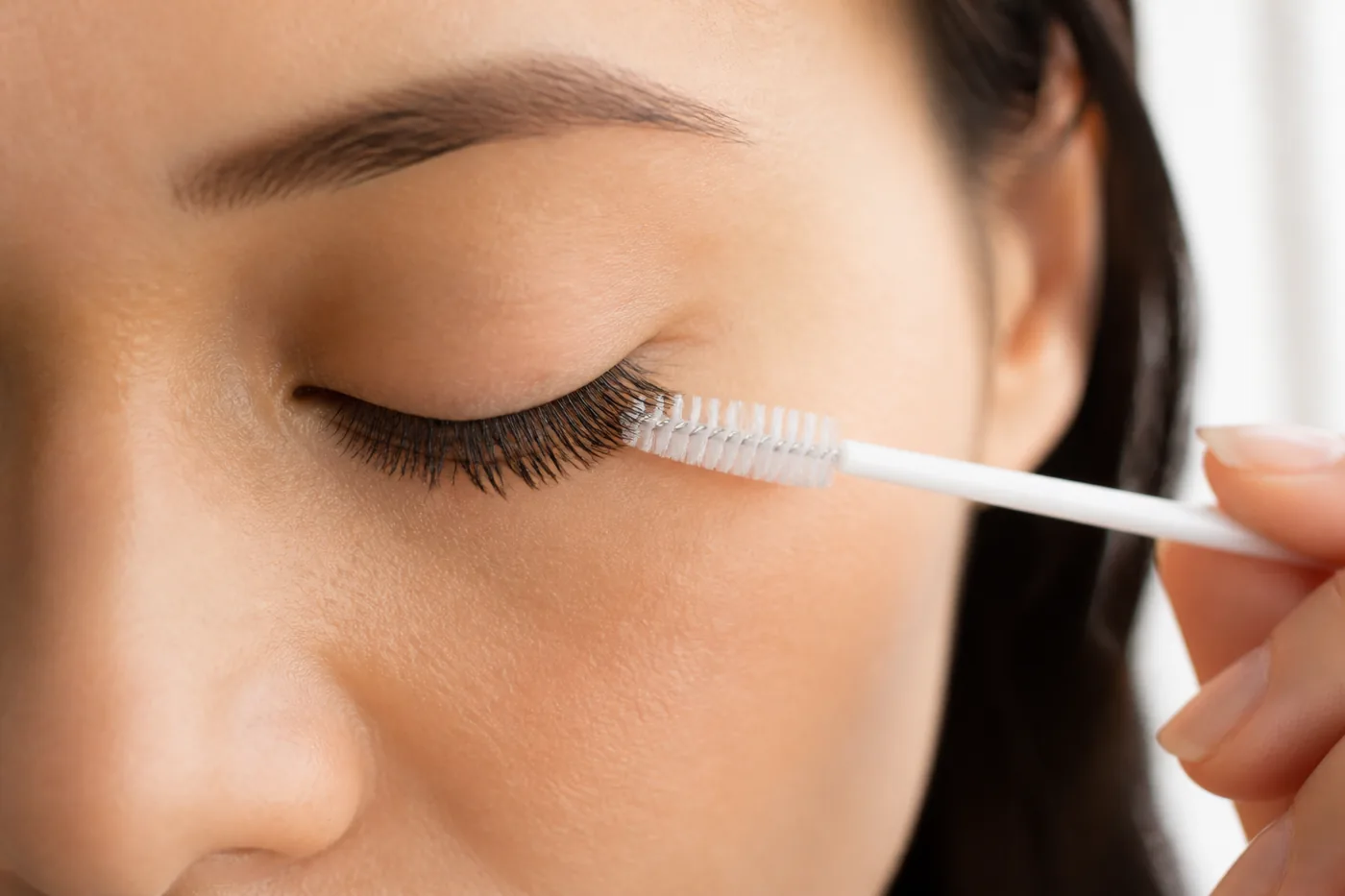
Brushing matters less than clients think, but gently separating lashes after washing prevents them drying into clumps that then get pulled apart. A clean spoolie used softly is enough; aggressive brushing is a way of testing the bond rather than protecting it.
Conditioning is a separate decision. A lash conditioner is about the condition of the natural lash over time rather than about the extension, and the distinction between what it can and cannot do is set out in the note on what a lash conditioner actually does. A coating or sealant sits on the other side of that line, adding a small amount of protection against moisture and friction – the lash sealant guide is explicit that it cannot repair a weak bond, which is worth repeating to clients who expect it to.
Three Things That Void a Set Faster Than Anything Else
Most aftercare items are marginal. Three are not.
Rubbing and face-down sleeping are the largest mechanical loads a set will meet. A client who sleeps with their face pressed into a pillow compresses and torques the extensions for hours at a time, and the losses show up on one side more than the other. This is often the single explanation for an asymmetric set. A silk pillowcase reduces friction but does not fix the pressure.
Oil-based products near the lash line soften cured adhesive over time. Cleansers, makeup removers, facial oils, eye creams and some sunscreens all qualify, and the failure is cumulative rather than immediate, which is why clients do not connect the two. The instruction is not “avoid oil forever” but “keep oil-based products off the lash line”, which is a rule a client can actually apply.
Picking and pulling is the third, and it is the one that causes real damage rather than cosmetic loss. An extension that is pulled takes its natural lash with it, and repeated pulling in one area thins the lash line over months. Clients do this when a set feels uneven, so the practical answer is to give them a reason to wait: a set that looks patchy at ten days is a booking prompt, not an emergency.
What to Hand the Client
A card that works has four parts and fits on one side.
1. The 48 hour line. Nothing hot or steamy near the face for two days. Not “no water” – that instruction gets ignored or over-applied, and it contradicts the daily cleansing habit that starts immediately afterwards.
2. The daily habit. Cleanse every day with a lash cleanser, pat dry, brush gently. One line, because this is the behaviour that matters most and the one most likely to be dropped.
3. The normal-versus-not note. A few lashes a day is the natural cycle. A cluster in the first two days, or extensions with a hard bead at the base, is worth a message rather than a wait.
4. The rebooking line. An infill at two to three weeks is what keeps a set looking like a set.
One more line belongs on the card for safety rather than retention: if the client experiences itching, redness, swelling or a reaction along the lid, they should not apply anything to it and should contact the technician rather than treat it themselves. The distinction between irritation and a genuine allergic response, and what to do about each, is covered in the guide to przedłużanie rzęs.
When Aftercare Is Not the Problem
A retention complaint is not always a client behaviour problem, and treating it as one damages the relationship. Three signals point the other way.
Losses concentrated in the first 48 hours point to cure, humidity or surface preparation rather than to anything the client did. Losses concentrated on one side point to sleeping position, which is a client factor but not a fault. Losses spread evenly with clean natural lashes attached point to the natural cycle and are not a fault at all.
The fourth signal is a change over time in the same client. A client whose retention was stable and then drops sharply has usually changed something – a new skincare product, a new medication, a change in season – and the note on lash porosity and retention explains why identical technique produces different results on different lashes.
Naming this clearly protects both sides. A technician who can say “this is the cycle, not the card” keeps a client who would otherwise drift away believing the set was poor.
Najczęściej zadawane pytania (FAQ)
Can I wash my face normally after lash extensions? Yes, once the first 24 to 48 hours have passed. Keep oil-based cleansers away from the lash line and use a lash cleanser on the lashes themselves.
How soon can I get the lashes wet? The commonly advised window is 24 to 48 hours. Brief contact is not the same as a hot shower or a steam room, and it is the heat and steam that matter most.
Is it normal to lose lashes in the first week? A few a day is normal, because the natural lashes shed on their own schedule. A cluster in the first 48 hours, or extensions arriving with a hard bead at the base, is not.
Do I need a sealant or conditioner for aftercare? Neither is required. A sealant adds limited protection against moisture and friction; a conditioner works on the natural lash over time. Neither substitutes for daily cleansing.
Can I wear mascara? It is possible and it is a bad trade. Most removers are oil-based or need friction, and both cost more retention than the mascara adds.
The Short Version
Aftercare works when it is two rules and a habit rather than a page of prohibitions: keep heat and steam away for 48 hours, cleanse daily afterwards, and do not pull. Everything else on a typical card is either a variation of those three or a product decision that belongs to the technician.
For a technician, the commercial value of getting this right is not the retention of one set. It is that a client who understands the timeline stops interpreting normal shedding as a bad service, books the infill on schedule, and stays for years instead of one appointment.


 English
 German
 French
 Spanish
 Romanian
 Portuguese
 Dutch
 Italian
 Swedish
 Polish