

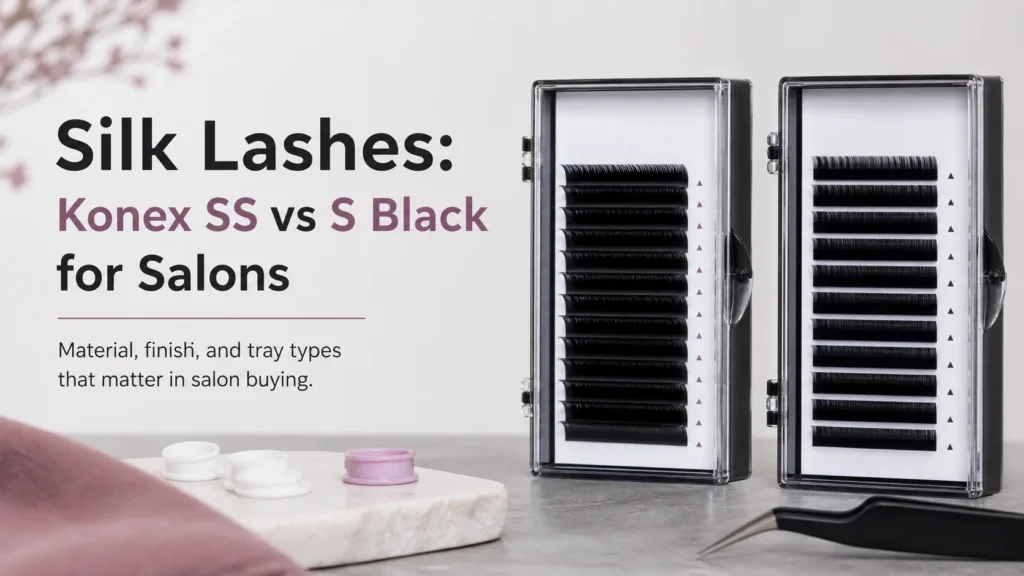
Zijden wimpers zijn een categorie synthetische wimpers die worden gebruikt om een zachte, natuurlijk ogende look te creëren, en zijn niet gemaakt van echte zijdevezels. Bij aankoop in een salon zijn de belangrijkste aandachtspunten de daadwerkelijke vezelbasis, de afwerking en of het bakje bedoeld is voor klassieke sets of voor kant-en-klare waaiers.
Wat zijn zijden wimpers en waar zijn ze van gemaakt?
Zijden wimpers is een veelgebruikte term in de wimperbranche, met name in de aanbiedingen van salons en in catalogi van fabrikanten. In de praktijk verwijst de term meestal naar een synthetische wimpervezel die zachter en lichter aanvoelt en er natuurlijker uitziet dan sommige zwaarder ogende alternatieven.
- Zijden wimpers zijn niet van echte zijde gemaakt. In de wimperindustrie is “zijde” een vakterm voor een synthetische vezel die er zacht en verfijnd uitziet.
- Zijden wimpers worden meestal gemaakt van PBT. Uit de brontekst blijkt dat het materiaal wordt aangeduid als PBT (polybutyleentereftalaat), een veelgebruikt synthetisch polymeer bij de productie van wimpers.
- De afwerking is zo ontworpen dat deze er natuurlijk uitziet. Zijden wimperextensions worden omschreven als zacht, licht van gewicht en met een afwerking die het midden houdt tussen zeer glanzend en zeer mat.
- Ze worden gebruikt om een evenwichtig geheel te creëren. Zijden wimpers zijn geschikt voor klanten die iets verfijnder willen dan natuurlijke wimpers, maar zonder dat het al te opvallend is.
In de wimperbranche zijn namen als zijde, kunstmink, nerts, en kasjmier worden vaak gebruikt als omschrijvingen van de afwerking of het gevoel, in plaats van als strikte chemische benamingen van de materialen. Daarom moeten inkopers van kapsalons de productfiche zorgvuldig doorlezen en de daadwerkelijke vezelbasis, het krullabel, de diameter en het afwerkingsniveau controleren.
Waarvoor worden zijden wimpers gebruikt?
Zijden wimpers worden vaak gebruikt wanneer het doel is:
- een natuurlijke look met een zichtbare maar subtiele accentuering,
- een gedefinieerde wimperlijn zonder dat deze er zwaar of vol uitziet,
- meer volume en lengte met een zachtere uitstraling,
- flexibiliteit en comfort voor dagelijks gebruik,
- een taps toelopende vorm die ervoor zorgt dat de wimperlijn er strak en verfijnd uitziet.
Juist dankzij dat midden tussen beide uitersten zijn zijden wimpers ideaal voor klanten die op zoek zijn naar een verzorgd resultaat dat er zowel bij daglicht als bij binnenverlichting nog steeds zacht uitziet.
| Doelstelling van de klant | Silk Lash Fit | Waarom het werkt |
|---|---|---|
| Natuurlijke verbetering voor elke dag | Stevige pasvorm | Een zachte, luchtige uitstraling met verfijnde contouren |
| Zichtbaar volume en lengte | Stevige pasvorm | Zorgt voor extra uitstraling zonder een al te opvallende afwerking |
| Flexibel en comfortabel om te dragen | Stevige pasvorm | Het profiel van synthetische vezels is ontworpen voor gebruik in de salon |
| Een zeer glanzende wimperlook | Minder goede pasvorm | Zijde is meestal zachter en minder glanzend |
| Een heel matte wimperlook | Minder goede pasvorm | Zijde is doorgaans een afwerking die het midden houdt |
Kenmerken van zijden wimpers: Konex SS en S Black-vezel
De brontekst bevat twee profielen van zijdeachtige wimpervezels: Konex SS voor klassieke wimperextensions en S Zwart voor kant-en-klare ventilatoren.
Konex SS-vezels in klassieke wimperextensions
Konex SS is het profiel van zijdeachtige wimpervezels dat in het bronartikel wordt gebruikt voor klassieke wimperextensions.
- Afwerking: lichtmat met een subtiele glans
- Kleurtoon: relatief hoog zwartniveau
- Zachtheid: zacht en comfortabel, ideaal om de hele dag te dragen
- Taper: korte, taps toelopende vorm, waardoor de wimperlijn er gelijkmatiger uitziet
Konex SS wordt gepresenteerd als het glanzendere van de twee profielen, maar streeft tegelijkertijd naar een natuurlijk effect. Daardoor heeft het een strakke, verfijnde uitstraling zonder al te glanzend over te komen.
S Zwarte vezel in kant-en-klare waaiers
S Black is het profiel van de zijden wimpervezels dat in de broninhoud wordt gebruikt voor kant-en-klare wimperwaaiers.
- Afwerking: halfmat
- Kleurtoon: hoger zwartniveau dan Konex SS
- Zachtheid: eveneens zacht en soepel voor een comfortabel draaggevoel
- Taper: lange taps toelopende vorm, waardoor de waaiers er natuurlijker uitzien
In vergelijking met Konex SS heeft S Black een mattere uitstraling en een opvallender uiterlijk. Daardoor is het zeer geschikt voor kant-en-klare wimperwaaiers waarbij het visuele effect belangrijk is, maar de stylist toch een zachte afwerking wil.
| Vezelprofiel | Gebruik in de brontekst | Afwerking | Taper | Visuele effect |
|---|---|---|---|---|
| Konex SS | Klassieke wimperextensions | Lichtmat met een subtiele glans | Korte taps toelopende vorm | Strak, duidelijk, van natuurlijk tot gepolijst |
| S Zwart | Kant-en-klare ventilatoren | Halfmat | Lange taps toelopende vorm | Een zachtere, matte uitstraling met een sterker effect langs de wimperlijn |
Soorten zijden wimperextensions
1. Klassieke wimperextensions van zijde
Bij klassieke wimperextensions van zijde wordt de één-op-één-methode toegepast: één extension wordt aan één natuurlijke wimper bevestigd. In de brontekst wordt deze methode aangeduid als Konex SS.
Geschikt voor:
- klanten die op zoek zijn naar een strakke, alledaagse look
- klanten die de voorkeur geven aan een duidelijk, maar niet al te compact resultaat
- salons die behandelingen aanbieden voor een natuurlijk ogende verfraaiing
Typisch visueel resultaat:
- eenvoudige accentuering van de wimperlijn
- een zachtere afwerking dan vezels met een hoogglansafwerking
- een uitgebalanceerd effect dat geschikt is voor overdag
2. Kant-en-klare wimperextensions van zijde
Kant-en-klare wimperextensions van zijde in waaiervorm zijn ontworpen in kant-en-klare waaiervormen, waardoor het aanbrengen sneller gaat. In de brontekst is dit de instelling die verband houdt met S Zwart.
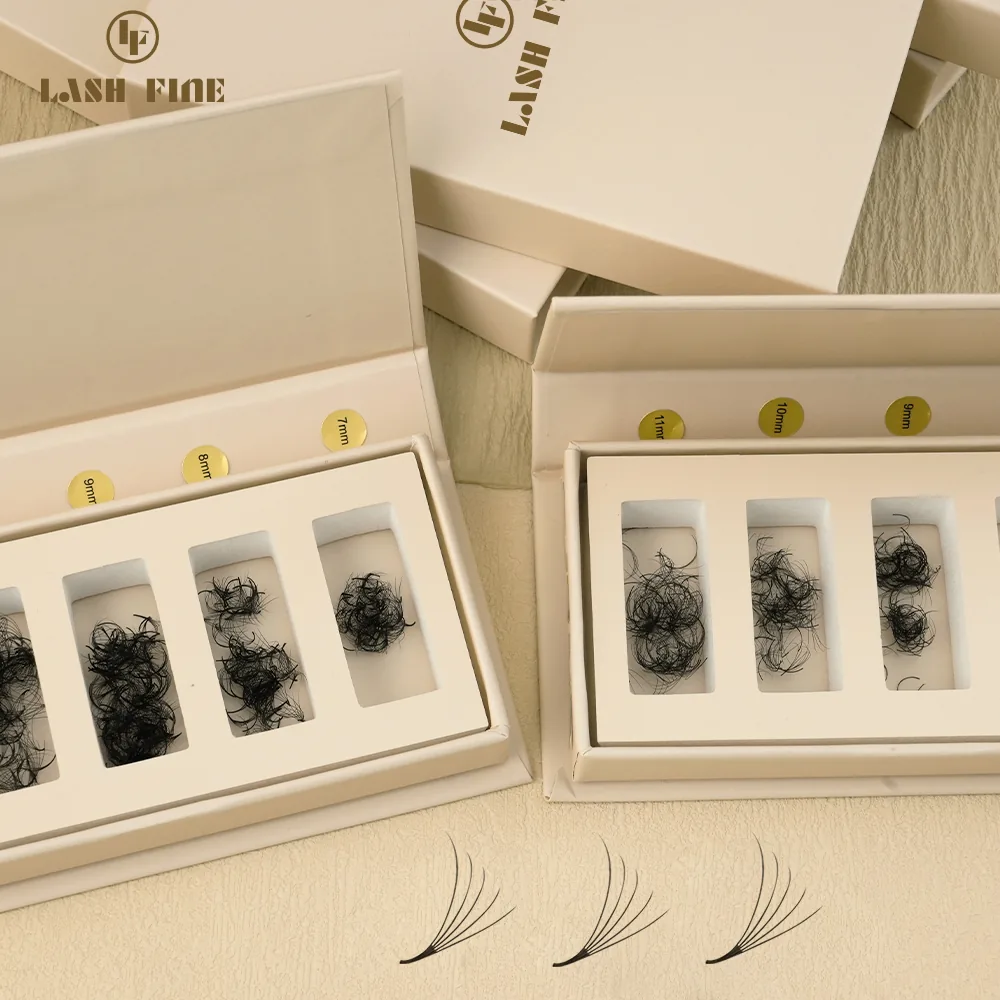
Geschikt voor:
- snellere afspraken
- klanten die een vollere look willen
- wimperstylisten die meer consistentie willen in de waaiervorm
Typisch visueel resultaat:
- vollere wimperlijn
- een opvallender uiterlijk dan klassieke sets
- een afwerking die zacht blijft in plaats van overdreven glanzend
3. Wimpers in zijde-look, ingedeeld naar afwerking en effect
Een handige manier om inzicht te krijgen in zijden wimperextensions is door te kijken naar het eindresultaat in plaats van alleen naar de productnaam.
- Lichtmatte zijde-look: dichter bij Konex SS in de bronbeschrijving
- Halfmatte zijde-look: dichter bij S Black in de bronbeschrijving
- Zijde-look met een natuurlijke uitstraling: wordt meestal gekozen wanneer de klant een gedefinieerde look wil zonder een te opvallende glans
Deze indeling op basis van afwerking is handig omdat de benamingen van salonproducten per fabrikant kunnen verschillen. Hetzelfde label “silk” kan per merk een andere betekenis hebben, dus wimperstylisten moeten de daadwerkelijke vezelspecificaties, het krultype en de diameter op het productblad controleren in plaats van alleen op het label af te gaan.
Veelvoorkomende specificaties om op te letten bij het kiezen van zijden wimperextensions
Om de productkeuze concreter te maken, bekijken inkopers van wimperproducten doorgaans de technische specificaties die door de fabrikant worden vermeld.
- Krultype: Veelvoorkomende krullen van wimpers zijn onder meer J, B, C, CC, D en L stijlen, afhankelijk van het merk en het decorontwerp.
- Diameterbereik: Klassieke extensions en fan-wimpers kunnen, afhankelijk van de stijl waarin ze worden aangebracht, in verschillende diktes worden geleverd.
- Eindniveau: lichtmat, halfmat of glanzend effect.
- Vezelprofiel: in het bronartikel wordt vermeld dat Konex SS en S Zwart zoals de twee vezelprofielen in zijdestijl.
- Indeling van de aanvraag: klassieke bakjes of kant-en-klare waaiertjes.
- Etikettering door de fabrikant: Productnamen kunnen variëren, dus controleer de daadwerkelijke vezelspecificatie voordat u bestelt.
Deze details zijn van belang omdat het eindresultaat in een salon afhangt van de combinatie van krul, diameter en afwerking, en niet alleen van het feit of het product “silk” heet.”
Veelgebruikte selectiecriteria voor salons
Houd bij het vergelijken van productlijnen rekening met het volgende:
- Krul: Kies een zachtere krul voor een subtielere lift en een sterkere krul voor een meer opvallend openend effect.
- Diameter: Kies een dunnere diameter als comfort en een luchtiger uiterlijk voorop staan.
- Afwerking: Kies ‘light-matte’ voor een subtiele glans of ‘semi-matte’ voor een zachtere, minder reflecterende look.
- Toepassingssnelheid: Kies voor kant-en-klare ventilatoren wanneer de afspraaktijd belangrijk is.
- Doel van de blik: Kies voor klassieke sets wanneer precisie en een natuurlijke definitie het belangrijkst zijn.
Eigenschappen van zijden wimpers die bij de fabrikant moeten worden gecontroleerd
Aangezien de naamgeving van salonproducten soms overeenkomsten vertoont, is het raadzaam om vóór de aankoop de exacte productgegevens op te vragen.
Belangrijke productcontroles:
- Materiaalkwaliteit: Controleer of de vezel wordt aangeduid als PBT en ga na of de fabrikant een merknaam voor het profiel gebruikt.
- Consistentie van de krul: Controleer of de naamgeving van de krullen in alle bakken en partijen consistent is.
- Overzicht van diameters: Controleer of de dikte overeenkomt met de gegevens op de verpakking of het specificatieblad.
- Beschrijving van de afwerking: Controleer of de vezel is aangeduid als mat, halfmat of glanzend.
- Toepassingsvoorbeeld: klassiek, kant-en-klaar sjabloon of een ander bestandsformaat.
Deze controles helpen salons om niet alleen op marketingtaal te vertrouwen.
Waarom salons kiezen voor wimperextensions van zijde
Er wordt vaak voor zijden wimperextensions gekozen omdat ze een middenweg vormen tussen verschillende visuele stijlen. Salons geven er wellicht de voorkeur aan wanneer ze:
- een verfijnd maar niet zwaar resultaat
- een vezelprofiel dat er netjes uitziet langs de wimperlijn
- een evenwicht tussen een subtiele glans en een zacht mat effect
- productopties voor zowel klassieke als kant-en-klare fan-services
- een afwerking die zorgt voor een natuurlijk ogend volume, lengte en soepelheid
Bij adviesgesprekken met klanten draait de keuze vaak om het gewenste uiterlijk en de onderhoudsdoelen. Als een klant een ingetogen, alledaags resultaat wil, is een klassieke zijden optie wellicht geschikter. Als het doel meer volume met een zachtere afwerking is, is de kant-en-klare waaiervorm wellicht geschikter.
Hoe bepaal je of zijden wimpers de juiste keuze zijn?
Gebruik de volgende selectiecriteria wanneer u zijden wimpers vergelijkt met andere soorten synthetische wimpers:
- Kies voor zijden wimpers als: De klant wil een evenwichtige afwerking, die zowel natuurlijk als verzorgd oogt.
- Kies voor klassieke zijden wimpers als: het gewenste resultaat is gedefinieerd, maar niet dicht.
- Kies voor kant-en-klare zijden wimpers in waaiervorm als: de klant wil meer volume of de salon heeft behoefte aan een snellere behandeling.
- Kies een ander vezelprofiel als: de klant geeft uitdrukkelijk de voorkeur aan een matter of juist glanzender resultaat dan het zijden etiket biedt.
- Kies voor opties in zijkwaliteit wanneer: je bent op zoek naar een product dat geschikt is voor dagelijks gebruik en tegelijkertijd zichtbaar volume, lengte en een taps toelopende vorm geeft.
De beste keuze voor wimpers wordt niet alleen bepaald door het woord “zijde”. Deze keuze wordt bepaald door het vezelprofiel, de afwerking, de krul, de diameter en de aanbrengmethode.
FAQ
Zijn zijden wimpers van echte zijde gemaakt?
Nee. In het bronartikel worden zijden wimpers beschreven als synthetische wimpervezels, niet als echte zijde.
Van welk materiaal zijn zijden wimpers gemaakt?
In het artikel worden ze omschreven als PBT (polybutyleentereftalaat) vezels, met Konex SS en S Black als de genoemde vezelprofielen.
Waarvoor worden zijden wimpers gebruikt?
Zijden wimpers worden gebruikt om een natuurlijke look te creëren met extra volume, lengte, flexibiliteit en een beter gedefinieerde wimperlijn.
Wat is het verschil tussen Konex SS en S Black?
In de brontekst, Konex SS wordt gebruikt voor klassieke wimperextensions en wordt omschreven als licht-mat met een korte taps toelopende vorm. S Zwart wordt gebruikt voor kant-en-klare waaiers en wordt omschreven als halfmat met een lange taps toelopende vorm.
Waar moet een salon op letten voordat ze zijden wimpers bestelt?
Een salon moet controleren of de materiaalkwaliteit, krultype, diameter, afwerking en toepassingsvorm op het productblad van de fabrikant, in plaats van alleen af te gaan op de marketingnaam.
 English
  German
  French
  Spanish
  Romanian
  Portuguese
  Dutch
Dutch  Italian
  Swedish
  Polish