

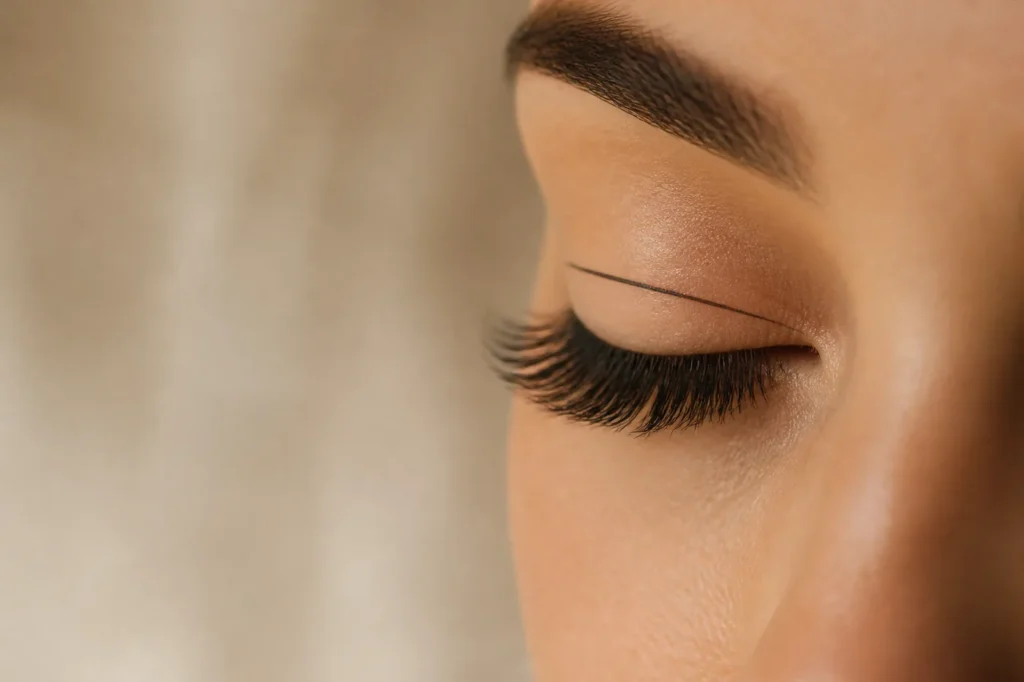
Yes, you can wear eyeliner with lash extensions. That is the answer almost every page gives, followed by one rule: use a water-based, oil-free liner. The rule is directionally right and badly incomplete, because it describes an ingredient list rather than what actually shortens a set.
Two things decide whether eyeliner costs you retention, and neither is on the label. The first is where the product lands relative to the adhesive bond. The second is how it comes off. A water-based liner applied into the roots and removed with a cotton pad is harder on a set than a slightly richer formula applied above the lash line and rinsed away. The ingredient list matters, but it is third on the list, not first.
This is written from the manufacturing side of the category, and that bias is stated again at the end.
What Oil Actually Does to the Bond
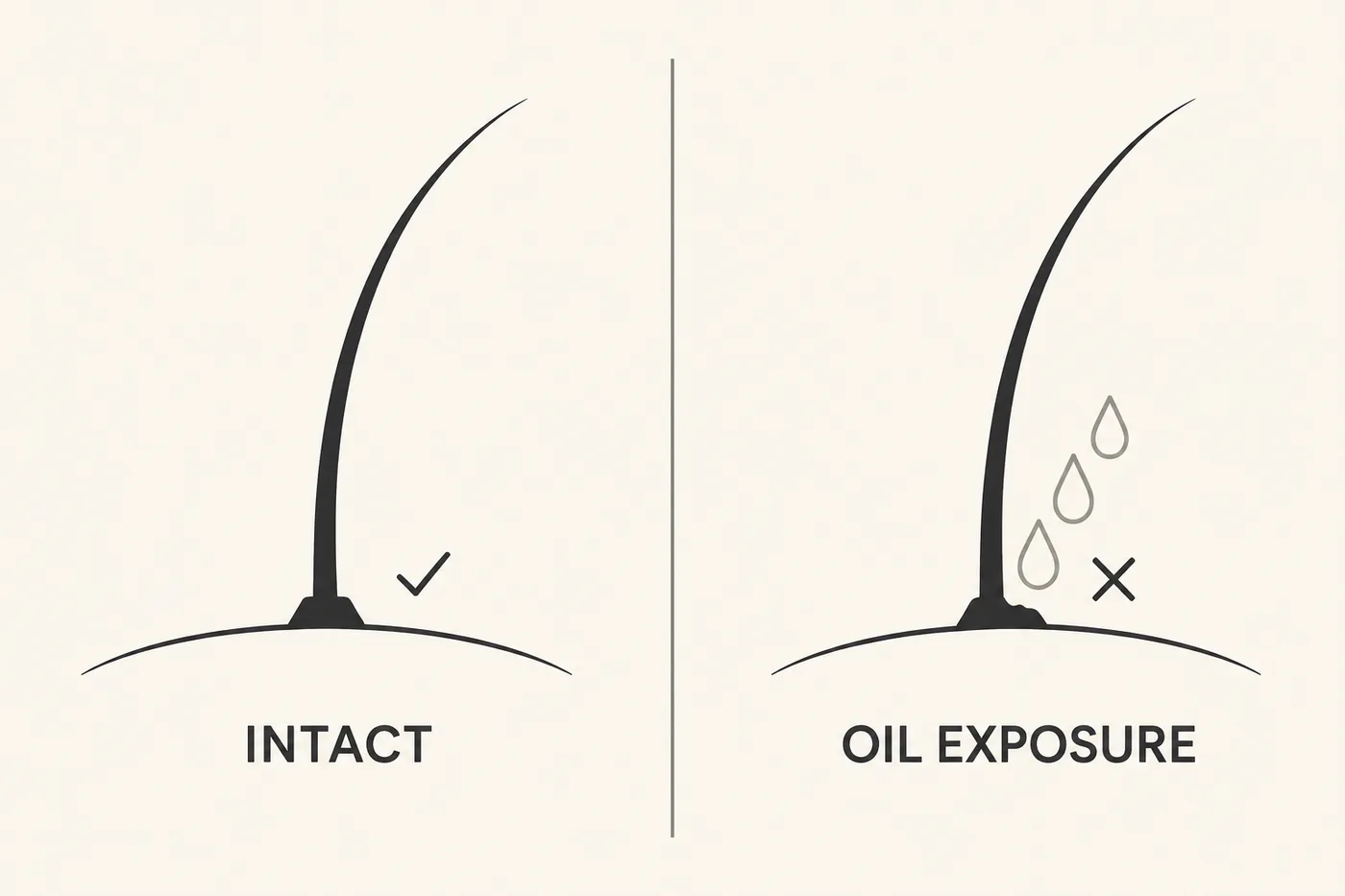
Les adhesive that holds an extension is a cyanoacrylate that has cured into a solid polymer collar around the base of the natural lash. Once cured, that polymer is reasonably strong in normal use and specifically vulnerable to two things: oils and mechanical peeling.
Oils do not dissolve a bond instantly, which is why the folk rule feels unreliable – a client uses an oil-based remover once and nothing happens. What oils do is soften and plasticise the cured polymer over repeated contact, and the effect compounds. A client who removes eye makeup with an oil balm every night for two weeks will see more pop-offs than one who does it once. Cyanoacrylates are also recognised sensitisers, with published case reporting of allergic contact dermatitis from ethyl cyanoacrylate exposure (PMID 17937754), so repeated exposure of the eye area to any product is worth taking seriously for reasons beyond retention.
Mechanical peeling is the faster failure. The bond is strongest against force along the lash and weakest against a sideways tug at the base, which is exactly the force a cotton pad makes when it is dragged across the lash line. Most “the extensions fell out” complaints trace to a removal ritual, not to an ingredient.
Where You Put It Matters More Than What You Use
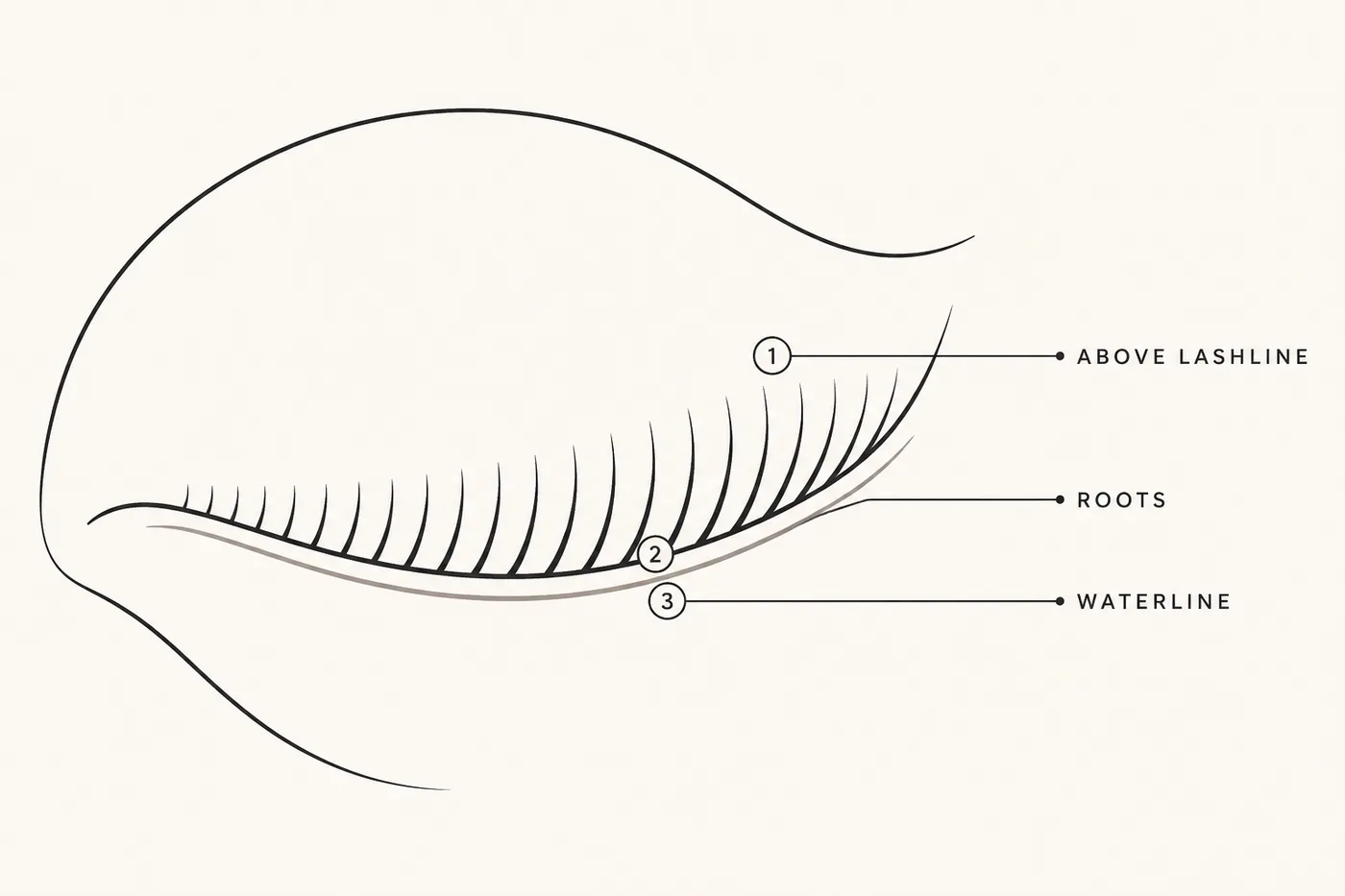
There are three places eyeliner can go, and they are not equivalent.
Above the lash line is the safe zone. A thin line drawn just above the base of the lashes, on the skin, never touches the adhesive. Nearly all of the risk here is in removal, not application.
Tight-lining, right at the roots, is the risky zone. Pigment applied between the lashes can sit directly against the bond, and removing it means working at the exact point you most want to leave alone. It is not impossible to do safely, but it requires a fine tip, a light hand and a remover that is rinsed rather than wiped.
The waterline is a different kind of risk, and this is where most of the advice online gets it backwards. Several sources recommend the waterline because it keeps product away from the adhesive, which is true. What that advice ignores is anatomy: the meibomian glands, which supply the oil layer of the tear film, open along the lid margin, and product applied there can obstruct them. Ophthalmology guidance on lid margin health treats this as a routine clinical concern, and case reporting has documented dry eye following habitual eyeliner use in that position.
So the trade is not “safe place versus unsafe place”. The waterline protects the bond and stresses the eye surface; the lash line protects the eye surface and requires care around the bond. For a client with dry eye, the calculation is easy, and it does not favour the waterline.
Mascara Is a Different Problem
Mascara is not eyeliner with a different applicator. It coats the entire fibre, including the section that meets the bond, and it is formulated to cling. That means two compounding problems: pigment and film former sitting on the adhesive, and a removal process that has to break the coating off the lashes.
On a classic set with visible gaps, a light coat on the tips is survivable. On a volume set, mascara bridges neighbouring fans into clumps, and the only way to undo the clumping is mechanical separation of fibres that were deliberately isolated. The result is exactly the condition technicians spend an appointment avoiding.
If a client wants more darkness than the set provides, the honest options are a darker fibre at the next refill, or a tint, or liner drawn above the lash line – not mascara on top of the work.
The Removal Ritual Is Where Sets Die
This is the part almost nobody writes about, and it matters more than the product choice.
Use a water-based remover. Avoid cleansing balms and oil-based micellar waters on the eye area, and keep two-phase makeup removers away entirely. Do not use a cotton pad, and do not drag: a cotton pad is a mechanical peel in slow motion. Apply remover with a soft brush or a fingertip, let it sit for a few seconds, then rinse with water and pat dry with a towel pressed – not wiped – against the closed eye.
Work downward, in the direction the lashes grow. Never scrub across the lash line, and never pick at a clump. A set that is cleaned this way will outlast one cleaned with an expensive oil-free product applied with a pad.
The same logic applies to the rest of the face: an oil cleanser used on the cheeks is fine, but it should not travel up to the lash line, and rinsing should happen before the residue has a chance to sit.
What “Lash Safe” on a Label Means
Very little, in a regulatory sense. “Lash safe” and “extension friendly” are marketing phrases, not standards, and a product carrying them has not been tested against any particular adhesive. The useful information is on the ingredient list: look for oils, waxes and heavy silicones, and treat “water-based” as a starting point rather than a guarantee – some water-based formulas still contain oils further down the list.
The most reliable test is a patch of actual behaviour: apply the liner above the lash line for two weeks and watch the pop-off pattern at the next refill. If losses concentrate along the areas where the liner was heaviest, the product or the removal is the variable, not the application technique.
A Routine That Actually Holds
Wait the first day. The adhesive continues to cure after the appointment, which is why water and makeup are best avoided for the first 24 to 48 hours; the same window applies to anything you put near the lash line.
After that: liner above the lash line with a fine water-based tip, no tight-lining on refill week, no mascara on volume sets, water-based remover applied with a brush and rinsed, and a daily cleanse with a proper lash cleanser rather than a makeup wipe. A lash sealant applied at refills adds a thin protective layer over the collar, and it is worth explaining to clients that this is not a substitute for careful removal. The sequencing of that daily routine is covered in lash extension aftercare, and the product format question is covered in the guide to shampooing pour cils.
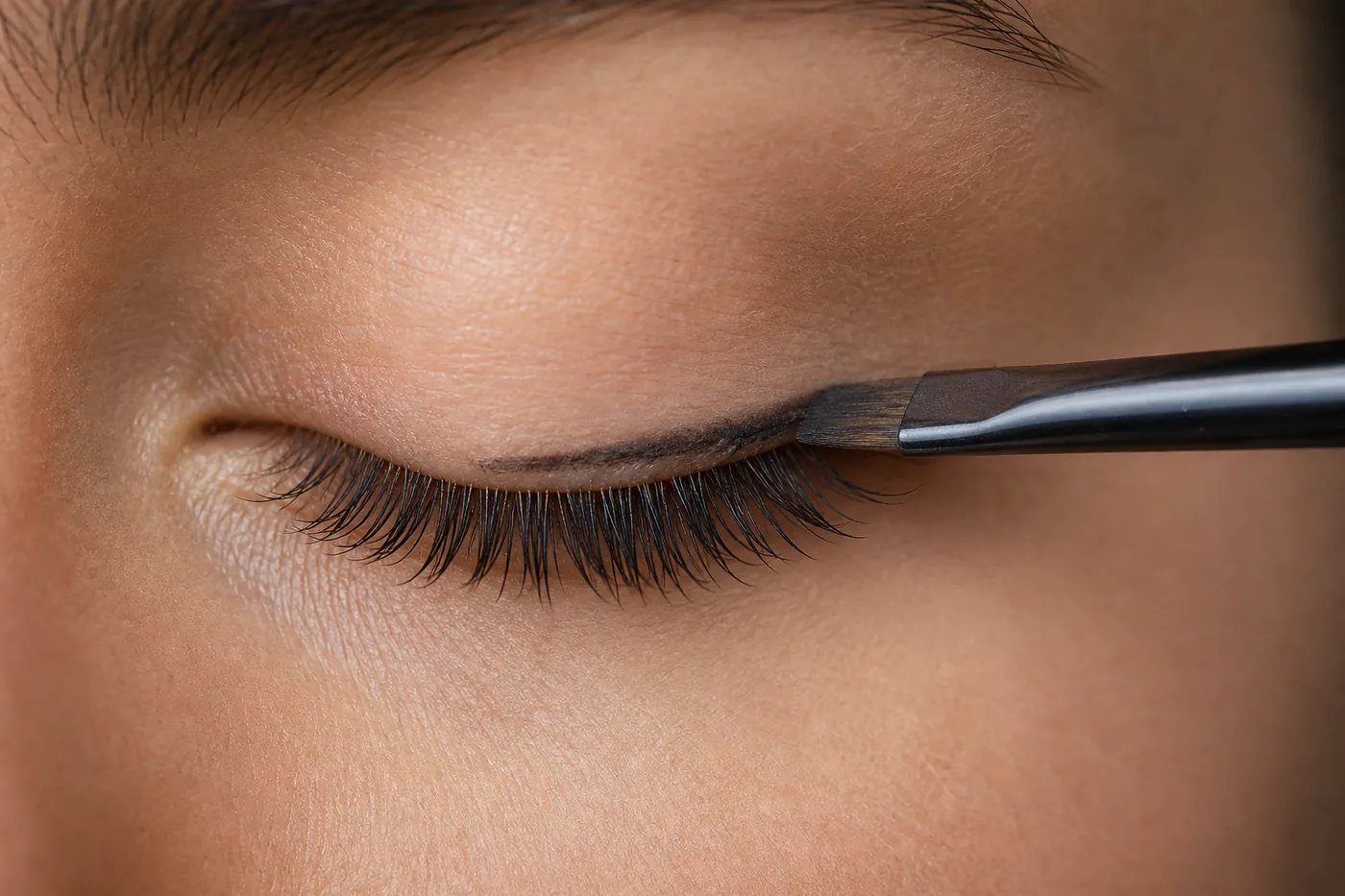
If a client wants a soft line with almost no product risk, an angled brush dipped in matte eyeshadow is the most forgiving option: no oils, no film formers, no waterproofing, and it rinses off with water. It is the one technique worth borrowing from the salon blogs, and it is also the least profitable thing to recommend.
Clients who train hard or swim should be told that sweat and chlorine are not the enemy – the enemy is the wipe-down afterwards. A towel pressed against the face is fine; a towel dragged across the eyes is not.
FAQ
Can you wear eyeliner with lash extensions? Yes. Use a water-based, oil-free formula, apply it above the lash line rather than into the roots, and remove it with a water-based remover that is rinsed off rather than wiped.
Is waterproof eyeliner safe? It is not recommended. Waterproof formulas are designed to resist removal, which means they are typically removed with oil-based products and pressure – both of which are harder on the adhesive than the liner itself.
Can you wear eyeliner on the waterline? It keeps product away from the adhesive, but the lid margin is where the meibomian glands open, and habitual liner there is associated with tear film problems. For clients with dry eye, it is the wrong trade.
Can you wear mascara with lash extensions? Technically yes, practically it is the fastest way to ruin a volume set: it coats the bond and bridges isolated fans into clumps, and removing it requires exactly the mechanical action you want to avoid.
How soon after a refill can you wear makeup? Wait 24 to 48 hours for the adhesive to finish curing. After that, follow the same rules as any other day.
The Short Version
The eyeliner is rarely the problem. Where it goes and how it comes off are the variables that decide retention, and the water-based rule only addresses the third-most-important one.
Draw above the lash line, keep product out of the roots, skip mascara on volume sets, and remove with something water-based that you rinse rather than wipe. Do that and liner costs you nothing; skip the removal discipline and no ingredient list will save the set.
One disclosure: we manufacture lash extensions and adhesives, so we benefit when a set retains well and is replaced less often by disappointment. That is why this piece spends more space on removal technique than on product recommendations – the removal is where the money actually goes.


 English
 German
 French
 Spanish
 Romanian
 Portuguese
 Dutch
 Italian
 Swedish
 Polish