

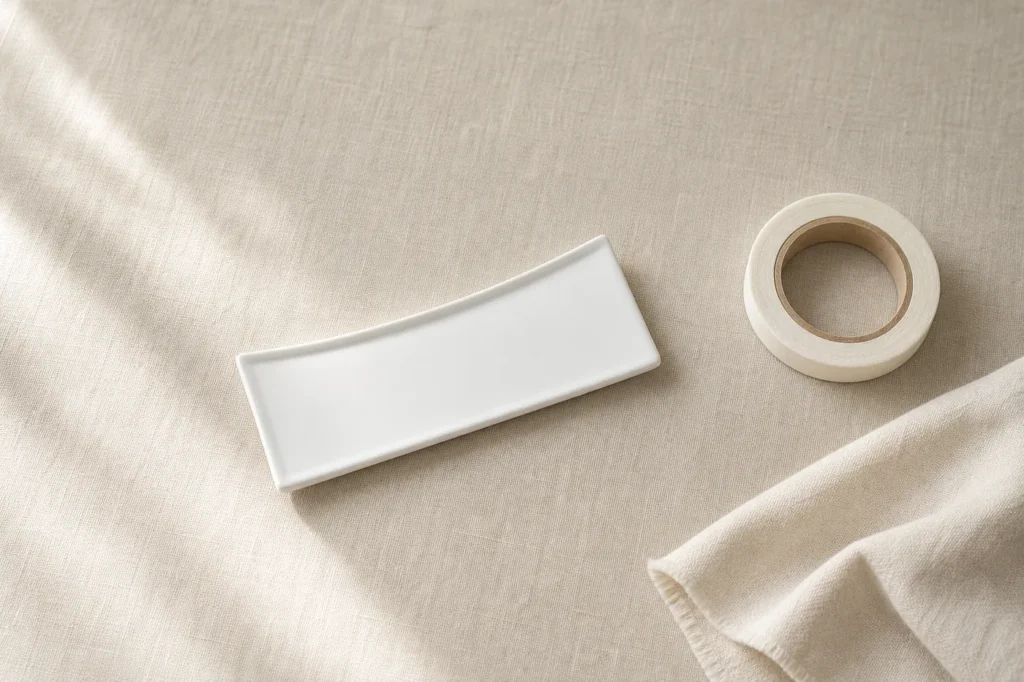
A lash tile is the small plate that sits beside the adhesive and does the unglamorous work of the set: it holds the drop, gives the tweezers somewhere to pick from, and keeps the sticky part of the job away from everything else. It costs almost nothing, it is replaced constantly, and it is part of a group of items that a technician consumes at a predictable rate and almost never thinks about until they run out mid-appointment.
That group is what this guide is about. Tiles and plates, glue rings, fixing tape, eye pads, adhesive storage and gasket pads are not the products a client notices, and they are the products a salon reorders most often. For a supplier they are the most reliable line in the catalogue for exactly that reason: they are consumables, they are bought in packs, and a customer who is happy with them does not shop around for a better price on a fifty-cent item.
What a Lash Tile Is and Why It Changes the Set
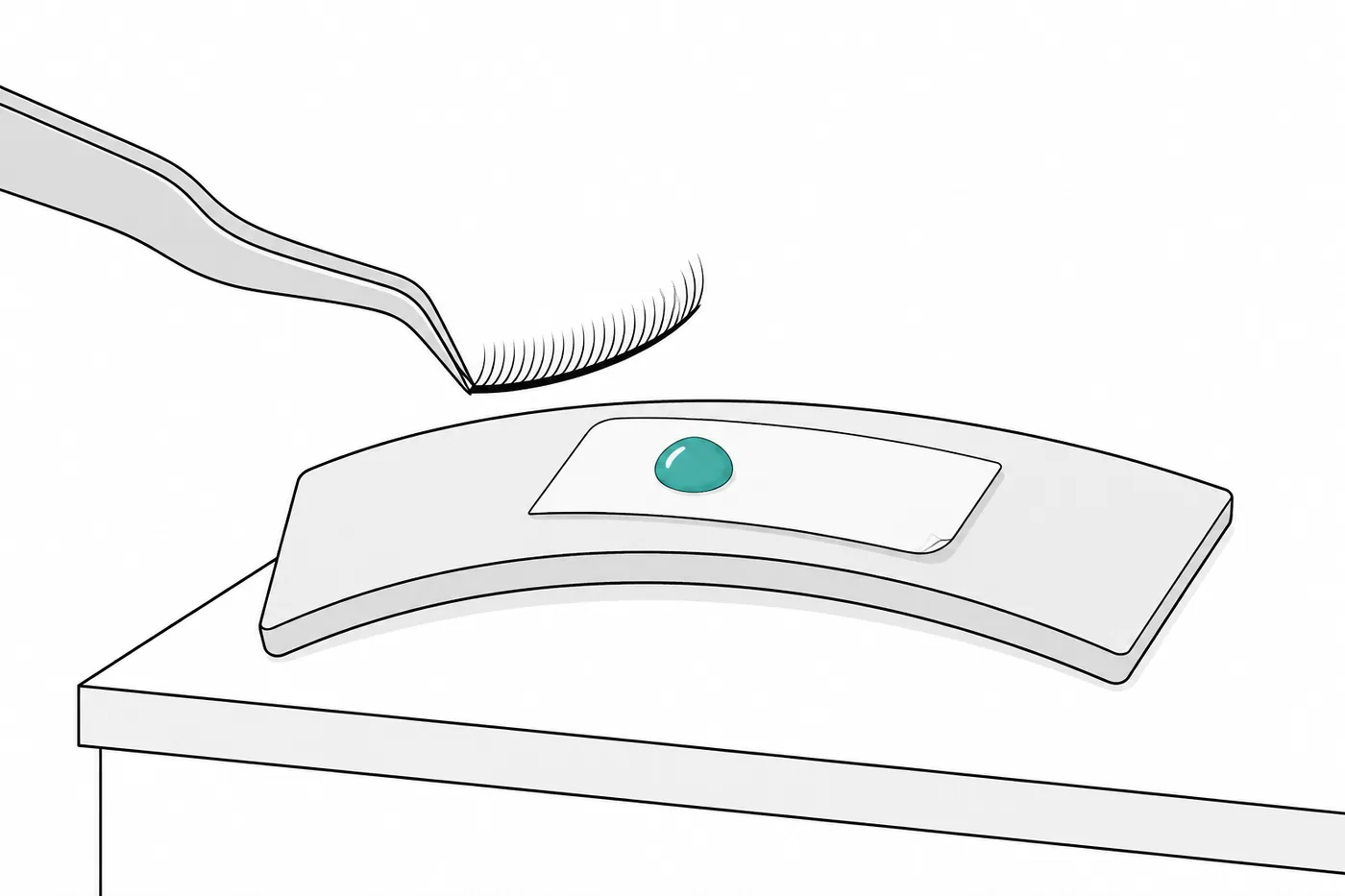
A lash tile, sometimes sold as a lash plate, is a small flat or gently curved surface that acts as the working area for the adhesive. The version that works best is shaped to follow the contour of the eye, because the technician’s hand travels along that curve all day; a flat tile makes the wrist work harder and slows the pick-up.
Its second function is tidiness, and this is where a well-designed tile earns its place. The better tiles ship with adhesive labels. The label is stuck to the surface, the drop is placed on the label, and when the drop is finished the label is peeled away and thrown out. No scraping, no solvent, no adhesive residue building up on the plate over a week of sets. For a salon this matters more than it sounds, because a contaminated working surface is a quiet source of both mess and inconsistent pick-up.
Material and weight are the two things to check when buying. Plastic is the cheapest and the lightest, and it is what most salons use because the tile is treated as a semi-consumable rather than an heirloom. Acrylic and ceramic feel better in the hand and hold their shape longer, and they are worth specifying for a technician who works a full book every day. Whatever the material, the surface has to be smooth enough that a fan does not catch on it and shallow enough that the drop stays where it is placed.
The size question is decided by the work, not by preference. A tile used only for drops can be small. A tile that also holds sorted fans needs enough room to lay them out without overlap, and a technician who fans on the tile needs a curved edge to work against. Buying a single tile size for a whole team is the most common mistake in this category.
The Glue Ring: The Smallest Item With the Largest Effect
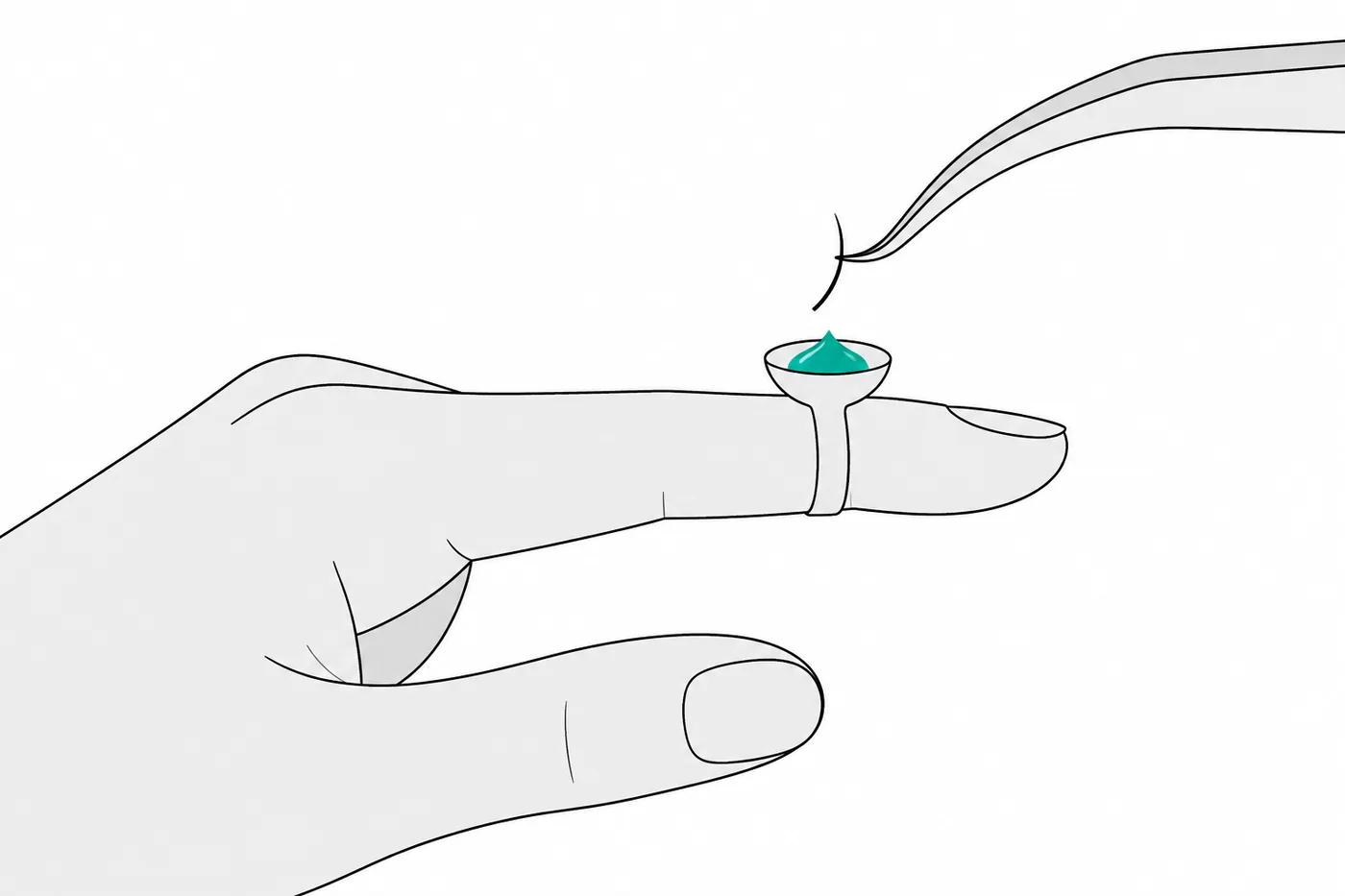
A glue ring is a disposable ring worn on the working finger, with a small cup that holds a drop of adhesive at the height of the hand. It replaces the tile for technicians who prefer to keep the adhesive on the hand rather than on the bench, and it changes the movement of the whole service: instead of reaching down to the plate for every pick-up, the technician dips and works in one motion.
The design details that matter are few and specific. The ring diameter should be adjustable, because a ring that pinches is a ring that gets abandoned after one set, and the same pack has to suit every finger in a salon. The cup should sit flat enough that a drop does not run to one side. The material should be a clean, odourless plastic, typically polypropylene, since the item sits against the skin for hours. And the shape should allow the technician to dip a lash, place it in a small groove to bloom, and lift it without the fan collapsing.
Where the ring wins is speed, and where it loses is capacity. A drop on a ring is smaller than a drop on a tile, so it is ideal for a fine set at a controlled pace and less suited to a dense volume service where the adhesive is drawn down hard. Many technicians keep both on the bench and switch according to the set in front of them.
Buying is simple and the economics are the reason this category exists. Rings are sold in packs of a hundred or more, they are used once or twice each, and a working technician gets through them fast. The Kleberinge product is typical of the format: adjustable, disposable, and packed for a salon rather than for a single client.
Tape and Pads: The Protection Layer
Two items in this group do the same job from different directions, which is why they are usually bought together. A fixing tape holds the working area in place during application and comes away gently at the end, and the Klebeband is sold on exactly that promise: a secure hold during the set, a removal that does not pull at the client’s skin. The Wimpernverlängerungspads do the protecting underneath, cushioning the eye area and keeping the lower lashes out of the way for the length of the appointment.
The specification questions are the same for both. Adhesion has to be strong enough for a two-hour service and weak enough to release without trauma. Residue has to be minimal, because a client who leaves with tacky skin under the eye notices it long before she notices the set. The material should tolerate being repositioned once, which is what happens in real appointments. And the pad should be shaped so that it sits flat on the cheekbone without lifting at the inner corner, where most pads fail.
There is a compliance angle worth stating plainly, because it is the most common overreach in salon supply: pads and tape are cosmetic accessories, and describing them as preventing infection or treating a reaction is a medical claim. The useful argument is comfort and consistency, not clinical protection.
Both items are private-labelled more often than the rest of the category, because they are visible during the service and they are often handed to the client. Packaging, pad shape and tape cutting are the three variables that a brand can own, and the Einkaufsführer für Wimpernpinzetten covers the same logic for the tool side of the station.
Glue Storage and the Gasket Pad: Protecting the Adhesive
Adhesive is the most expensive item on the station by volume, and it is also the most sensitive to how it is kept. The consumables that surround it exist to slow its decline, and they are usually added to an adhesive order rather than bought on their own.
Die Kleberaufbewahrung format is a container that seals properly and can be kept upright, out of light, at a stable temperature. Those are the same conditions the Wimpernkleber-Leitfaden sets out for shelf life, and the point of the container is simply to make them easy to maintain in a busy room rather than to add anything to the formula. What to check is the seal, the size of the opening for the bottle the salon actually uses, and whether the unit can be labelled and dated.
The gasket pad does the opposite job at a much smaller scale. A heart-shaped gasket pad sits between the adhesive and the air, holding the drop in place, keeping it from spreading, and delaying the point at which it starts to thicken. Technicians who work slowly, or who are interrupted by a client question halfway through a set, feel the difference within a week. The useful specifications are a smooth edge that does not catch a fan, a shallow well that holds the drop without pooling it, and a size small enough to be portable.
Together, these two items make the adhesive behave more predictably, and that is a better sales argument than price. A salon that loses half a bottle a month to poor storage has already paid for the container several times over. The same argument applies to the coating sealant that sits at the end of the same workflow, because a product that is stored correctly performs the way the supplier tested it.

What to Specify and How to Buy

A consumables order is decided by a short list of details, and getting them wrong is expensive because the order is small and the reorder cycle is fast.
1. Material and skin contact. Everything that touches the client or the technician’s finger should be clean, odourless and consistent between batches. Ask what the material is, not just what colour it is.
2. Pack quantity and unit cost. These items are bought by the hundred or the thousand. The number that matters is the cost per appointment, not the cost per pack.
3. Repositionability and residue. For tape and pads, ask how the item behaves if it is lifted and reapplied once, and check the delivered sample for tacky residue after removal.
4. Compatibility with your adhesive. A ring cup or a gasket pad that reacts with the adhesive makes the drop behave unpredictably. Test the pairing before a bulk order.
5. Packaging and private label. Pads and tape are the two items most often branded. Confirm the minimum order for printed packaging before planning the range.
6. Reorder rhythm. Ask the supplier for a suggested case size that matches a month of work for a single technician, because that is how a salon actually buys.
For anyone assembling a first order, the eyelash extension allergy guide is worth reading alongside it, because pads and tape are the two items most often blamed when a client reacts to a service, and the answer there is almost never the pad itself.
QC and a Stocking Checklist
Incoming checks are quick and worth doing on every delivery. Confirm the pack count against the invoice, because consumables are the category where short counts happen most often. Check that the ring diameters are adjustable across the pack and that the cup is not distorted. Open one pack of pads and confirm the shape sits flat without lifting at the inner corner. Check the tape for a clean cut edge and for residue on the backing. Check the storage container seal by closing it and inverting it once.
Six decisions cover the range itself.
1. Choose one tile size for drops and a larger one where fans are sorted, rather than forcing one product to do both.
2. Stock rings in a quantity that matches a month of appointments, and treat them as disposable rather than washing and reusing them.
3. Keep pads and tape to a single specification that releases cleanly, and label them for the channels that will carry them.
4. Add adhesive storage to the same order as the adhesive, so it is never the item that arrives a week late.
5. Keep gasket pads at the station rather than in the storeroom, because the product only helps if it is where the drop is placed.
6. Date the adhesive and rotate consumables by delivery, not by whichever box is nearest the door.
FAQ
Is a lash tile the same as a lash plate? The two names describe the same object: a small surface for holding adhesive and for picking up extensions. Curved versions follow the eye contour and are easier to work from for long periods.
Do glue rings replace the tile? They replace it for technicians who prefer the adhesive on the finger rather than on the bench. Rings give speed and a shorter reach; a tile holds a larger drop and gives more room for sorting fans. Many stations keep both.
Are pads and tape reusable? No. Both are single-use items in a professional service, and the pad should be discarded after each client.
How much of this should a salon keep in stock? A month of work per technician is the working rule for rings, pads and tape, plus one spare container of adhesive storage. Running out of a pad mid-set costs more than the pad.
Where It Fits in the Range
These six items are the most repeatable part of a lash catalogue, and the lash plate is a good place to start a range because it is the object that defines the working area. The logic for a supplier is straightforward: a technician who buys adhesive every month also buys rings, pads and tape every month, so the consumables ride along with the order that matters and cost nothing in additional selling effort.
Two habits make that work. Keep the consumable items physically near the adhesive in a catalogue rather than buried in a tools category, so the buyer sees them at the moment of reorder. And specify them tightly enough that a customer can reorder by code without opening a sample each time, because in this category consistency is the product. A salon that never has to think about the station is a salon that keeps buying from the same supplier.


 English
 German
 French
 Spanish
 Romanian
 Portuguese
 Dutch
 Italian
 Swedish
 Polish